
24/7 Customer Support

Free returns

Same-day & Next-day Delivery

Quality Guaranteed

Unlock Your Welcome Offers: FREE Delivery | Up to 80% OFF | Free 30-day JoyPlus trial
Download the APP
A portable handheld fan can make commuting, office work, festivals and travel more comfortable, but not every compact fan is equally useful. A slim body may fit neatly into a handbag, while a high-speed motor may drain its battery quickly. Some models also advertise long runtimes that only apply at the lowest setting.
Before buying, look beyond phrases such as “turbo”, “all-day cooling” or “ultra-quiet”. The practical questions are simpler: how will you charge it, where will you use it and can it operate comfortably without being held all the time?
A fan’s top speed, RPM or wind-speed figure describes a particular operating setting. It does not tell you how long the battery will last, how noisy the fan may be or whether the airflow will feel comfortable indoors.
A turbo handheld fan can be useful outside, at a concert or while waiting for public transport. However, a lower setting may be more suitable in a quiet office, on a train or beside a bed. Look for multiple speed settings, rather than choosing solely by the largest RPM figure.
Runtime figures are usually dependent on speed. For example, a compact USB rechargeable fan may last considerably longer on speed one than on its highest setting. Check whether the listing provides a range, such as three to 22 hours, instead of relying on one headline number.
For UK travel, also check the charging connection. A USB rechargeable fan with USB-C can be convenient with a laptop, power bank or compatible adapter. A battery-operated handheld fan using AA batteries may be useful for immediate use, but you will need replacement batteries when power runs out.
Holding a fan for a long journey or a full work session can become inconvenient. A model with a rear stand, foldable body, lanyard or phone stand can offer more flexibility.
Before purchasing, verify that the stand is included rather than shown only as part of a product photograph. Also check whether the fan can stand securely on a reasonably flat desk or bedside table.
Battery capacity is usually shown in mAh, but capacity alone does not guarantee a particular runtime. Motor power, speed setting and airflow design all affect consumption. A 2,000mAh battery may suit short commutes, whereas a 5,000mAh model can be more appropriate for long journeys or outdoor events, although it may add weight.
Check:
Use a suitable certified charger, avoid exposing the fan to water and stop charging if the device becomes unusually hot.
A 3-speed fan is generally straightforward for everyday use: low for close-range cooling, medium for general personal airflow and high when more air movement is needed. A 5-speed fan offers finer adjustment, which can be useful when moving between a quiet office and a warm outdoor setting.
Some advanced models show speed and battery information on an LED display. This can help you avoid discovering that the battery is nearly empty just before leaving home.
A mini portable fan should be compact enough for the bag you actually carry. A heavier battery may provide longer stated operation but can make prolonged handheld use less comfortable. A pocket fan weighing around 100–180g may suit commuters, while a larger unit may be more suitable when stronger airflow is the priority.
For festivals, holidays and outdoor activities, consider a wrist strap or lanyard. For office use, a handheld fan with stand or portable desk fan may be more practical than a model designed only for one-handed use.
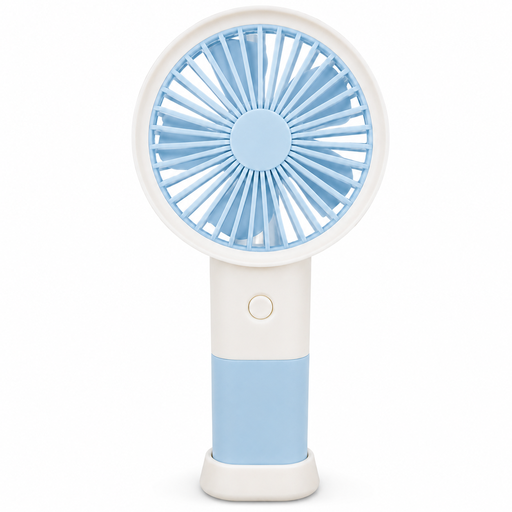
Why This Fits Their Persona: A practical starting point for commuters, students and office workers who want one fan for handheld and desk use without a complicated control system.
The included table stand addresses the inconvenience of holding a fan continuously, while three settings provide more control than a single-speed model.
Three speeds, Type-C charging and a table stand in a compact format.
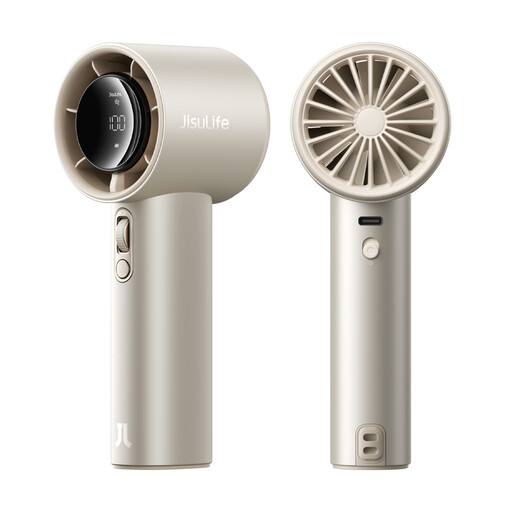
Why This Fits Their Persona: Suitable for shoppers who value detailed controls, a visible battery reading and a metal-bodied design for regular travel and outdoor use.
Its LED display shows operating information rather than leaving battery status to guesswork. The stated runtime is given as a range depending on settings.
5,000mAh battery, LED display, USB charging and 100 adjustable wind levels.
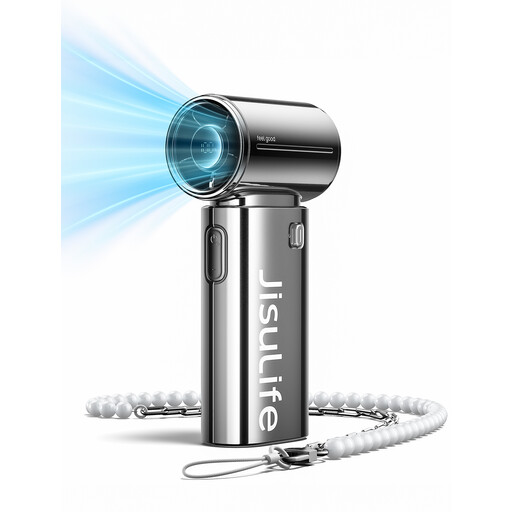
Why This Fits Their Persona: A match for festival attendees, outdoor enthusiasts and travellers who want stronger airflow and a larger battery in a pocket-sized format.
The product description states different operating times for low, medium and high settings, making the battery expectation clearer than a single headline figure.
5,000mAh battery, 9-blade airflow design, five speeds and a digital display.
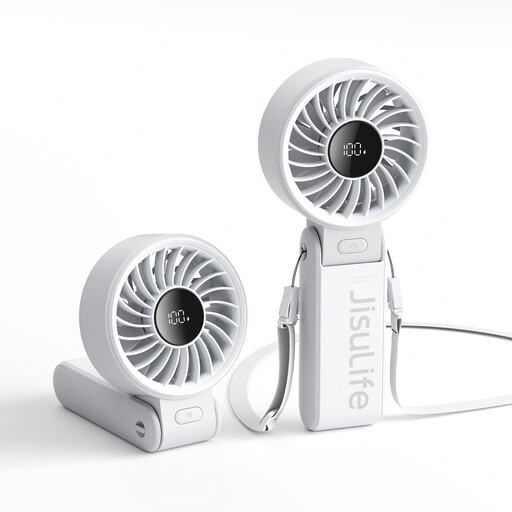
Why This Fits Their Persona: Designed for people who move between a desk, public transport and outdoor settings and want handheld, desktop and lanyard use from one device.
The foldable structure and lanyard provide alternatives to holding the fan, while the stated runtime range explains that speed affects battery life.
5,000mAh battery, five speeds, LED display and three usage modes.
For any rechargeable fan, read the supplied instructions and inspect the casing, cable and charging port before use. Keep rotating blades away from fingers, hair and loose materials. Do not immerse a fan in water, use it in heavy rain or leave lithium-battery products charging unattended for extended periods.
When buying in the UK, look for clear manufacturer and importer details, suitable instructions and applicable UKCA or CE conformity marking where required for the product. These marks are not a guarantee of performance, so also check the seller’s returns policy, warranty information and product dimensions.
A battery-operated fan with soft foam blades may be suitable for supervised family use, but a lanyard can present a risk to young children. Keep fans, cables and batteries away from unsupervised children.
We have compiled a complete, real-time list of products that fully satisfy these strict selection criteria and UK safety regulations.
A rechargeable model avoids repeated AA battery purchases and can be topped up from equipment many UK households already own, such as a laptop or power bank. Running cost depends on the battery, charger and electricity tariff, but the energy used for a small fan is generally limited. Replace or recycle batteries and electronic products through appropriate local facilities.
Lifespan depends on build quality, battery care, dust exposure and how often the motor is operated at high speed. Keep the air grille clear, avoid moisture and follow the charging instructions. A fan with a replaceable battery may be easier to maintain, but many compact models have built-in batteries that are not designed for user replacement.
Yes, if the model has a stable stand and a suitable charging connection. Check its folded dimensions before packing and confirm any transport rules for lithium-battery devices when flying. Keep the fan in hand luggage if required by the airline and protect the power button from accidental activation.