
24/7 Customer Support

Free returns

Same-day & Next-day Delivery

Quality Guaranteed

Unlock Your Welcome Offers: FREE Delivery | Up to 80% OFF | Free 30-day JoyPlus trial
Download the APP
A portable handheld fan can make a crowded commute, warm office or outdoor event considerably more comfortable. However, compact cooling products vary widely in airflow, battery life and charging convenience. A small body does not automatically mean useful performance, and impressive figures on packaging may not reflect everyday use.
Before buying a rechargeable handheld fan, look beyond the headline claims and check how the product fits your routine.
A listing may highlight motor revolutions per minute or a high wind-speed figure, but maximum output is only one part of the experience. A fan running at its highest setting may be louder, consume more battery and feel uncomfortable at close range.
For commuting or office use, adjustable airflow is more practical than a single turbo setting. A personal cooling fan with several speed levels allows you to use a gentle breeze indoors and stronger airflow outdoors.
Battery claims usually depend on the lowest speed setting. A USB rechargeable fan advertised with up to 18, 22, 25 or 30 hours of operation will normally run for less time at maximum airflow.
Check three details together:
A fan that is powerful but awkward to carry may remain at home. Look for a manageable weight, a lanyard or pouch, a safety lock and a grille that helps keep fingers, hair and loose clothing away from moving parts.
For concerts, cruises and travel, compact dimensions matter. Also remember that handheld fans contain lithium-ion batteries. Check the rules of your airline, cruise operator or venue before packing one, and do not place a damaged or swollen battery in luggage.
A mini portable fan should offer enough adjustment for different environments. Five speeds are generally easier to operate than a complex control system, while 100-level adjustment can provide finer control when you want to make small changes.
Noise figures should be treated as usage information, not a guarantee of silence. For example, one Life 9 listing gives a noise range of 55–76 dB at 30 cm. This indicates that the highest setting may be more noticeable in a quiet office, library or place of worship than at an outdoor concert.
A battery-operated fan is more convenient when it uses a common USB connection. USB-C or standard USB charging lets you use compatible wall adaptors, laptops and power banks, although charging speed depends on the adaptor and the fan’s input specification.
A 5,000mAh battery offers more capacity than a 3,000mAh model on paper, but actual operating time depends on motor power and speed. A display showing the remaining battery can help prevent the fan from cutting out during a journey.
For a pocket fan, compare the complete product dimensions rather than the fan head alone. A 128g model may be easier to carry throughout a working day, while a larger 180g or 280g model may provide additional battery capacity or features.
Useful practical details include:
If a product claims UKCA or CE marking, check that the marking and responsible importer information are present on the product or packaging. Do not assume that a marketplace description alone confirms regulatory compliance.
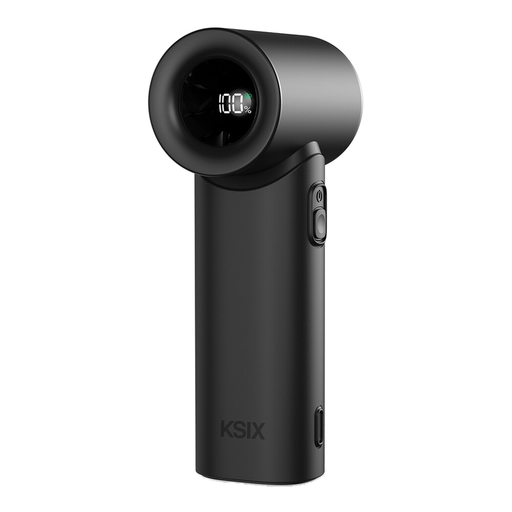
Why This Fits Their Persona: Its 128g body, five speeds and handheld or desktop format suit shoppers wanting a straightforward travel fan for commuting, office use and everyday summer cooling.
The specification states a 3,000mAh rechargeable battery and approximately three-hour USB-C recharge, making the capacity and charging expectation clear.
9.0m/s maximum air speed, brushless motor, USB-C charging and a 4W power rating.
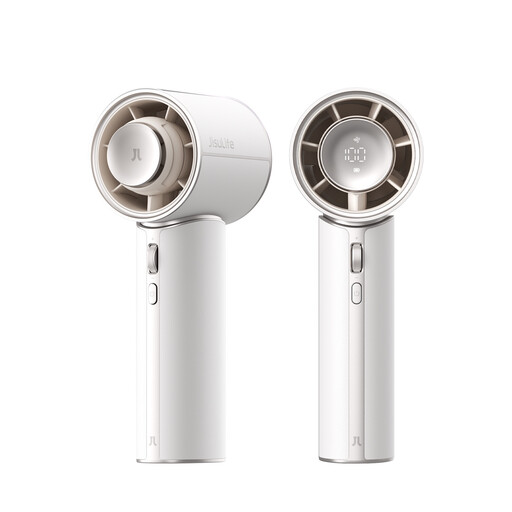
Why This Fits Their Persona: The PU leather finish, pouch and retractable lanyard make this personal cooling fan suitable for weddings, travel, office use and practical gifting.
Its display shows wind speed, while a double tap reveals battery level. The safety lock and honeycomb rear grille also support safer storage and handling.
1–100 speed adjustment, 4,250mAh battery and stated three-to-30-hour runtime depending on speed.
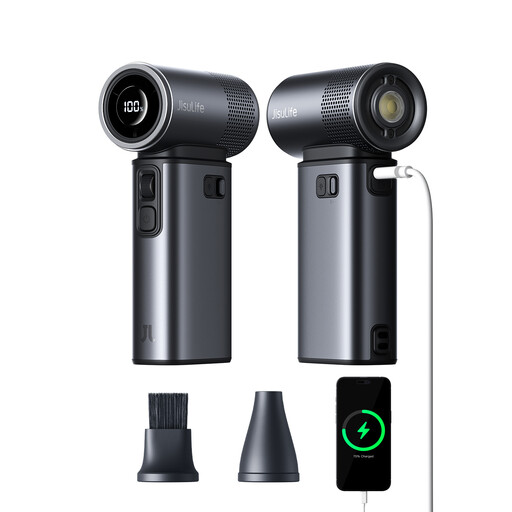
Why This Fits Their Persona: Its larger battery and additional functions are suited to camping, concerts, cruises and outdoor activities where access to mains charging may be limited.
The digital display shows speed and battery status, while the safety lock helps prevent accidental activation during transport. The listing also gives specific moisture and battery warnings.
9,000mAh battery, up to 25 hours stated runtime, 1–100 speed control, 18W power-bank output and integrated torch.
We have compiled a complete, real-time list of products that fully satisfy these strict selection criteria and UK safety regulations.
It uses relatively little electricity because it charges through USB, but running cost depends on battery capacity, charging frequency and the electricity tariff. The practical advantage is portability rather than a guaranteed saving. Charging from an existing laptop or power bank may also suit travel better than finding a mains socket.
Runtime varies by model and speed. The listed products provide published ranges such as three to 30 hours, three to 22 hours or up to 25 hours. High-speed or turbo operation uses more power, so treat the maximum figure as an upper estimate rather than a typical result.
Many personal fans use lithium-ion batteries, so transport rules may apply. Check the current airline or cruise operator guidance before travelling, keep the device protected from accidental activation and do not carry a damaged battery. A safety lock is useful, but it does not replace the carrier’s requirements.