
24/7 Customer Support

Free returns

Same-day & Next-day Delivery

Quality Guaranteed

Unlock Your Welcome Offers: FREE Delivery | Up to 80% OFF | Free 30-day JoyPlus trial
Download the APP
A portable handheld fan can make crowded trains, warm offices, festivals and summer journeys more comfortable. However, choosing one based only on attractive styling or a large RPM figure can lead to disappointment. A fan may feel too weak outdoors, run out of charge before the end of the day, or lack the stand needed for hands-free use.
Joybuy’s Product Recommendation Officer approach is simple: separate useful specifications from promotional wording, then match the design to how you will actually use it.
A high RPM figure can sound impressive, but it does not describe the complete cooling experience. Airflow also depends on the blade design, outlet shape, motor efficiency and distance from your face. A compact fan with a concentrated outlet may feel more effective than one with a higher stated motor speed but a poorly directed breeze.
Look for practical specifications such as maximum air speed, the number of speed settings and whether the product is designed for close-range personal cooling.
Manufacturers generally quote operating time at the lowest setting. A rechargeable handheld fan advertised with 18 or 30 hours of use may run for considerably less at high speed.
Before buying, check whether the description gives a range, such as 3–22 hours depending on speed, rather than relying on one maximum figure. Battery capacity, measured in mAh, is useful for comparison, but it does not guarantee identical run time between different motors and fan designs.
A fan that is comfortable for a few minutes may become inconvenient during a long commute. Check the weight, dimensions, lanyard or wrist strap, and whether a safety lock prevents accidental activation inside a bag.
For office use, a handheld fan with stand can be more useful than a model designed only for one-handed operation. For concerts, travel and camping, a compact shape, secure strap and visible battery indicator can matter more than decorative features.
A USB rechargeable fan is convenient because it can usually be charged from a laptop, power bank, car charger or USB adapter. USB-C is increasingly practical because it uses the same connector found on many current devices, although you should still check whether a charging cable is supplied.
For occasional short trips, a 2,000mAh battery may be adequate. If you expect to spend a full day outdoors, consider a larger capacity such as 4,250mAh or 5,000mAh. Remember that higher speed settings consume more power.
Lithium-ion batteries should not be punctured, dismantled or exposed to fire and extreme heat. Use a suitable certified charger, avoid charging unattended for long periods, and stop using the fan if it becomes unusually hot.
Three speed settings are sufficient for straightforward personal cooling, while five or 100 levels offer finer control. A high-speed handheld fan may be suitable outdoors, but maximum airflow can be louder and less comfortable in a quiet office, library or meeting room.
Noise figures, where provided, should be read in context because measurement distance and surroundings affect perceived volume. Keep hair, fingers, jewellery and loose clothing away from the intake and outlet grilles, particularly with turbo-style fans.
For a travel fan, weight under 200g is generally easier to carry in a handbag, pocket or backpack. A rear stand allows desktop use, while a lanyard can provide hands-free carrying or positioning. Foldable designs may be useful on a desk, and a tilting head can help direct airflow without holding the fan continuously.
A fan with LED display can show the selected speed and remaining battery level. This is more practical than guessing when the battery needs charging, although it may add weight and cost.
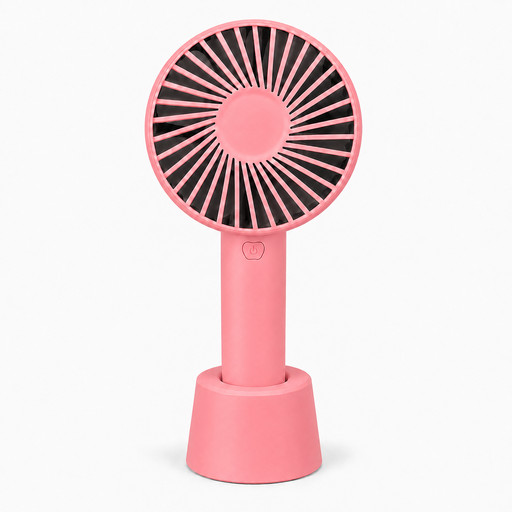
Why This Fits Their Persona: A straightforward choice for first-time buyers wanting everyday cooling at home, in the office or during commuting without unnecessary controls.
Its description clearly identifies USB charging, a desktop stand and wrist strap, so the main practical features are easy to check before purchase.
Three-way convenience: handheld use, hands-free desktop placement and wrist-strap carrying.
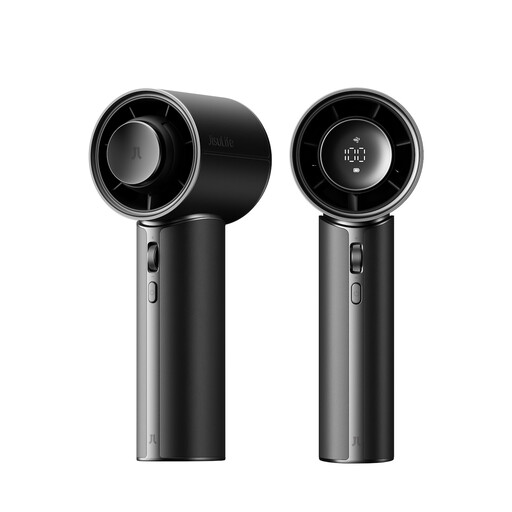
Why This Fits Their Persona: Suitable for shoppers who value a refined finish, detailed speed adjustment and a carry pouch for commuting, events or travel.
The listed 3–30-hour range is tied to speed settings, making the battery claim more transparent than a single unqualified runtime.
Offers 1–100 wind levels, a digital display, 4,250mAh battery and retractable lanyard with pouch.
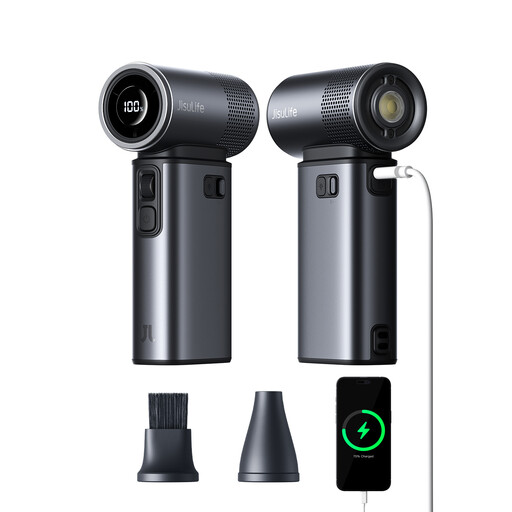
Why This Fits Their Persona: Designed for campers, concert-goers and outdoor users who prioritise a larger battery and additional functions.
Its stated 9,000mAh capacity and 18W charging specification address long-use and recharge concerns; high-speed mode still reduces runtime.
Includes a battery display, flashlight, power-bank function and adjustable 1–100 speed control.
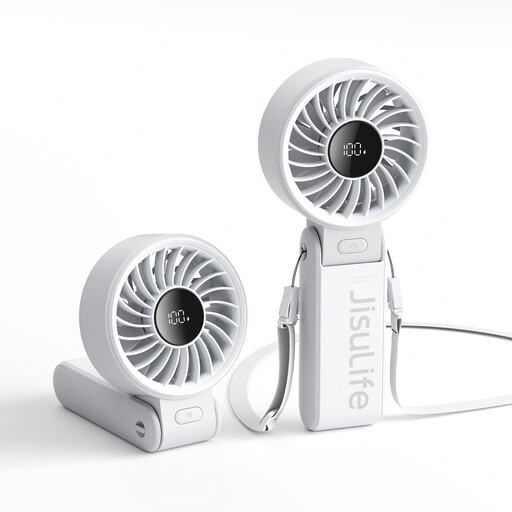
Why This Fits Their Persona: A practical option for desk workers, shoppers and commuters who want handheld, desktop or neck-worn use.
The foldable construction and lanyard provide alternatives to continuously holding the fan, while five speeds avoid an all-or-nothing airflow choice.
Supports handheld, desktop and neck-worn use, with a 5,000mAh battery and stated 3.5–19-hour operating range.
We have compiled a complete, real-time list of products that fully satisfy these strict selection criteria and UK safety regulations.
Many models list charging times between approximately two and five hours, depending on battery size, charging input and adapter. A USB-C model may charge more conveniently, but always follow the supplied instructions and use a compatible charger.
A USB rechargeable fan generally uses a small amount of electricity compared with larger room fans, but the exact cost depends on battery capacity, charging frequency and your electricity tariff. Charging from a laptop or power bank shifts the energy source but does not remove the need to recharge the battery.
Yes, if it includes an integrated or supplied stand, foldable base or stable rear support. Confirm the product description before buying: a standard mini portable fan without a stand may need to be held continuously. A desktop handheld fan is particularly useful in offices, bedrooms and study areas where hands-free cooling is preferred.