
24/7 Customer Support

Free returns

Same-day & Next-day Delivery

Quality Guaranteed

Unlock Your Welcome Offers: FREE Delivery | Up to 80% OFF | Free 30-day JoyPlus trial
Download the APP
A portable handheld fan can make a crowded commute, warm office or outdoor event more comfortable. However, compact fans vary considerably in airflow, battery capacity, noise and charging convenience. A low-priced mini portable fan may look appealing online but become inconvenient if it needs constant recharging or produces little air movement outdoors.
This guide explains the specifications worth checking before buying, common marketing pitfalls and our top recommendations for different UK lifestyles.
A product may advertise up to 18, 22, 30 or even 40 hours of cooling. These figures normally apply to the lowest speed setting. At higher speeds, the battery will run down more quickly.
When comparing a rechargeable handheld fan, look for:
A 5000mAh rechargeable fan can offer a useful balance between battery life and portability, but a larger battery usually adds weight.
RPM indicates how quickly the motor rotates, but it does not describe the whole airflow experience. Blade design, air intake, outlet shape and motor efficiency also affect the breeze you feel.
Some turbo handheld fan models quote high RPM or wind-speed figures. These can be useful comparison points, but consider the intended setting. A strong airflow may suit a festival, beach or campsite, while a quieter lower setting may be more appropriate for an office, church or public transport.
A fan with an LED display, torch, aroma diffuser, power-bank function or magnetic nozzles may offer additional value, but every feature can add size, weight or complexity.
For example:
Choose functions that match your routine rather than paying for features you are unlikely to use.
A basic battery-operated handheld fan with three speeds may be sufficient for make-up application, desk use or short journeys. If you need more precise control, a fan with five settings or 1–100 speed adjustment can provide a gentler indoor breeze and stronger outdoor airflow.
Noise levels are also relevant. Product descriptions may provide a decibel range, although the perceived sound depends on distance and surroundings. A high-speed personal fan will generally be more noticeable than a low-speed setting.
A USB rechargeable fan is convenient because it can connect to a laptop, power bank, car adapter or standard USB charger. USB-C is particularly practical if it matches the cables already used for your phone and other devices.
For longer trips, prioritise a 5,000mAh or 9,000mAh model. For a lighter pocket fan, a 2,000mAh battery can reduce weight and may still provide several hours of use. Lithium-ion batteries should not be punctured, dismantled or exposed to fire. Keep the fan dry and stop using it if the battery becomes unusually hot, swollen or damaged.
When flying, check the airline’s current rules for spare and built-in lithium batteries before packing a portable fan for travel.
A pocket fan should fit comfortably in a handbag, backpack or coat pocket. Weight matters if you plan to carry it for several hours. A lanyard can help with quick access, while a foldable handheld fan can stand on a desk or dressing table.
A wearable neck fan or 3-in-1 design may suit shopping, commuting and outdoor events because it can be held, placed on a desk or worn around the neck. If using a lanyard, do not wrap it tightly around the neck, and keep it away from young children.
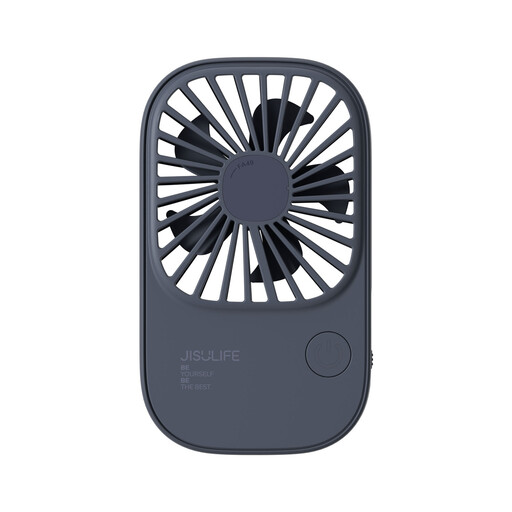
Why This Fits Their Persona: This lightweight option weighs 104g and suits commuters, office workers and shoppers who want a simple mini portable fan for bags, desks or short trips around the UK.
Its stated runtime is separated by speed: up to 14 hours on low, 9 hours on medium and 4 hours on high, rather than presenting one figure without context.
Three speed settings, USB-C charging, rear stand and lanyard; the 2,000mAh battery is suited to lighter everyday carrying.
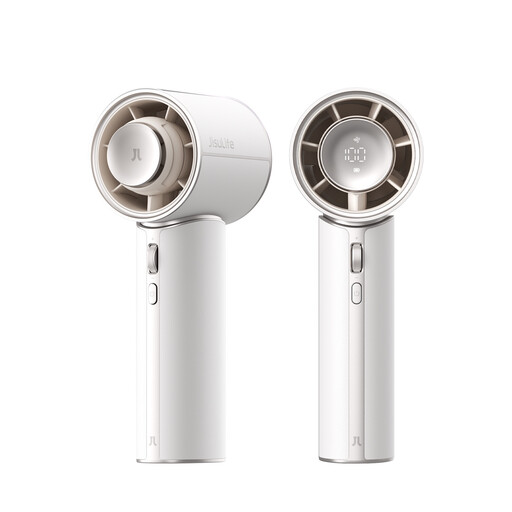
Why This Fits Their Persona: The PU leather finish, storage pouch and retractable lanyard suit gift buyers and adults who want a more refined personal fan for weddings, travel or office use.
The LED display shows wind speed, while a double tap reveals remaining battery. Its safety lock helps prevent accidental activation in a bag.
4250mAh battery, 1–100 speed adjustment, aroma pod with five spare pads and stated 3–30-hour operating time depending on settings.
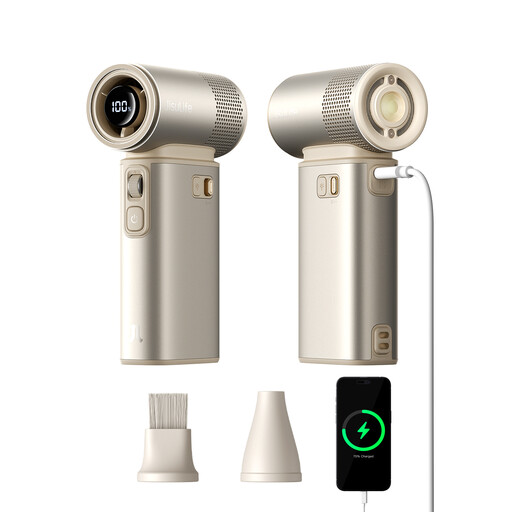
Why This Fits Their Persona: Its larger battery and additional functions suit campers, concert-goers and travellers who may need powerful airflow and extra device charging away from a socket.
The digital display shows speed and battery status, while the safety lock helps prevent activation during transport. The listed 25-hour maximum is linked to usage conditions.
9000mAh battery, 1–100 speed control, 18W two-way charging, torch and magnetic air nozzles for specified dust-removal or inflation tasks.
We have compiled a complete, real-time list of products that fully satisfy these strict selection criteria and UK safety regulations.
It can be useful for airport queues, transfers and warm destinations. Check the airline’s battery policy before travelling, keep the fan protected from accidental activation and pack it where the carrier allows lithium-battery devices. A compact travel fan with a safety lock is easier to store securely.
Battery runtime depends on capacity, speed, motor design and display or lighting use. The product specifications above range from several hours at higher speeds to more than 20 hours at lower settings. Treat “up to” figures as maximum estimates rather than guaranteed everyday performance.
Charging a small personal fan uses relatively little electricity compared with larger household cooling appliances. The actual cost depends on the battery capacity, charging frequency and your electricity tariff. Using a compatible USB charger and avoiding unnecessary overcharging can help maintain practical ownership costs.