
24/7 Customer Support

Free returns

Same-day & Next-day Delivery

Quality Guaranteed

Unlock Your Welcome Offers: FREE Delivery | Up to 80% OFF | Free 30-day JoyPlus trial
Download the APP
A portable handheld fan can make a noticeable difference on a crowded train, during a warm office day or while waiting outdoors. However, compact cooling products vary considerably. A fan that looks powerful in a listing may have limited battery life, awkward controls or no practical way to use it without holding it.
The right choice depends on how and where you expect to use it. Before buying, look beyond phrases such as “turbo”, “high-speed” and “long-lasting” and check the specifications that affect daily convenience.
A high RPM figure or maximum wind-speed claim describes the upper setting, not necessarily the experience across all modes. High-speed operation can also use considerably more battery power and create more noise.
For office work, applying make-up or sleeping, a lower setting may be more practical. For outdoor events or a hot commute, stronger airflow and a concentrated outlet may matter more. Compare the number of speed settings, stated runtime at different levels and charging requirements rather than focusing on one headline figure.
Manufacturers generally quote the longest runtime on the lowest setting. A rechargeable handheld fan advertised for 18 or 22 hours may run for far less at maximum power.
Look for a breakdown by speed where available. Battery capacity is also useful: a 5,000mAh battery generally stores more charge than a 2,000mAh battery, but it can make the fan heavier and increase charging time. Consider whether you need all-day cooling or simply a few short bursts between charging opportunities.
A pocket fan is convenient until you need both hands for a phone, luggage, coffee or make-up. Some models include a rear stand, while others support desk placement, a lanyard or neck-worn use.
Check whether the stand is integrated and stable, whether the fan folds securely and whether a carry strap is supplied. A handheld fan with stand can work at a desk or bedside table, while a neck fan or lanyard design is more suitable for shopping, festivals and outdoor activities. Do not wrap a lanyard tightly around a child’s neck and keep it away from young children.
Three speeds are sufficient for straightforward personal cooling, while five or more settings offer finer control. A high-speed handheld fan may list airflow in metres per second or motor speed in RPM. These figures are useful for comparison, but they should not be treated as a direct measure of comfort.
For shared offices, libraries and quiet spaces, check whether the listing provides a noise figure. If it does not, a lower speed is likely to be more suitable than relying on maximum power.
A USB rechargeable fan is convenient because it can be topped up from a laptop, power bank, car USB port or mains adapter. USB-C is increasingly useful because the cable is common across many modern devices, although the fan may not include a mains plug.
Check:
A battery-operated fan using AA batteries can be useful when you need immediate use without waiting for a recharge. It may suit travel or occasional use, but ongoing replacement batteries add to ownership cost.
For a mini portable fan, weight and dimensions affect whether it genuinely fits in a pocket or small bag. Models in the supplied range weigh from approximately 104g to 280g, so there is a clear trade-off between larger batteries, metal construction and portability.
Always inspect the grille and safety instructions. Keep fingers, hair and loose fabric away from moving blades, avoid moisture unless the product is specifically designed for it and stop using a fan if the battery or casing becomes damaged or unusually hot. For UK use, check the product listing and packaging for the applicable conformity marking, safety information, manufacturer details and charging instructions. Do not assume that a USB connection alone makes every charger suitable.
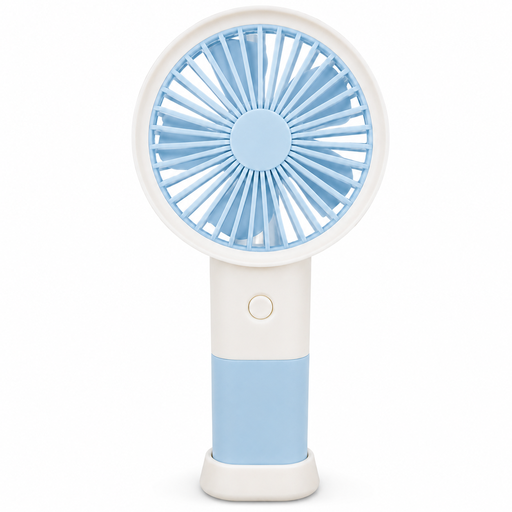
Why This Fits Their Persona: A straightforward option for commuters, office workers and shoppers wanting one compact fan for handheld and desk use.
The integrated table stand avoids relying on hand-held use, while three adjustable speeds are more informative than a single maximum-speed claim.
Type-C charging; three speed settings; supplied table stand for hands-free use.
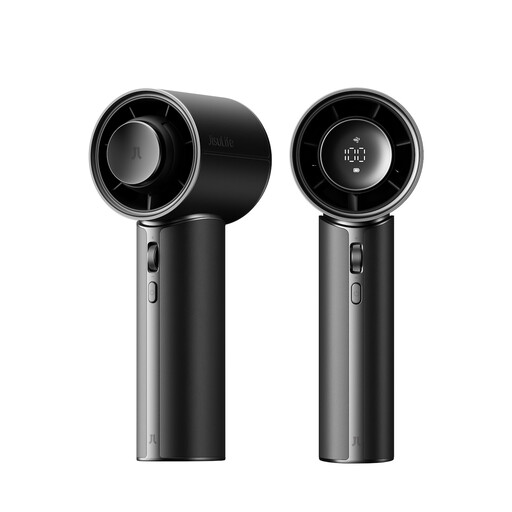
Why This Fits Their Persona: Suits users who value detailed control, a display and a more refined design for commuting, events or travel.
The LED display shows wind speed and battery information, helping prevent unexpected power loss; its stated runtime is given as a range rather than one unqualified figure.
4250mAh battery; 1–100 speed levels; retractable lanyard and storage pouch.
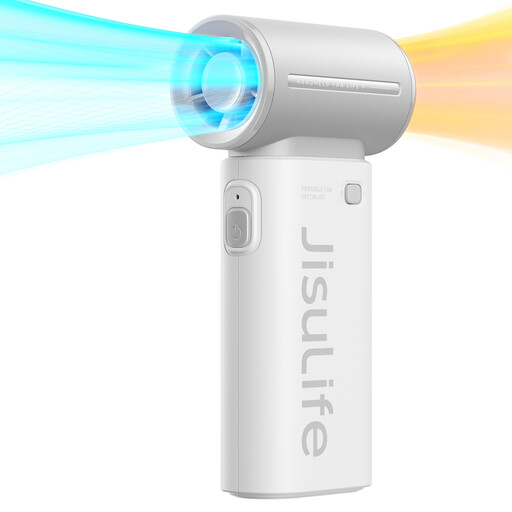
Why This Fits Their Persona: A practical match for festivals, camping, cruises and long outdoor days where battery capacity and stronger airflow are priorities.
Its stated runtime is supplied by speed setting, and five modes let users balance airflow, noise and battery use instead of running maximum power continuously.
5000mAh battery; five speed settings; compact design with safety lock and lanyard.
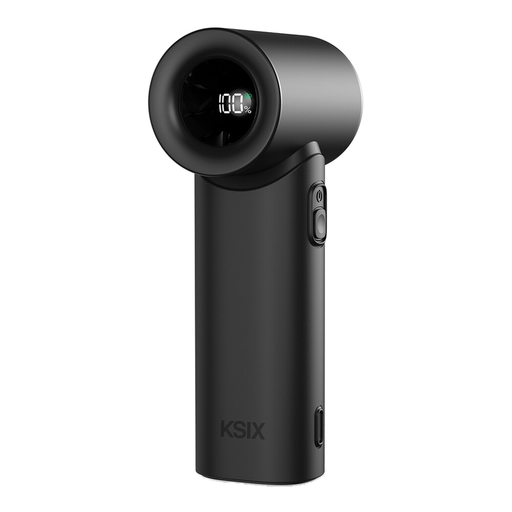
Why This Fits Their Persona: Suitable for users moving between a desk, public transport and outdoor settings who want a compact fan with visible battery information.
The five-speed layout offers more control than a basic two-mode fan, while the LED display helps users monitor the selected setting and battery.
3000mAh battery; USB-C charging; stated maximum air speed of 9.0m/s; handheld and desktop use.
We have compiled a complete, real-time list of products that fully satisfy these strict selection criteria and UK safety regulations.
Battery life depends on capacity, speed and features. Smaller 2,000mAh models may provide several hours at higher settings and longer operation at low speed. Fans with 5,000mAh batteries can offer extended low-speed runtime, but maximum-speed use will reduce it. Treat the stated figures as guidance and check whether they refer to the lowest setting.
Most USB rechargeable fan models can be charged from a compatible power bank, laptop or USB adapter. Confirm the required input, such as 5V/2A, and use the supplied or a suitable certified cable. Keep the fan and charger dry and disconnect charging if the product becomes unusually hot.
A small personal fan typically uses less power than a larger desk fan because its motor and airflow area are smaller. Actual running cost depends on wattage, usage time and your electricity tariff. For occasional cooling close to your face, a portable fan can avoid running a larger room fan continuously.