
24/7 全天候客户支持

免费退货

当日/次日达

品质保障

开启新人专享福利: 全场免邮 | 低至 2 折 | 免费试用 30 天 JoyPlus 会员
下载 Joybuy
A portable handheld fan can make a crowded train, warm office or outdoor concert considerably more comfortable. However, compact cooling products vary widely in battery capacity, airflow control and charging convenience. A low-cost-looking option may become frustrating if it needs constant recharging, produces only a weak breeze or switches on accidentally inside your bag.
The following buying guide highlights common traps and the specifications worth checking before choosing a rechargeable handheld fan for everyday use in the UK.
A listing may focus on motor speed, RPM or a “turbo” setting. These figures do not tell you how practical the fan will be at a desk, on public transport or during a concert. A very strong setting can also be noisy and drain the battery quickly.
Look for adjustable speed levels, rather than relying on a single maximum figure. A gentle setting is more suitable for an office or make-up application, while stronger airflow may be useful outdoors.
Battery claims usually depend on the lowest speed. A fan advertised with 18 or 30 hours of operation may run for considerably less at high power. Before buying, check whether the description gives a range, such as 3–18 hours or 3–30 hours, and consider which speed you are likely to use.
A portable fan with battery should also show how it recharges. USB-C is convenient because it can work with many laptop chargers, power banks and travel adapters, but always use a compatible charging accessory and follow the supplied instructions.
A pocket fan that lacks a safety lock can activate in a handbag or rucksack. This may waste battery power and cause unnecessary heat inside a confined space. A lanyard, pouch, stand or folding design can also make a significant difference during commuting and travel.
Check the dimensions and weight carefully. A fan weighing around 100–180g is easier to hold for longer periods, while a larger battery may add weight but provide longer operation.
Battery capacity is shown in mAh, but a higher number alone does not guarantee longer use. Motor power, airflow setting and electronic controls also affect runtime. For occasional journeys, a 2,000mAh USB rechargeable fan may be sufficient. Frequent travellers or outdoor users may prefer 4,250–5,000mAh capacity.
Also check the stated charging time. Some compact fans list approximately two to three hours for a full recharge, which may suit overnight or workplace charging.
A mini portable fan with three speed levels offers basic adjustment. Five levels provide more flexibility, while a 1–100 control system allows very fine changes. Turbo or concentrated airflow can be useful outside, but it is worth checking the noise information if you intend to use the fan in a library, office, church or quiet carriage.
Blade design affects the shape of the airflow, but specifications such as “nine blades” should be treated as supporting information rather than a guarantee of comfort. The useful question is whether the fan provides a suitable low setting as well as stronger cooling.
Choose a fan with a covered intake and outlet, particularly if it will be used around children or stored in a busy bag. Keep fingers, hair and loose fabric away from moving parts. Do not use a personal cooling fan near water or in heavy rain.
For UK buyers, check the packaging and instructions for relevant CE or UKCA marking where applicable, battery information, manufacturer details and charging guidance. These marks should not be assumed simply because a product is sold online. A seller’s warranty and clear support contact are also useful if the battery, charging port or motor develops a fault.
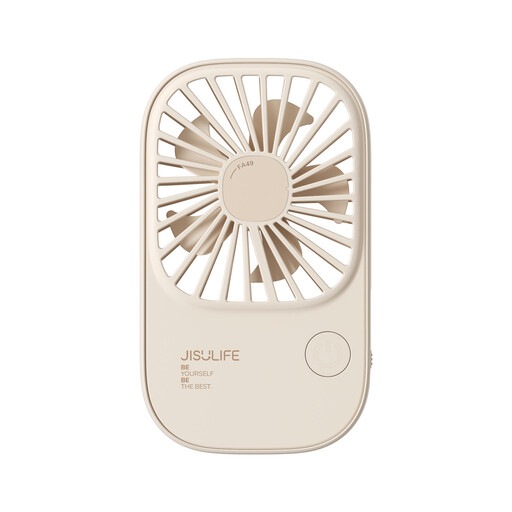
Why This Fits Their Persona: This slim 104g pocket fan suits first-time buyers who want simple cooling for commuting, office use, travel or make-up without carrying a larger device.
It provides three selectable speeds, a safety lock and a rear stand, avoiding the limitations of a single-mode fan that is difficult to store or use hands-free.
2,000mAh battery; USB-C charging; listed runtimes of up to 14 hours on the low setting; 104g weight.
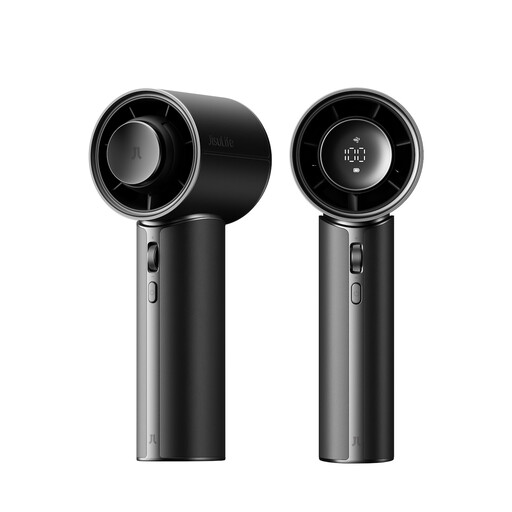
Why This Fits Their Persona: The PU leather finish, storage pouch and retractable lanyard make this suitable for weddings, offices, travel and shoppers seeking a more refined gift.
The digital display shows wind speed and battery information, while the safety lock reduces the chance of accidental activation in storage.
4250mAh battery; 1–100 speed adjustment; stated 3–30 hour runtime; aroma pod and five spare pads included, with oils not included.
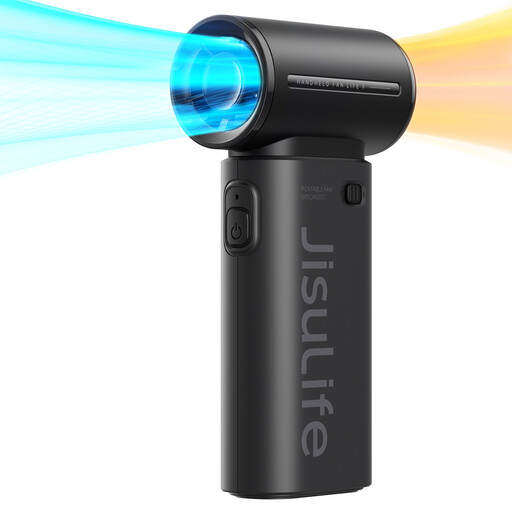
Why This Fits Their Persona: Its compact turbo format is suited to festival queues, concerts, camping, cruises and warm-weather travel where concentrated airflow is a priority.
Five wind settings allow lower-power use when noise matters, while a side safety lock helps prevent the fan starting inside luggage.
5,000mAh battery; stated runtime of up to 18 hours; 9-blade design; USB charging compatibility with power banks, laptops and car chargers.
We have compiled a complete, real-time list of products that fully satisfy these strict selection criteria and UK safety regulations.
Policies vary by venue. A small battery-powered fan is generally easier to carry than a mains-powered device, but event organisers may restrict items with large batteries, detachable blades or bulky accessories. Check the venue’s prohibited-items policy before travelling.
Runtime depends on battery capacity, motor power and speed. The products above list approximate ranges from several hours on higher settings to more than 18 hours on lower settings. Battery performance can gradually reduce with age, heat exposure and repeated charging cycles.
A USB rechargeable fan normally uses relatively little electricity compared with larger mains-operated appliances. Running cost depends on battery capacity, charging frequency and your electricity tariff. Charging from a laptop or power bank may be convenient, but it still draws energy from that source.