
24/7 Customer Support

Free returns

Same-day & Next-day Delivery

Quality Guaranteed

Unlock Your Welcome Offers: FREE Delivery | Up to 80% OFF | Free 30-day JoyPlus trial
Download the APP
A portable handheld fan can be useful on crowded trains, at outdoor concerts, during warm office days or while travelling. However, compact fans vary considerably in battery capacity, airflow control, charging convenience and stability. A product that looks powerful on a listing may be less practical when it becomes noisy, difficult to recharge or uncomfortable to hold.
This guide from the Joybuy Product Recommendation Officer explains which specifications deserve attention and matches several options to different UK shopping needs.
Marketing often highlights a maximum wind speed or motor speed. These figures can indicate potential output, but they do not show how the fan feels at every setting, how loud it becomes or how long the battery lasts at high power.
A high-speed handheld fan may be suitable for outdoor use, but a lower setting is often more appropriate in an office, on public transport or when sitting close to the fan. Look for several speed levels rather than relying on one headline figure.
Runtime is usually measured at the lowest speed. A fan advertised with 20 or 30 hours of operation may run for considerably less at maximum airflow. Check whether the product provides a range, such as three to 22 hours, and whether the battery indicator shows remaining charge.
A rechargeable handheld fan with a visible battery display can be more practical than one that stops without warning, particularly during long journeys or outdoor events.
A handheld model is not automatically suitable as a desk fan. Some need to be held continuously, while others have a folding body, table stand or lanyard. Consider whether you need hands-free cooling for working, applying make-up, watching a concert or camping.
Also check the grille, controls and charging port. Loose hair, fingers and objects should be kept away from moving blades, and a built-in lithium battery should never be opened or exposed to water or excessive heat.
Battery capacity is measured in mAh, but capacity alone does not determine runtime. Motor power, speed level and airflow design also affect consumption. A 3,000mAh fan may be lighter and quicker to charge, while a 5,000mAh or 9,000mAh model may be more suitable for extended outdoor use.
For everyday convenience, check:
Use a suitable, certified charger and follow the supplied instructions. If the device becomes unusually hot while charging, disconnect it.
Three settings may be sufficient for basic personal cooling. Five or more settings offer finer control between a gentle indoor breeze and stronger outdoor airflow. Some models list a maximum air speed in metres per second, while others focus on motor RPM or blade count. These measurements are useful for comparison, but they are not directly interchangeable.
A mini portable fan with a concentrated outlet may feel stronger at close range, whereas a wider outlet can distribute airflow more broadly. For concerts, commuting and outdoor events, a lanyard or carry strap can also make a difference.
A fan carried daily should fit comfortably into a handbag, work bag or rucksack. Weight matters when the fan is held for long periods or worn around the neck. A folding design can make storage easier, while a stand can turn a personal fan into a hands-free desk fan.
For flights and cruises, check the operator’s current rules for lithium-battery devices before travelling. Keep the fan dry, avoid blocking the grille and use the safety lock if one is provided.
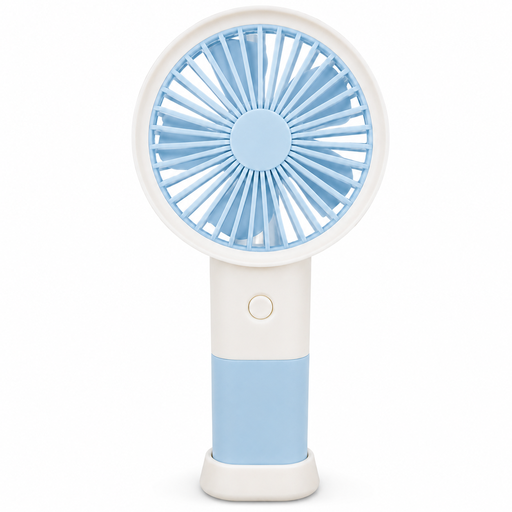
Why This Fits Their Persona: A straightforward choice for shoppers wanting a compact personal fan for commuting, home use or an office desk without unnecessary functions.
The three-speed control avoids reliance on a single maximum setting, while the table stand addresses the need for hands-free use.
Three speed settings, Type-C charging and an integrated table stand.
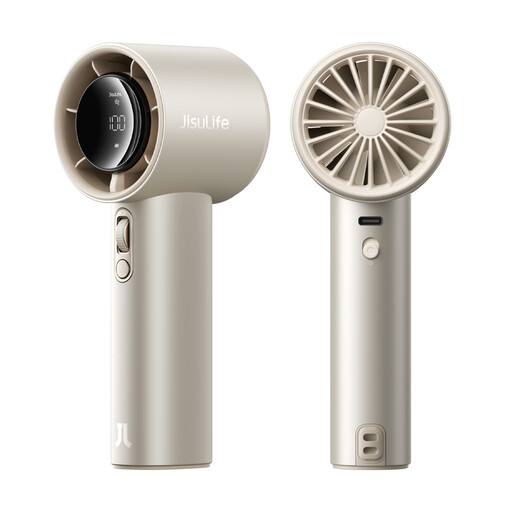
Why This Fits Their Persona: Suitable for shoppers who value a metal-style finish, detailed speed control and battery information for travel or daily carrying.
Its display helps you monitor charge, while 100 speed levels allow more precise adjustment than a basic three-speed fan.
5,000mAh battery, LED display and USB charging with stated fast-charge support.
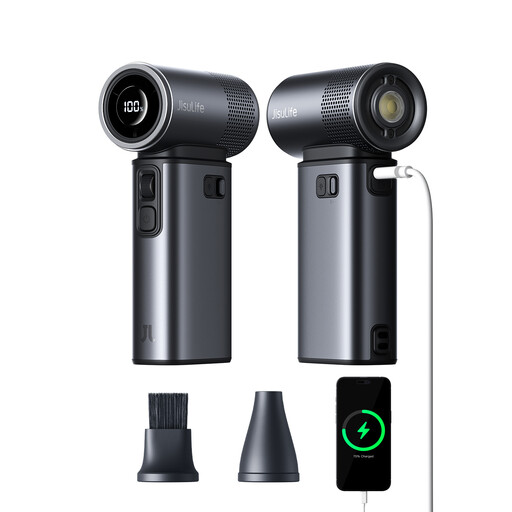
Why This Fits Their Persona: Designed for camping, concerts, beach trips and other situations where extended battery capacity and extra functions are useful.
The 9,000mAh battery and digital display address short-runtime concerns, although higher speeds will still use more power.
Up to 100 speed levels, a stated 25-hour maximum runtime, flashlight and power-bank function.
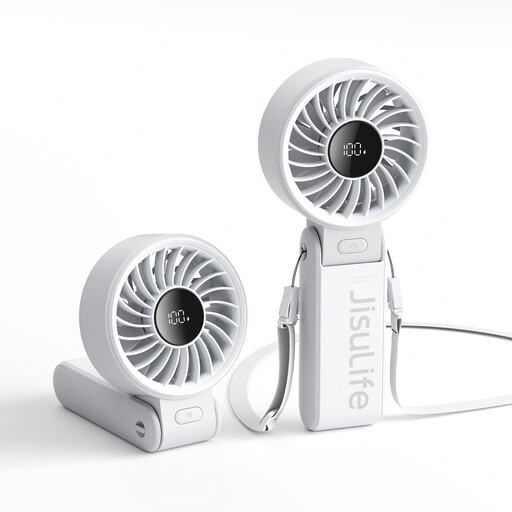
Why This Fits Their Persona: A practical travel fan for people who alternate between handheld, desk and hands-free cooling during workdays, shopping trips or outdoor events.
The folding 3-in-1 design avoids buying separate handheld, neck and desk fans, while the display makes battery status visible.
5 speed settings, 5,000mAh battery and stated operation of approximately 3.5 to 19 hours depending on use.
We have compiled a complete, real-time list of products that fully satisfy these strict selection criteria and UK safety regulations.
The electricity cost is generally modest because these devices use relatively low power, but the exact amount depends on the fan’s wattage, charging efficiency and usage time. A simple calculation is:
Power in kW × hours used × your electricity tariff = estimated running cost
For a USB rechargeable fan, the larger cost consideration is usually the purchase price and battery condition rather than electricity consumption. Avoid leaving the device charging unnecessarily, and follow the manufacturer’s charging guidance.
Portable fans with lithium batteries may be subject to airline and airport rules. Keep the device in hand luggage where required, protect it from accidental activation and check the specific airline’s current battery policy before travelling. A safety lock can help prevent unintended operation in a bag.
Only if it has a stable base, folding body or integrated stand. A standard personal fan may tip over or direct airflow poorly when placed on a desk. Check the product description for explicit desktop functionality and use it on a flat, dry surface.
Lifespan depends on battery cycles, motor quality, dust, moisture and handling. Keep grilles clear, do not immerse the fan and avoid operating it while damaged. Rechargeable batteries gradually lose capacity over time, so a model with a visible battery display and replaceable or serviceable parts, where available, can make ongoing use easier.