
24/7 Customer Support

Free returns

Same-day & Next-day Delivery

Quality Guaranteed

Unlock Your Welcome Offers: FREE Delivery | Up to 80% OFF | Free 30-day JoyPlus trial
Download the APP
A portable handheld fan can make a noticeable difference during a crowded commute, warm office day, festival or summer journey. However, compact cooling devices vary considerably in battery capacity, airflow control, charging design and ease of use.
The product that looks powerful on a listing may not suit your daily routine. A high-speed model can be noisy, while a lightweight mini portable fan may have a smaller battery. Before buying, it is worth separating useful specifications from vague promotional language.
A 5000mAh rechargeable fan generally stores more energy than a 2000mAh model, but the stated operating time depends on the selected speed. Higher airflow uses more power, so “up to” 18, 22 or 40 hours normally refers to a lower setting rather than continuous maximum output.
Check whether the listing provides:
A high-speed handheld fan may provide concentrated airflow outdoors, but maximum output can be louder and less comfortable at close range. For office work, make-up application or use on public transport, adjustable speeds are more practical than a single high-power setting.
A quiet portable fan should still be checked for published noise information. For example, one Life9 listing gives a noise range of 55–76dB at 30cm, depending on operation. This is more useful than an unqualified “quiet” description.
A fan without a stand, lanyard or safety lock may be awkward during travel. Consider whether you need:
Keep fingers, hair and loose items away from moving blades or air grilles. Built-in lithium batteries should not be punctured, dismantled, exposed to fire or charged with unsuitable equipment.
A USB rechargeable fan with a 2000mAh battery may suit short commutes, gym sessions or occasional make-up use. A 3000mAh or 5000mAh model is more suitable for long outdoor days, festivals, camping or travel where charging access may be limited.
Treat runtime figures as setting-dependent. A product offering 3–22 hours, for example, may provide the lower figure at a high speed and the longer figure at a gentle setting. A portable power bank can extend use, but remember that the fan and cable must remain dry.
Look for at least three speed settings if the fan will be used in different environments. Five speeds provide more control for moving between a quiet office, a warm train platform and outdoor conditions. Some high-speed handheld fan models offer up to 9–10m/s airflow according to their product specifications, although this should not be treated as a direct measure of comfort or room cooling.
A brushless motor can be a useful design feature, but buyers should still check the complete specification, including power consumption, charging time and noise information.
Dimensions and weight matter when carrying the fan daily. A device weighing around 100–180g is generally easier to hold for longer periods than a heavier metal-bodied model. A foldable design can also convert a handheld fan into a portable desk fan, while a lanyard allows hands-free carrying.
For UK travel, check the product’s dimensions before placing it in a small handbag or event bag. At concerts and sporting venues, venue rules may also restrict battery-powered devices, so check the organiser’s guidance in advance.
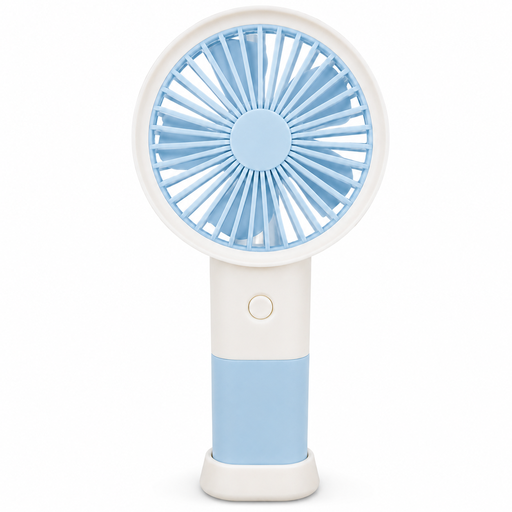
Why This Fits Their Persona: A straightforward choice for commuters, office workers and first-time buyers who want basic personal cooling without a larger battery or complex controls.
Three speed settings offer more flexibility than a single-output fan, while Type-C charging avoids relying on replaceable batteries.
Table stand for hands-free use; Type-C charging compatible with suitable laptops, power banks and adapters.
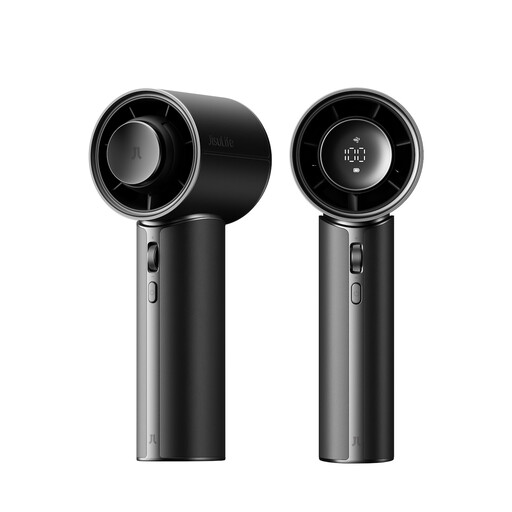
Why This Fits Their Persona: Suited to shoppers who value a refined appearance, detailed speed control and a compact travel format for offices, weddings or evening events.
The stated 3–30-hour range identifies the effect of speed settings, rather than presenting one unclear battery figure.
100-level airflow adjustment; digital display and retractable lanyard with storage pouch listed in the product details.
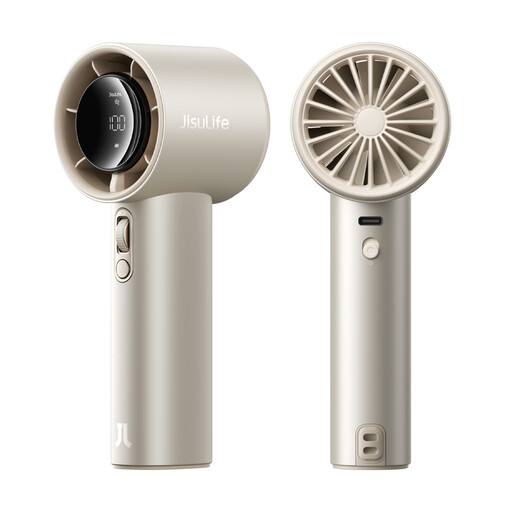
Why This Fits Their Persona: Designed for festival visitors, campers and travellers who prioritise a large battery, rapid charging and fine airflow control.
The listing specifies a 5000mAh battery and notes that operating time varies by level, making the capacity easier to assess realistically.
100 wind-speed levels; listed 1.5–2-hour charging time when used with a compatible 18W PD or QC adapter.
A neck fan can be useful when both hands are occupied, but it may feel less flexible than a handheld model. A foldable design is more practical for desk use, while an ultra-slim fan is easier to store in a small bag. For make-up users, a low setting and stable stand may matter more than maximum airflow.
Before ordering, compare the product dimensions, battery information, included accessories, charging instructions and safety warnings. Also check delivery details, returns information and the latest price rather than relying solely on headline claims.
We have compiled a complete, real-time list of products that fully satisfy these strict selection criteria and UK safety regulations.
Charging time varies by battery size and input. The listed products range from approximately two hours with compatible fast charging to four or five hours for some 5000mAh models. Use the supplied cable and a suitable certified adapter, and follow the manufacturer’s charging instructions.
A rechargeable fan generally uses relatively little electricity compared with larger cooling appliances, but the exact cost depends on its power rating, charging frequency and electricity tariff. A 4W or 5W fan will use less energy per hour than a higher-powered appliance. The rating is a guide rather than a precise household cost calculation.