
24/7 Customer Support

Free returns

Same-day & Next-day Delivery

Quality Guaranteed

Unlock Your Welcome Offers: FREE Delivery | Up to 80% OFF | Free 30-day JoyPlus trial
Download the APP
A portable handheld fan can make a crowded commute, warm office or outdoor event more comfortable without taking up much room. However, product listings often focus on impressive speed figures and maximum battery claims while leaving out details that matter in daily use.
The right choice depends on how you plan to use the fan, how often you can recharge it and whether you need hands-free cooling. This guide explains the main buying pitfalls, the specifications worth checking and our top recommendations for different lifestyles.
A listing may state 18, 22 or even 40 hours of cooling, but this figure usually applies to the lowest speed setting. Higher airflow levels consume more power, so practical runtime can be considerably shorter.
Look for a product that clearly states its operating range across different speeds. A 5000mAh rechargeable fan generally offers more capacity than a small 2000mAh model, although motor power and speed settings also affect how long it runs.
A high wind-speed figure can be useful outdoors, but it may feel too strong or noisy at a desk. Conversely, a low-power mini portable fan may be pleasant for close-range use but less effective at a concert, on a platform or during a walk.
Multiple speed settings give you more control. A 5-speed portable fan can provide a gentler breeze indoors and stronger airflow outside, while a three-speed model may offer simpler operation and a lighter design.
Weight, shape and controls affect convenience just as much as size. A fan that is compact but awkward to grip may become tiring during a long journey. Also check whether it includes a wrist strap, lanyard, stand or foldable body.
For air travel, remember that rechargeable fans contain lithium-ion batteries. Check your airline’s current rules before packing one in checked luggage, and keep the fan protected from accidental activation.
A USB rechargeable fan is convenient for UK travel because it can be powered from a laptop, power bank, car charger or USB adapter. Check:
Do not use damaged cables or chargers, and stop using a rechargeable fan if the battery becomes unusually hot, swollen or deformed.
Blade count and motor type can influence airflow, but they do not tell the whole story. A brushless motor may support efficient operation, while concentrated turbine-style airflow can suit outdoor use. Noise is equally important for offices, libraries and shared accommodation.
If you want a high-power mini fan, prioritise adjustable speeds and a stable grip. For desk use, a stand can be more useful than maximum airflow because it allows continuous cooling without holding the device.
A foldable handheld fan can be easier to position on a desk or pack into a small bag. Some models also include a lanyard for carrying or wearing around the neck. A portable neck fan is more suitable when both hands need to remain free, such as while walking, shopping or doing light outdoor activities.
A bladeless neck fan can reduce access to exposed rotating blades, but it still contains electrical and battery components. Keep it dry, avoid blocking the air inlets and follow the manufacturer’s instructions for charging and use.
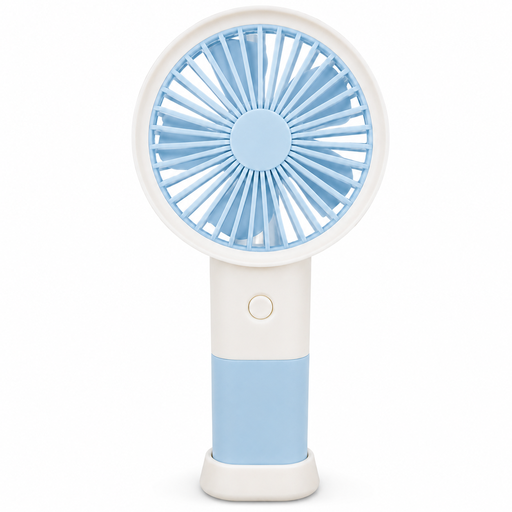
Why This Fits Their Persona: A practical everyday option for office workers, commuters and first-time buyers who want simple personal cooling without a larger wearable design.
The included table stand avoids the inconvenience of holding a fan continuously, while Type-C charging supports common modern cables and power sources.
Three speed settings, a desktop stand and USB Type-C charging in a compact format.
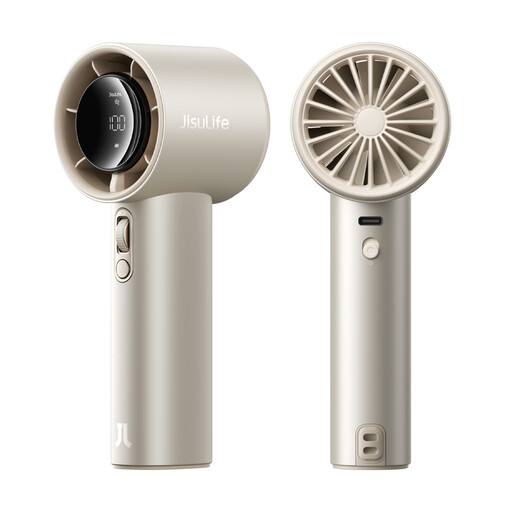
Why This Fits Their Persona: Suitable for shoppers who value detailed controls, a metal-look finish and visible battery information for travel or outdoor use.
The display shows wind speed and battery level, helping avoid guesswork. Its stated runtime varies by setting, so the headline maximum should not be treated as high-speed runtime.
100 adjustable wind levels, a 5000mAh battery and a stated 1.5–2-hour charging time with a compatible 18W input.
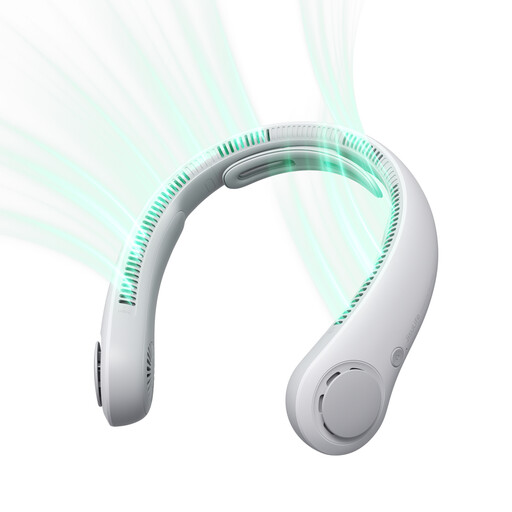
Why This Fits Their Persona: A hands-free choice for festivals, gardening, walking, commuting or light exercise when holding a personal cooling fan is inconvenient.
The neck-worn format removes the need to grip the fan, while the 2.5–16.5-hour stated range makes the difference between speed settings clear.
Bladeless construction, five speeds, USB-C charging and a 5000mAh battery.
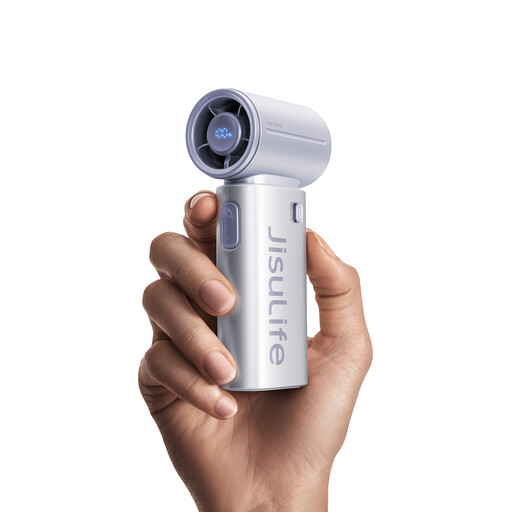
Why This Fits Their Persona: Its compact 180g format suits bags, pockets and lanyard carrying for journeys, cruises, outdoor events and warm venues.
The LED display provides live speed and battery information, and the product states a 3–22-hour range rather than presenting one runtime as universal.
Five speeds, 5000mAh capacity, digital display and a stated maximum wind speed of 10m/s.
We have compiled a complete, real-time list of products that fully satisfy these strict selection criteria and UK safety regulations.
Charge the fan on a stable, non-flammable surface and use the supplied cable or a compatible certified charger. Avoid leaving it in direct sunlight, inside a hot car or in damp conditions. Keep fingers, loose clothing and long hair away from exposed grilles while the blades are moving.
For longer battery life, avoid storing the device completely flat for extended periods. If you will not use it for several weeks, follow the manufacturer’s storage guidance and keep it somewhere cool and dry.
Rules vary between airlines and battery sizes. Most small personal fans are easier to carry in hand luggage, but you should check the airline’s current lithium-battery policy before travelling. Keep the device switched off and protected from accidental activation.
Runtime depends on battery capacity, motor power and speed. The products above state ranges from several hours to more than 20 hours at lower settings. High-speed operation normally uses more energy, so compare the complete runtime specification rather than only the maximum figure.
A USB fan generally uses a small amount of power compared with larger mains-powered cooling appliances. Your cost depends on the fan’s wattage, how often it is charged and your electricity tariff. Charging from a laptop or power bank may also be convenient when travelling, but the power still ultimately comes from a charged source.