Long-session kitchen-table writers
If you draft and revise reviews for extended periods, give key spacing, layout and writing feel more attention than the smallest possible footprint.


For regular book-review writing at a kitchen table, favour a layout you can use comfortably for drafting and editing over the smallest possible keyboard. A covered model makes sense if you often carry it with a tablet; a compact keyboard with quiet-key claims and device switching may suit shared-space writing, while a compact mechanical model is worth considering if its key feel and controls matter more to you. Check the exact layout, device connection and storage dimensions before buying.
If you draft and revise reviews for extended periods, give key spacing, layout and writing feel more attention than the smallest possible footprint.
If you start notes on a phone or tablet and finish on a laptop, check compatibility with each device and whether switching between them is straightforward.
If the kitchen table needs clearing after each session, consider the keyboard’s storage dimensions, protection when carried and power method alongside its typing layout.
For book-review writing at a kitchen table, assess the typing layout first, then weigh device connections, pack-away space and noise against the way you use the room.
| Concern | What to check | Who this matters to |
|---|---|---|
| Typing comfort and layout | Inspect key positions and the regional layout; decide whether a reduced key set suits your editing shortcuts. | When I spend a long session drafting and correcting a review, cramped keys or unfamiliar punctuation positions interrupt my writing. Roughly 36% of consumers put typing comfort and layout first. |
| Device compatibility | Check each operating system and connection method, plus how many devices the exact model can switch between. | If my notes begin on a tablet but the final draft is on a laptop, I need the keyboard to work with both without disrupting the changeover. Around 29% of consumers make device compatibility their primary concern. |
| Table space and storage | Compare the keyboard’s dimensions with the free table area and the place where you will store it. | I need to clear the table after writing, so a keyboard that fits where I put it away matters more than extra dedicated keys. About 21% of consumers prioritise space and pack-away portability. |
| Typing noise | Look for a quiet-key claim for the exact model rather than assuming compact or low-profile keys sound alike. | When someone else is using the kitchen, I want my typing to cause as little disturbance as possible. Roughly 14% of consumers place quiet typing first. |
Different regional layouts can put punctuation and symbols in unfamiliar positions. Keychron, for example, offers regional variants of the K3 Max.
If UK key positions matter to your writing, choose a listing explicitly labelled UK or UK-ISO and inspect its layout image.
A folio-style case may fit only specified tablet sizes and generations. A case made for one iPad Pro variant is not a substitute for a standalone keyboard used across different devices.
Match the tablet’s exact model and generation to the case compatibility list before ordering.
Size and low-profile keys alone do not establish typing noise. Logitech describes the Pebble Keys 2 K380s as having quiet keys, but that claim does not extend to every compact keyboard.
For a shared kitchen, assess the quiet-key information and switch option for the exact model you intend to buy.
A discarded keyboard is electrical waste, whether its power comes from removable batteries or a rechargeable battery.
GOV.UK advises taking waste electrical products to a local household waste recycling centre. If a lithium battery is removable, tape its terminals before recycling.
Offers both tablet-focused portable keyboards and compact keyboards for switching between writing devices.
Offers compact mechanical options for writers interested in connection choices and key customisation.
Offers slim Bluetooth keyboards for portable use with computers and tablets.
These keyboards offer different ways to write at a kitchen table, from full-size layouts to compact and folding designs. Compare each model’s stated layout and connections with the space and devices you use.
 Image unavailable
Consider this full-size option if you want a familiar layout for drafting and have room to leave a larger keyboard on the table.
The product name specifies a UK layout and wireless connection. Check its dimensions if it must be packed away after each session.
 Image unavailable
Consider its reduced layout if clearing the table and switching writing devices matter more than retaining a full-size key set.
The product name specifies 78 keys, a US layout, Bluetooth 5.0/4.0 and 2.4 GHz connections, with support for four devices. Check that the US key positions suit your punctuation habits.
 Image unavailable
This is an option for writing on a UK keyboard layout when a Bluetooth connection fits your device setup.
Check its table footprint and whether its key feel and typing sound suit a shared kitchen.
 Image unavailable
Consider this mechanical model if you value its connection choices and want to assess its switch feel for longer writing sessions.
The product name specifies a US layout and wired, Bluetooth and 2.4 GHz modes. Check the key positions, typing sound and physical dimensions before choosing it for a shared kitchen table.
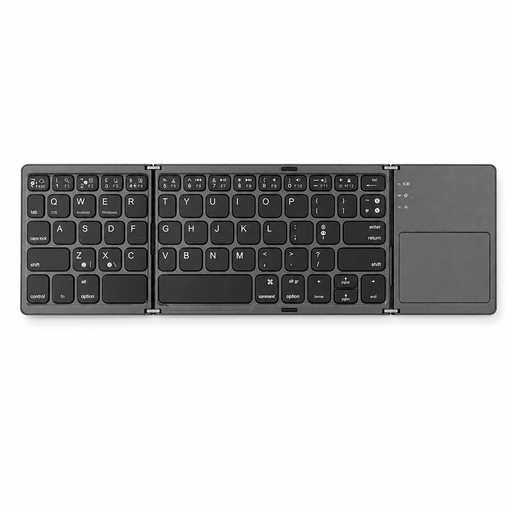 Image unavailable
Consider this model if you want a keyboard to use with different device types, but assess the layout before relying on it for extended drafts.
The product name lists Bluetooth connectivity and compatibility with computers, laptops, iPads and smartphones. Confirm the key positions and storage dimensions for your setup.
Not unless storage or carrying space matters more to you than the typing layout. For regular book-review drafts, compare key positions and the keys you use for editing before choosing an ultra-compact format.
Put the keyboard in pairing mode, open Bluetooth settings on your computer, tablet or phone, and select the keyboard; enter a pairing code if prompted. Logitech advises selecting a blinking device slot first on its Easy-Switch models.
Choose a UK layout if familiar UK punctuation and key positions are important to your writing. Check the exact variant rather than the product family name: Keychron lists regional versions of the K3 Max, including UK-ISO.
Take an old keyboard to an appropriate electrical-waste collection point rather than putting it in general household waste. GOV.UK says waste electrical products can be taken to a local household waste recycling centre; tape the terminals of a removable lithium battery before recycling it.