Tablet-first recipe editors
If you draft or revise recipes on a tablet or phone, check that a keyboard works with its operating system and is practical to carry between sessions.


Choose a portable keyboard that works with the device you use for recipes, and confirm its physical key layout before weighing up other features. A covered, travel-focused keyboard suits frequent tablet use; quiet keys matter when you will type near other customers, while longer laptop editing sessions may make key feel and shortcuts more important. Check a mechanical keyboard’s particular switches rather than assuming its compact size makes it discreet.
If you draft or revise recipes on a tablet or phone, check that a keyboard works with its operating system and is practical to carry between sessions.
If you make continuous edits at shared tables, typing noise and the space a keyboard occupies may matter as much as its wireless connection.
If substantial revisions are part of your routine, assess key feel, navigation and shortcuts rather than choosing by packed size alone.
Start with device compatibility and the physical layout, then decide which compromise matters most when you take the keyboard to a café: bag space, typing noise or comfort over a longer session.
| Concern | What to check | Who this matters to |
|---|---|---|
| Packability and protection | Check packed dimensions and weight, and whether a cover protects the keys in your bag. | I carry my keyboard between cafés and want it to fit alongside my recipe notes without exposing the keys. Around 31% of consumers put packability and protection first. |
| Quiet typing | Look for a quiet-key claim for the specific model; with mechanical boards, check the selected switch version. | When I make lengthy edits beside other customers, I want typing that will not draw attention. Roughly 25% of consumers give quiet typing priority. |
| Device compatibility | Confirm your operating system, physical key layout and connection method, including how switching works if you use several devices. | I move between the device holding my recipes and another device for final edits, so a usable connection and layout come first. Around 25% of consumers prioritise compatibility. |
| Long-session editing | Assess key feel, navigation keys and shortcuts; check lighting and switch options if they matter to your workflow. | When I revise a whole recipe collection, I need keys and controls I can work with for an extended session. Approximately 19% of consumers put editing comfort and workflow first. |
Size alone does not establish typing noise. Logitech describes the Pebble Keys 2 K380s as having quiet keys, whereas the sound of a mechanical keyboard depends on its switches.
Check the exact model’s quiet-typing information or the switch version before choosing a keyboard for close café seating.
A wireless connection does not settle whether the keyboard suits your operating system, preferred key layout or way of moving between devices.
Compare the stated compatibility and physical layout with the tablet, phone or laptop you actually use for recipes.
A covered travel keyboard addresses carrying and key protection; shortcut access, key feel and lighting may matter more during substantial text revisions.
Judge the layout against your longest likely editing session, not only the space available in your bag.
GOV.UK advises that electrical products and batteries marked with the crossed-out wheelie-bin symbol should go to an appropriate recycling collection point rather than household rubbish.
Check the collection options available for the keyboard and follow the applicable guidance if its battery is removable or damaged.
Its portable keyboard range offers different approaches to tablet travel, shared-space typing and longer editing sessions.
The K3 Max is a route for editors who specifically want a compact, low-profile mechanical keyboard.
The standard Magic Keyboard (USB-C) in British English is an option for a recipe-editing setup centred on compatible Apple devices.
These keyboards cover foldable and conventional Bluetooth options alongside compact mechanical layouts. For café recipe editing, compare the physical layout, device compatibility and typing noise of the particular version you intend to use.
 No image available
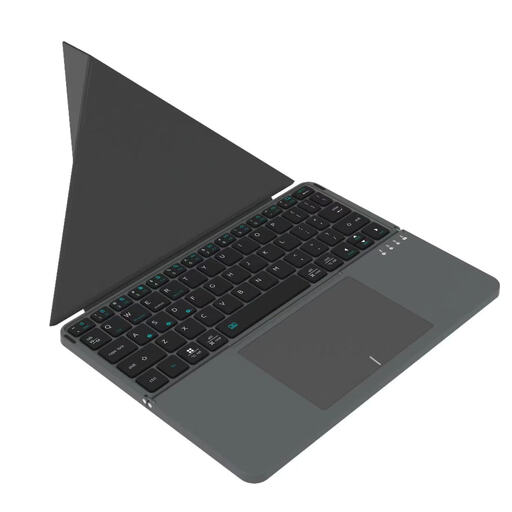
Consider this wireless option if you want a keyboard to carry for recipe editing across devices. Its title identifies Bluetooth and a UK variant; confirm the physical key layout and typing noise if either is decisive for you.
 No image available
Consider this keyboard if your recipes move between a computer and mobile devices. Its title identifies Bluetooth connectivity and use with computers, iPads and smartphones; check the key layout and feel before relying on it for lengthy edits.
 No image available
This compact mechanical option is worth considering if you prefer that format for longer recipe edits. The title specifies a 75% layout, Bluetooth, 2.4 GHz and wired modes, and RGB backlighting. Its US QWERTY layout may not match a preferred UK layout; check the switches and typing noise for café use.
 No image available
Consider this model if you want an 80% mechanical layout for editing and can check how its keys feel in use. The title specifies a gasket mount, Latte Switch-Pink variant and US QWERTY layout; confirm that layout and the typing noise before using it at a shared table.
 No image available
This 68-key mechanical option may appeal if you want a smaller keyboard on the café table. The title specifies Bluetooth 5.1 and wired modes, white backlighting and a US QWERTY layout. Check that the layout and switch sound suit your editing sessions.
Prioritise quiet typing if you expect to make continuous edits close to other customers. Logitech describes the Pebble Keys 2 K380s as having quiet low-profile keys; for a mechanical keyboard, check the sound of the particular switch version rather than judging by keyboard size.
Yes, if the particular keyboard supports each device’s operating system and your intended connection method. Logitech lists Keys-To-Go 2 for Android, ChromeOS, Windows, iPadOS, iOS and macOS wireless devices, with switching between up to three devices; check your devices and their OS versions against the model you choose.
It can suit you if mechanical key feel and customisation matter more than having the most discreet typing setup. Keychron lists a 75% layout and QMK/VIA customisation for the K3 Max, but its feel and sound depend on the selected switches.
Take an electrical product marked with the crossed-out wheelie-bin symbol to an appropriate recycling collection point rather than putting it in household rubbish, as GOV.UK advises. Check the relevant guidance for its battery, particularly if the battery is removable or damaged.