For planning across a laptop, tablet and phone, choose a standalone Bluetooth keyboard only after checking that its layout and supported devices match yours; for work near other library visitors, look for an explicit quiet-key description. A tablet keyboard case makes more sense if you use its specified iPad model and want an integrated trackpad and stand, while a compact mechanical keyboard is worth considering if extended writing and configurable shortcuts matter more to you than a discreet setup.
Who needs which keyboard?
Quiet shared-space event planner
If you draft agendas or sign-up information beside other library visitors, key noise deserves attention. Logitech describes the Pebble Keys 2 K380s as having quiet, low-profile keys; check whether the exact keyboard you choose meets your library’s expectations.
Multi-device volunteer coordinator
If schedules, messages and forms sit on different devices, check each device’s compatibility and whether switching between them would help. Logitech specifies three-device switching for both Keys-To-Go 2 and Pebble Keys 2 K380s.
Long-form planning writer
If event briefs and spreadsheets occupy much of your session, layout and shortcut control may matter more than minimum size. Keychron specifies a 75% layout, wired connection and configurable shortcuts for its K3 Version 3 ISO model; consider whether its mechanical keys suit the space where you will type.
What matters when choosing?
Decide where and on which devices you will type before choosing a format: a separate keyboard can move between compatible screens, while a keyboard case must fit its specified tablet.
Standalone Bluetooth keyboard
Choose it when: You move between compatible planning devices and want to position the keyboard separately from the screen.
Trade-off: A standalone keyboard does not itself provide a tablet stand, trackpad or protective case.
Tablet keyboard case
Choose it when: You use the specified iPad model and want the stand, trackpad and keyboard together; Apple lists these features for its Magic Keyboard for iPad Pro 11-inch (M5).
Trade-off: Its model-specific fit makes it unsuitable as a keyboard to move freely between different devices.
Compact mechanical keyboard
Choose it when: Extended writing and configurable shortcuts are priorities; Keychron offers these options on the K3 Version 3 ISO model.
Trade-off: Check the exact switches and their sound before choosing mechanical keys for a shared library space.
| Concern |
What to check |
Who this matters to |
| Key noise |
Look for a quiet-key description for the exact model and check the library’s expectations. |
When drafting agendas near other visitors, I want to avoid distracting them with key noise; roughly 42% of consumers put quiet shared-space typing first. |
| Device switching |
Check supported operating systems, connection methods and the number of devices the keyboard can switch between. |
If messages, forms and schedules are on different screens, I need a keyboard that works with the devices I use; around 33% of consumers prioritise cross-device use. |
| Writing control |
Check the physical layout and key type, plus any wired-mode requirement for configuring shortcuts. |
For substantial event briefs or spreadsheet work, I would give typing layout and shortcut access more weight; roughly 25% of consumers place extended-writing control first. |
What should you check before buying?
-
Assuming every compact keyboard has a UK layout
Key positions and symbols can differ. Logitech lists layout variants for Pebble Keys 2 K380s, while Keychron identifies UK-ISO versions of its K3 Version 3.
Confirm the exact English UK or UK-ISO variant rather than relying on a product-family name or photograph.
-
Choosing a keyboard case before checking the tablet
Apple’s Magic Keyboard for iPad Pro 11-inch (M5) is designed for a specified iPad model and has an iPadOS requirement.
Match your tablet’s exact model, screen size and operating-system version against Apple’s compatibility information.
-
Taking a small keyboard to mean a quiet one
Size and wireless connectivity do not establish how keys sound. Logitech describes the Pebble Keys 2 K380s as quiet, while a mechanical keyboard calls for a check of its particular switches.
Look for key-noise information about the exact variant and consider the expectations of the library where you will work.
-
Confusing a charging port with the typing connection
Apple specifies Bluetooth for its standalone Magic Keyboard (USB-C), alongside a USB-C port for charging and pairing. A port’s presence alone does not tell you how a different keyboard connects during use.
Check whether the model uses Bluetooth, a wireless receiver, a cable or more than one method, then match that method to your device.
Relevant brands to consider
Logitech
Its Keys-To-Go 2 and Pebble Keys 2 K380s are relevant to standalone, multi-device typing.
- Logitech specifies broad operating-system support and up to three-device use for Keys-To-Go 2; it describes Pebble Keys 2 K380s as compact, with quiet, low-profile keys and an English UK layout option.
- Neither of these standalone models provides an integrated tablet stand; check the precise layout and device support of the variant you choose.
Keychron
Its K3 Version 3 ISO model is an option for compact mechanical typing and configurable shortcuts.
- Keychron specifies a 75% layout, UK-ISO options, Bluetooth 5.2 and wired operation.
- Configuring keys or macros through Keychron Launcher requires wired mode in a supported browser. Check the selected switches for shared-space use.
Apple
Its keyboard options include a British English standalone Magic Keyboard and a model-specific iPad keyboard case.
- Apple specifies Bluetooth and USB-C charging for the standalone Magic Keyboard; its Magic Keyboard for iPad Pro 11-inch (M5) includes a trackpad and adjustable viewing angles.
- Check Apple’s device and operating-system requirements, particularly before choosing the iPad case.
Standalone keyboards on Joybuy
These standalone keyboards offer different physical layouts and connection options for event-planning work. Compare the exact key layout, device compatibility and suitability for typing near other library visitors before choosing.
 No image available
Targus EcoSmart full-size wireless keyboard (UK)
Consider this full-size option if you want a separate keyboard for planning documents and have room to carry it. The product name identifies a UK variant; check that its size fits your bag and library workspace.
View on Joybuy
 No image available
Hyper HyperSpace Next Bluetooth keyboard (UK, white)
Consider this Bluetooth option for a UK-layout planning setup. If you will carry it regularly or type beside other visitors, check its dimensions and key noise before choosing.
View on Joybuy
 No image available
AULA F75 75% mechanical keyboard, QWERTY US
Consider this 75% mechanical layout if you want a smaller keyboard for substantial typing. The named variant has a QWERTY US layout and offers wired, Bluetooth and 2.4G modes; check device support and the exact key sound for library use.
View on Joybuy
 No image available
Lofree OE907 65% keyboard, QWERTY US
Consider its 68-key mechanical layout if a compact standalone keyboard suits your planning work. The named variant lists Bluetooth 5.1 and a wired mode; check whether its QWERTY US layout and key sound suit your library tasks.
View on Joybuy
 No image available
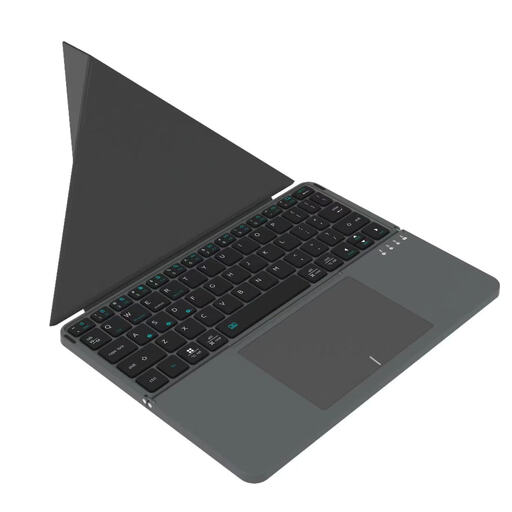
VoxorAI BOX1 Bluetooth keyboard (black)
Consider this Bluetooth keyboard if you plan to type on a compatible computer, tablet or phone. Check its physical key layout, the keys you need for event documents and its key noise before taking it into a library.
View on Joybuy
Common questions
Do I need a keyboard that switches between devices?
Device switching is useful if you regularly move between a phone, tablet and laptop while planning. Logitech specifies up to three-device use for Keys-To-Go 2 and three-device Easy-Switch for Pebble Keys 2 K380s; if you type on just one device, check its compatibility first.
Should I choose a standalone keyboard or an iPad keyboard case?
Choose a standalone keyboard if you need to type across compatible devices or position it separately from the screen. Choose a case for its integrated setup only after checking the exact iPad model and software requirement; Apple specifies iPadOS 17.4 or later for its Magic Keyboard for iPad Pro 11-inch (M5).
Is a compact mechanical keyboard unsuitable for a library?
Not necessarily, but compact size does not establish quiet operation. Check the exact switches and your library’s expectations; if low key noise is your priority, Logitech specifically describes the Pebble Keys 2 K380s as having quiet, low-profile keys.
What should I do with a keyboard at the end of its life?
Check your local authority or retailer for a suitable electrical-item collection route. The UK Office for Product Safety and Standards and Department for Environment, Food & Rural Affairs explain that waste electrical and electronic equipment rules aim to reduce disposal through landfill or incineration.


