For chapter summaries written across several devices, start with a compact Bluetooth keyboard whose maker describes its keys as quiet, and confirm that it supports each device you plan to use. Choose a UK-layout multi-mode keyboard if you also need a receiver or wired connection; consider a Mac keyboard or iPad keyboard case when its exact device fit matters more than switching between devices. A quiet-key claim does not override your library’s rules for the study zone.
Who needs which setup?
Quiet-zone chapter summariser
If you write long summaries in a shared study area, key noise and the rules for that particular zone matter alongside typing comfort. Logitech describes the Pebble Keys 2 K380s as having quiet low-profile keys; the University of Reading and the University of Nottingham publish rules for noise in their respective study spaces.
Multi-device student note-taker
If you move notes between a laptop, tablet and phone, check compatibility and how you switch connections. Logitech describes three-device switching for the Pebble Keys 2 K380s, while Keychron lists Bluetooth, 2.4 GHz and wired modes for the B1 Pro.
iPad- or Mac-first library worker
If you mainly write on one Apple device, a device-focused keyboard may suit your workflow. Apple’s Mac keyboard and iPad keyboard cases serve different devices, so match the exact Mac or iPad model and the British English layout before ordering.
What matters when choosing?
Start with the rules for your study zone and the devices you will use. Then weigh carrying size, connection options and keyboard layout against the length of your writing sessions.
| Concern |
What to check |
Who this matters to |
| Typing in the study zone |
Check the zone’s current rules and whether the maker describes the keys as quiet. Neither a quiet-key claim nor low-profile keys establish permission to type in a silent area. |
If I am drafting a long summary near other readers, I need to avoid disturbing them and be ready to move if necessary. Around 42% of consumers would put quiet-zone suitability first. |
| Carrying and connecting |
Check the keyboard’s size, device compatibility and switching options. Decide whether Bluetooth alone works for your devices or you also need a 2.4 GHz receiver or cable. |
When I read on one device and write on another, I want a keyboard I can carry and connect without interrupting my notes. For around 33% of consumers, that flexibility would be the primary need. |
| Device fit and layout |
Confirm the exact device model and UK or British English layout. For an iPad case, match the named iPad generation and screen size. |
If I write mainly on one Mac or iPad, I may value features tailored to it, but a case that does not fit is no use to me. Exact device integration would come first for around 25% of consumers. |
Mistakes to avoid
-
Assuming quiet keys are allowed in every silent zone
A manufacturer’s quiet-key description concerns the keyboard, not permission to use it. The University of Reading and the University of Nottingham set requirements for their own quiet and silent study spaces.
Read the signage or current policy for your zone, type with consideration for others and move to another area if your work causes a disturbance.
-
Assuming an ISO layout is a UK layout
ISO keyboards come in different regional variants. An unfamiliar placement of symbols can be inconvenient when entering citations and punctuation.
Check that the exact variant is labelled UK layout or British English; Keychron lists multiple regional ISO layouts.
-
Choosing an iPad keyboard case by appearance
Apple identifies keyboard cases by compatible iPad model and size. A similar-looking case is not enough to establish that it fits your device.
Match your iPad generation and screen size to the keyboard case’s stated compatibility before ordering.
Brands to consider
Logitech
For a compact keyboard used with several study devices, Logitech describes the Pebble Keys 2 K380s as portable, with quiet low-profile keys and three-device Easy-Switch operation.
- Logitech lists support for Windows, macOS, iPadOS, iOS and Android for this model.
- A compact layout may not suit someone who needs full-size key spacing, and quiet keys do not determine a library’s rules.
Keychron
For study across devices with different connection needs, Keychron offers a UK-layout version of the B1 Pro.
- Keychron lists Bluetooth, 2.4 GHz and wired connection modes for the B1 Pro.
- Check the exact regional layout and key noise separately; connection choice does not establish how quiet typing will be.
Apple
For a Mac- or iPad-focused setup, Apple offers a USB-C Magic Keyboard for Mac and separate keyboard cases for named iPad models.
- Apple describes automatic Mac pairing for its USB-C Magic Keyboard; its compatible iPad keyboard cases offer device-specific features such as a trackpad and adjustable viewing angle.
- Check the precise device and keyboard-case compatibility. A device-specific option may not suit regular switching between different devices.
Joybuy keyboards for library study
These keyboards offer compact or full-size layouts for drafting chapter summaries. Compare their stated layouts and connection modes with your own devices, and follow the rules for your library study zone.
 No image available
Targus EcoSmart full-size wireless keyboard (UK)
Consider this if you want a UK-layout board for writing longer summaries and have room to carry a full-size keyboard. Check key noise and device compatibility for your own setup before using it in a quiet study area.
View on Joybuy
 No image available
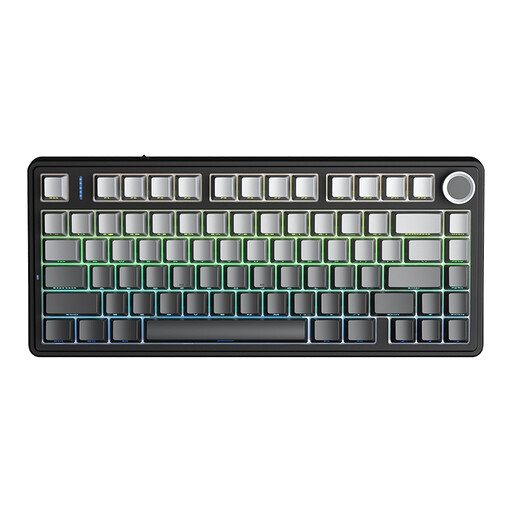
AULA F75 PRO wireless mechanical keyboard, 75% US layout
The 75% layout is worth considering if you want a smaller board with a choice of connections. Its title specifies Bluetooth, 2.4 GHz and wired modes, but also a US rather than UK layout. Check device compatibility and key noise before choosing it for library work.
View on Joybuy
 No image available
Ticktype DP104 Gecha Gray keyboard, silent tactile switches, US layout
Consider this for a full-size writing setup if its larger format suits what you carry. The title specifies 108 keys, Bluetooth, 2.4 GHz and USB-C wired modes, plus an 8000 mAh battery capacity; that capacity does not establish runtime. Its silent-tactile description is not a measured noise level, and the layout is US.
View on Joybuy
 No image available
AULA F99 Light Blue wireless keyboard, Reaper switches, US layout
This is an option if you want wired, Bluetooth and 2.4 GHz connections and can accommodate a larger keyboard. The title specifies a US QWERTY layout, so confirm that its key placement suits your writing, along with device compatibility and key noise.
View on Joybuy
Common questions
Can I use a portable keyboard in a silent library area?
Check the rules for the exact library and study zone before typing there. The University of Reading distinguishes silent and quiet areas, while the University of Nottingham describes its silent spaces as places for silent individual study. If your typing disturbs others, move to a suitable area.
Is Bluetooth enough, or do I need other connection modes?
Bluetooth may be enough if every device you intend to use supports it. If a particular computer needs a receiver or cable connection, consider a keyboard with 2.4 GHz or wired mode and check that the exact variant has the layout you want.
Should I choose a UK keyboard layout for chapter summaries?
Choose a confirmed UK or British English layout if familiar key placement for punctuation and symbols matters to your writing. Do not treat “ISO” alone as confirmation of a UK layout; Keychron lists several regional ISO variants.
When does an iPad keyboard case make sense?
An iPad keyboard case makes sense when you write mainly on an exactly compatible iPad and want features such as an integrated trackpad and adjustable viewing angle. Match the named iPad model and size before ordering; if you regularly move between different devices, check whether a standalone multi-device keyboard would be more useful.


