Small-desk archive organisers
If your mouse, card reader, storage drive or photo notes share the desk, measure the space left for a keyboard. A model you can put away between sessions may also suit a desk used for other tasks.


Choose a travel-sized keyboard if leaving room for a mouse and putting the keyboard away are your priorities. For frequent file naming, tagging and captions, consider a compact desk keyboard with the layout and visibility you need, provided its measured footprint fits. Check device compatibility, British-English layout and power type before deciding.
If your mouse, card reader, storage drive or photo notes share the desk, measure the space left for a keyboard. A model you can put away between sessions may also suit a desk used for other tasks.
If archive work moves between a computer, tablet and phone, check support for each device and operating-system version. Bluetooth pairing and switching between paired devices are separate features.
If you regularly type filenames, tags and captions, consider the key layout and whether you need illumination as well as the keyboard’s footprint. The lightest model is not automatically the right one for repeated typing.
For photo-archive work on a small desk, establish the space available beside your pointing device, then check the layout and connection requirements of every device you plan to use.
| Concern | What to check | Who this matters to |
|---|---|---|
| Desk space and storage | Measure the clear area beside your mouse and archive equipment; compare the exact model’s width and depth. | I need room to move the mouse and connect photo-storage equipment, and I want to put the keyboard away afterwards. Around 40% of consumers put desk space and portability first. |
| Moving between devices | Check supported operating systems, pairing capacity and the method for switching devices. | When I move from a computer to a tablet or phone, I want to avoid pairing the keyboard again each time. Around 30% of consumers give multi-device use their highest priority. |
| Repeated typing | Consider the key layout, available desk width and whether the exact model has backlighting. | Entering many filenames, tags and captions makes the typing arrangement more important to me than minimum carry weight. Around 20% of consumers chiefly prioritise sustained metadata entry. |
| Apple-device fit | Match the keyboard to your exact Apple device and software version; confirm the layout and charging connection. | If my archive stays on Apple devices, I want a keyboard that fits that setup without assuming it also works elsewhere. Around 10% of consumers put Apple-device compatibility first. |
A keyboard that is easy to carry may still crowd the mouse or an external drive during photo sorting.
Measure the usable keyboard area and compare the chosen variant’s width and depth before weighing up extras such as lighting.
Operating-system and version requirements differ. Microsoft specifies Windows 10 or 11 with Bluetooth 4.0 or later for its Designer Compact Keyboard, while Apple publishes an Apple-device compatibility list for Magic Keyboard (USB-C).
Check the manufacturer’s requirements against each device you intend to use, and confirm the keyboard layout.
Logitech Keys-To-Go 2 uses replaceable CR2032 cells, whereas Logitech MX Keys Mini and Apple Magic Keyboard (USB-C) use USB-C charging. Choose the arrangement that works where you sort photos.
Plan for replacement cells or access to a suitable charging cable. GOV.UK guidance says batteries and electrical products should not go in household rubbish; use an appropriate collection point at end of life.
Replaceable cells will need changing during the keyboard’s life; a rechargeable model needs access to charging power.
Its documented models span a travel-sized keyboard, a compact multi-device option and an illuminated compact desk keyboard.
Magic Keyboard (USB-C) is a freestanding option for a supported Apple-device archive setup.
Designer Compact Keyboard is a reference point for a Windows-first Bluetooth setup.
These keyboards offer foldable or compact layouts relevant to a photo-archive desk. Their layouts and connection options differ, so check the physical footprint and device requirements of the particular model you are considering.
 No image available
Consider this model if you want a Bluetooth keyboard that can be put away between archive sessions. Check its unfolded footprint, key layout, operating-system compatibility and device-switching behaviour for your setup.
 No image available
The backlit, compact layout is worth considering if key visibility matters during photo tagging. The title specifies 68 keys, Bluetooth 5.1 and wired operation; check whether its US layout suits your typing and how it switches between devices.
 No image available
Consider its compact layout and RGB backlighting if you enter photo details at a desk. The title lists wired, Bluetooth and 2.4G modes; confirm its width and depth, operating-system support and suitability of the US layout before choosing it.
 No image available
Consider this model if its layout provides the keys you use for archive work, but measure the space available before committing to it. The title specifies a US QWERTY layout and wired, Bluetooth and 2.4G modes; confirm its footprint and compatibility with your devices.
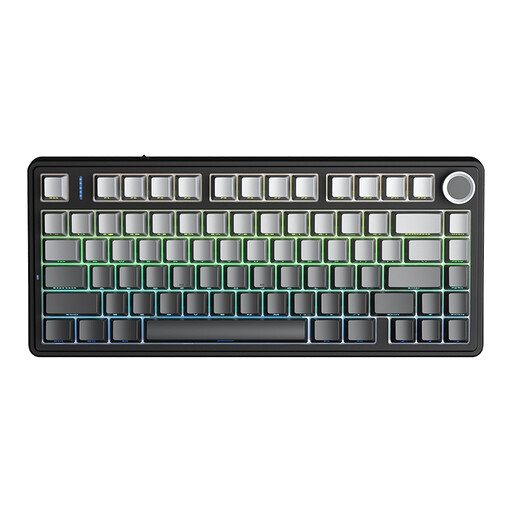 No image available
This compact-layout option may suit a desk where backlit keys matter for photo labelling. The title specifies RGB backlighting, hot-swappable switches and Bluetooth, 2.4G and wired modes; check its dimensions, device compatibility and US layout against your needs.
Choose by the space left after positioning your mouse and any storage equipment, not by a “mini” label. Logitech Support specifies Keys-To-Go 2 at 250 mm by 105 mm; Apple specifies Magic Keyboard (USB-C) at 27.89 cm by 11.49 cm. Compare the dimensions of the exact model you intend to buy, while allowing for the typing layout you need.
Yes, if the exact keyboard supports all three devices and their operating-system versions. Logitech lists broad platform compatibility for Keys-To-Go 2 and describes three-device switching for Pebble Keys 2 K380s; Apple publishes an Apple-device compatibility list for Magic Keyboard (USB-C). Check pairing capacity and the switching method separately from Bluetooth support.
Choose the power arrangement that is easier to maintain where you use the keyboard. Logitech specifies two replaceable CR2032 cells for Keys-To-Go 2, while MX Keys Mini and Apple Magic Keyboard (USB-C) use USB-C charging. Allow for replacement cells or access to a suitable charging cable, as applicable.
Take batteries and electrical products to appropriate recycling collection points rather than putting them in household rubbish, as GOV.UK guidance advises. If a battery cannot be removed, recycle the keyboard as electrical waste.