Tablet-and-phone site planners
You record measurements, review plans and send updates away from a fixed desk. A keyboard that travels easily must also work with the phone or tablet you actually use.


For renovation notes and supplier messages typed mainly on a phone or tablet, choose a portable keyboard whose compatibility and layout match that device. If you regularly move between devices, prioritise switching; for longer budgets and specifications, consider a larger layout if you have room to carry and use it.
You record measurements, review plans and send updates away from a fixed desk. A keyboard that travels easily must also work with the phone or tablet you actually use.
You use a phone for messages, a tablet for drawings and a laptop for documents. Switching between paired devices may matter more to you than the smallest keyboard footprint.
You spend longer sessions comparing quotes, maintaining a budget or writing specifications. Familiar key spacing and the right layout may outweigh minimum carrying size.
Start with the devices you will type on and where you will use the keyboard. Then decide whether easy transport, switching between devices or more room for sustained typing is your main priority.
| Concern | What to check | Who this matters to |
|---|---|---|
| Portable tablet and phone typing | Check compatibility with your device and whether the chosen keyboard includes a protective cover. | If I take measurements and send updates while moving between rooms, I need a keyboard that is practical to carry and works with my device. About 40% of consumers put portable tablet-and-phone typing first. |
| Switching between devices | Check the supported device count and how the keyboard switches between paired devices. | When plans are on my tablet but messages and budgets are on other devices, I want to change where I type without disrupting the task. Around 30% of consumers give device switching top priority. |
| Layout for budgets and specifications | Confirm the exact British English or UK-ISO variant and whether its size fits your work surface. | For a long session entering quantities and writing specifications, I would rather have a familiar layout than minimise bag space. Roughly 20% of consumers prioritise that typing arrangement. |
| Exact Apple-device fit | Match the full device model and generation; decide whether you need a standalone keyboard or a fitted case. | If my planning stays on a particular iPad, a case that fits that model matters more to me than broad compatibility. About 10% of consumers make exact Apple-device fit their primary concern. |
A different physical layout can interrupt repeated entry of measurements, figures and symbols.
Check that the exact variant you select is labelled British English or UK-ISO; a UK product page alone does not identify its key arrangement.
Apple's Magic Keyboard for iPad Pro is made for named device models, so a similar-looking iPad may not fit.
Compare the full iPad model and generation with Apple's compatibility list before ordering.
A mismatched case can leave you needing a compatible keyboard or a separate stand.
A mini format is easier to accommodate on a restricted surface, but longer quote and specification sessions may call for a different layout.
Decide whether frequent carrying or sustained typing takes priority, then compare the dimensions and key arrangement of the variants you are considering.
GOV.UK advises using appropriate collection routes for electrical products and batteries marked with the crossed-out wheelie-bin symbol.
Check your local electrical-waste and battery collection options when replacing a keyboard.
Relevant if you are comparing a covered keyboard for mobile devices with a compact keyboard for switching between devices.
Relevant for a compact keyboard that may suit a restricted temporary work surface.
Relevant when longer planning sessions justify carrying a full-size keyboard.
Relevant when planning centres on a confirmed Apple device rather than a keyboard intended to move freely between different systems.
These keyboards offer choices for renovation notes and longer planning sessions. Compare the space you can spare for a keyboard with the devices and layout you need before choosing a variant.
 No image available
Consider this Bluetooth keyboard for renovation planning across the devices you intend to use. The name identifies a UK variant; confirm its exact key arrangement and device compatibility before ordering.
 No image available
The full-size format is worth considering if budgets and written specifications take priority over minimum carrying size. The name identifies a UK wireless variant; check its exact key legends and connection requirements.
 No image available
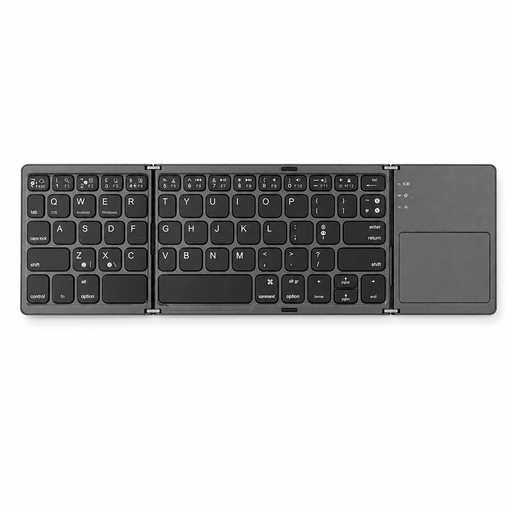
For notes away from a fixed desk, consider this Bluetooth model if it matches the device you will take with you. Check the key layout and whether it can switch between your intended devices if that is central to your workflow.
 No image available
The stated UK layout makes this a keyboard to consider for planning documents when you have room to use it. Confirm that its connection and operating-system compatibility meet your needs before relying on it with a phone or tablet.
Choose one if it is the layout you already use for frequent measurements, quotes and notes. Check the exact variant: Apple lists a British English Magic Keyboard, while Keychron identifies UK-ISO options for the B6 Pro.
Yes, if the exact keyboard supports each device and its operating system. Logitech lists broad operating-system compatibility and switching among up to three devices for Keys-To-Go 2; check the compatibility list and switching method for whichever model you choose.
Check your employer's or contractor's device policy before pairing it. The National Cyber Security Centre notes that peripherals can provide another route to a device and its data, so use approved equipment and remove old pairings when the keyboard changes hands.
Use an appropriate electrical-waste collection route rather than putting a keyboard bearing the crossed-out wheelie-bin symbol in household rubbish. GOV.UK also advises collecting batteries separately where they can be removed.