People who make cards on several devices
If you edit cards on a laptop, tablet and phone, look for compatibility with each device and a way to switch between them. A keyboard made solely for one tablet would give you less flexibility.


Choose a compact Bluetooth keyboard if you make revision cards on several devices or expect to change tablets. If you work mainly on one iPad, a keyboard case can combine typing and viewing support, but only if it fits your exact model. In either case, check device compatibility, the physical key layout and whether you will comfortably carry the keyboard to study sessions.
If you edit cards on a laptop, tablet and phone, look for compatibility with each device and a way to switch between them. A keyboard made solely for one tablet would give you less flexibility.
If you regularly take a tablet or phone to a library, classroom or on a journey, consider the keyboard’s carrying size and how its keys will be protected in your bag, as well as how it feels to type on.
If one iPad is your main revision device, a compatible keyboard case may provide viewing support and protection alongside typing. Check the particular case for a trackpad if you want one; these features vary by model.
Choose it when: You make cards on more than one compatible device or want to keep the keyboard when you change tablets.
Trade-off: You may need to carry a separate tablet stand or case, and each device must support the keyboard’s connection method.
Choose it when: You prepare cards mainly on one compatible iPad and want the keyboard and viewing support together.
Trade-off: A fitted case is tied to specified iPad models rather than serving as a general keyboard for a phone or laptop.
For consumers preparing revision cards across phones, tablets and laptops, these four needs help separate the connection choice from the questions of carrying, typing and tablet fit.
| Concern | What to check | Who this matters to |
|---|---|---|
| Device compatibility and switching | Check support for each device and operating system, the connection method and whether the keyboard can switch between paired devices. | If I edit cards on both a laptop and a phone, changing keyboards would interrupt my work. Around 31% of consumers put cross-device use first. |
| Carrying and key protection | Compare the listed dimensions with your bag and check whether a cover or case is included. | When I take revision materials between study locations, the keyboard needs to fit alongside my device without its keys being exposed. Carrying convenience comes first for around 31% of consumers. |
| Typing feel and disturbance | Check the key layout, profile and available information about typing noise; confirm that the keys you use in your card-making software are accessible. | If I enter many short cards in a shared study space, I care about comfortable keys and how much typing disturbs others. Around 23% of consumers prioritise that typing experience. |
| Integrated iPad setup | Match the case to the exact iPad model and generation, then check whether it has the viewing positions and trackpad you want. | With one iPad for most of my revision, I would rather have a supported screen and keyboard in one case than pack separate accessories. That integrated setup is the main need for around 15% of consumers. |
A keyboard can support one operating system or connection method without supporting all of yours. Microsoft says a Windows computer needs Bluetooth to pair a Bluetooth device.
Check the keyboard’s stated compatibility against each phone, tablet or computer you intend to use. If a computer lacks Bluetooth, check whether a suitable adapter or receiver-based keyboard meets your needs.
Fitted keyboard cases are made for particular iPad models and generations; a matching screen size does not establish compatibility.
Find your exact iPad model and generation, then compare them with the case manufacturer’s compatibility list before ordering.
A small keyboard can have a different key arrangement from your usual laptop, which matters when you repeatedly enter and edit cards.
Check the physical layout and the keys or shortcuts your card-making software needs. If you study around others, look for information about the particular keyboard’s typing noise rather than assuming compact means quiet.
GOV.UK advises that electrical products and batteries should not go into household rubbish when they no longer work.
Use an appropriate electrical-waste recycling route for the keyboard and a suitable battery collection route for any removable batteries.
These brands illustrate different keyboard formats; the relevant features and compatibility still depend on the individual model.
Logitech offers separate compact keyboards, including the Pebble Keys 2 K380s and the tablet-focused Keys-To-Go 2.
Apple’s iPad keyboard accessories are relevant when a compatible iPad is the main device for preparing cards.
Rapoo’s E9600M is an example of a computer-focused keyboard offering both Bluetooth and a 2.4 GHz receiver connection.
These choices cover separate wireless keyboards for revision-card typing and a fitted iPad keyboard case. Choose by the devices you actually use: a full-size keyboard may suit a more settled workspace, while a compact layout or fitted case addresses a different carrying or tablet setup.
 No image available
Consider this full-size option if you usually prepare cards at a desk rather than carrying a keyboard to every study session.
The product name identifies a wireless keyboard and a UK variant. Check the physical key layout on the exact listing if British-English key placement matters to you.
 No image available
This is a separate Bluetooth keyboard to consider if you want to type cards without choosing a fitted tablet case.
Check that your intended devices support its connection and confirm the physical key layout; the UK variant in the name does not by itself settle the key legends.
 No image available
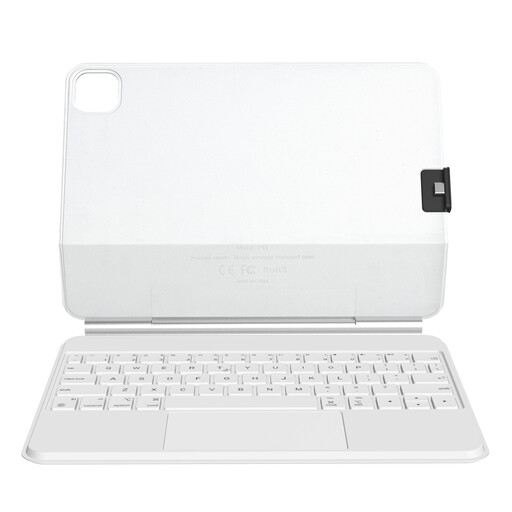
Consider this fitted case if you make cards primarily on an iPad and want a keyboard with a trackpad rather than a separate keyboard.
The product name also specifies a detachable protective cover. Match your exact iPad generation to the case compatibility list: the sizes in the title alone are not enough. Check the physical key layout if it matters to your typing.
 No image available
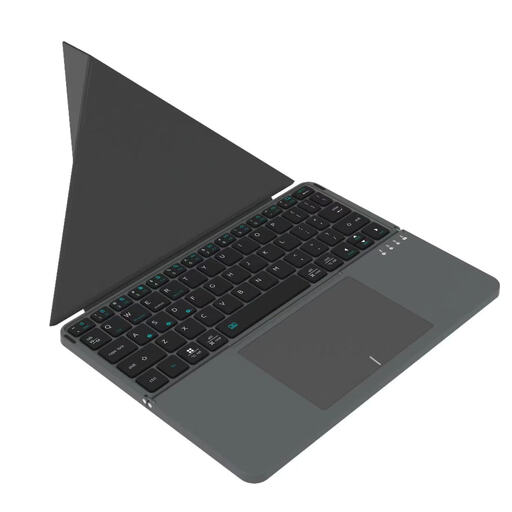
Consider this separate keyboard if you prepare cards on a computer, iPad or smartphone rather than using a case fitted to one tablet.
The name specifies Bluetooth connectivity for those device types. Confirm support for your particular device and inspect the key arrangement if you depend on shortcuts or British-English punctuation placement.
 No image available
Consider this compact mechanical keyboard if its key arrangement suits the way you enter revision cards.
The product name specifies 68 keys, Jellyfish switches, Bluetooth 5.1 and a wired mode. Its stated US layout may put punctuation in unfamiliar positions if you normally use a British-English keyboard. Check whether its typing noise suits any shared study space you use.
Yes, if the keyboard supports your Windows setup and the laptop has Bluetooth available and enabled. Microsoft says a Windows device needs Bluetooth to pair a Bluetooth device; if yours lacks it, check whether a suitable adapter or a receiver-based keyboard would work with its available ports.
No: match the exact iPad model and generation, not just the screen size. Apple lists its keyboard accessories by compatible iPad families and models, and other fitted cases likewise need their own compatibility checks.
Choose one if you want the printed keys and punctuation positions to match the British-English layout you normally use. Check the exact variant and product images rather than assuming that a keyboard labelled for the UK has your preferred physical layout.
Use suitable electrical-waste and battery recycling routes rather than putting them in household rubbish. GOV.UK advises that electrical products and batteries should be recycled when they no longer work; check local collection options for the keyboard and any removable batteries.