Choose a compact Bluetooth keyboard if you make revision cards beside other people and switch between study devices, but check its key noise, layout and compatibility with the devices you use. If one compatible iPad is your main device, a model-specific keyboard case can combine typing with a stand and trackpad; it is less adaptable when you change devices.
Who is this for?
People revising near others
If you type beside classmates, flatmates or library users, key noise may matter more than extra features. Logitech describes the Pebble Keys 2 K380s as having quiet low-profile keys, and other models may also be described as quiet; a manufacturer or listing description does not establish how a keyboard will sound in your workspace.
People switching study devices
If notes are on a laptop but you also make cards on a tablet or phone, check operating-system support and how the keyboard switches devices. Logitech lists three-device switching for the Pebble Keys 2 K380s; the connection options differ by model.
People studying mainly on an iPad
If one iPad is your main revision device, you may prefer a keyboard case that travels with its stand and trackpad. Apple's keyboard cases are model-specific, so identify your iPad before choosing one.
What matters when choosing?
Start with the devices you type on: a separate keyboard allows more choice across devices, while an iPad keyboard case needs an exact model match. Then weigh noise and what you are willing to carry into a shared workspace.
Separate Bluetooth keyboard
Choose it when: You make revision cards on more than one type of device and want a keyboard you can move between them.
Trade-off: You still need a suitable position or separate stand for a tablet, and compatibility varies by keyboard.
iPad keyboard case
Choose it when: A compatible iPad is your main study device and you want its keyboard, stand and trackpad together.
Trade-off: Apple's keyboard cases fit specified iPad models and sizes rather than serving as keyboards for your other devices.
| Concern |
What to check |
Who this matters to |
| Typing noise |
Look for a specific description of the keys and, where possible, try typing on them. A quiet-key claim is not a measured sound level. |
I make cards while others study close by and do not want my typing to disturb them. Around 33% of consumers put low typing noise first. |
| Portability and protection |
Compare the listed size and weight with your bag, and check whether a cover protects the keys; a cover need not act as a tablet stand. |
My keyboard travels with books and a tablet, so I need it to pack away without leaving the keys exposed. For around 27% of consumers, carrying and protecting it is the main concern. |
| Device compatibility |
Check the exact operating systems, connection methods and device-switching controls for the model you intend to buy. |
I move between a laptop and a mobile device when gathering notes and writing cards, and want the keyboard to work with both. Device compatibility comes first for around 27% of consumers. |
| Integrated iPad setup |
Match the keyboard case to the exact iPad model and size, then check which stand and trackpad features that case provides. |
I study mainly on one iPad and would rather carry its typing setup together than arrange separate accessories. Around 13% of consumers make that integrated setup their primary concern. |
Buying pitfalls
-
Assuming portable means quiet
A keyboard can fit easily in a bag yet still have keys that distract people nearby. Product descriptions of quiet keys are not comparable sound measurements.
Check the particular model's key description and return terms, and try its typing sound where possible before relying on it in a quiet space.
-
Choosing an iPad case by appearance alone
Apple's keyboard cases are made for particular iPad families and sizes; a similar-looking case may not fit yours.
Find your iPad model in its settings or on the device and compare it with the manufacturer's compatibility list before ordering.
-
Assuming the keyboard has a UK layout
Layout variants can place keys and symbols differently, which matters when you type revision cards.
If you need UK key placement, select a listing that explicitly identifies a UK or UK-ISO variant and check its photographs and specifications.
-
Putting an old keyboard in household rubbish
Battery-powered keyboards are electrical products, and GOV.UK advises separate collection of electrical products and batteries.
Use an appropriate electrical-waste collection point and follow its instructions for any removable batteries.
Brands to consider for these keyboard types
Logitech
Its Pebble Keys 2 K380s and Keys-To-Go 2 are relevant if you want a separate keyboard for study devices.
- Logitech lists three-device switching and support for several operating systems for the Pebble Keys 2 K380s, and describes a built-in cover on the Keys-To-Go 2.
- Check the exact model's layout and operating-system requirements. A manufacturer's quiet-key description does not guarantee how it will sound nearby.
Keychron
The B1 Pro ISO range is relevant if UK key placement and a choice of connection methods matter to you.
- Keychron lists Bluetooth, 2.4 GHz wireless and wired modes for the B1 Pro ISO.
- Choose the specifically labelled UK-ISO variant if you need that layout; do not assume it applies to every B1 Pro listing.
Apple
Its iPad keyboard cases are relevant if you want an accessory designed around one compatible iPad rather than a separate multi-device keyboard.
- Apple's listed keyboard-case designs combine typing with iPad-specific features such as protection, a stand or a trackpad, depending on the model.
- Compatibility is restricted to the iPad models and sizes specified for each case.
Joybuy keyboard choices
These are separate keyboards for revision-card typing, ranging from compact layouts to a full-size UK-layout option. Compare the layout and connection details with your study device, and give key noise particular attention if you work beside others.
 Image unavailable
Rapoo E9050L 75% Wireless Keyboard, US Layout, White
Consider this model if you type on several study devices and its US key placement suits you. The product name specifies 78 keys, switching among up to four devices, and Bluetooth, 2.4 GHz and wired connections. Check support for your particular tablet or phone, and assess the key noise if you use a quiet shared space.
View on Joybuy
 Image unavailable
Targus EcoSmart Full-Size Wireless Keyboard, UK Layout
Consider this UK-layout option if you have room for a full-size keyboard at your study desk. Its full-size format is worth weighing against the bag space you have available; check its dimensions and typing noise if you plan to carry it into shared spaces.
View on Joybuy
 Image unavailable
AULA F99 Mechanical Wireless Keyboard, US Layout, Light Blue/Reaper Switch
Consider this model if its mechanical keys and US layout suit the way you type revision cards. The product name lists wired, Bluetooth and 2.4 GHz modes. Check its dimensions and weight for your bag, and try the typing sound before relying on it beside other people.
View on Joybuy
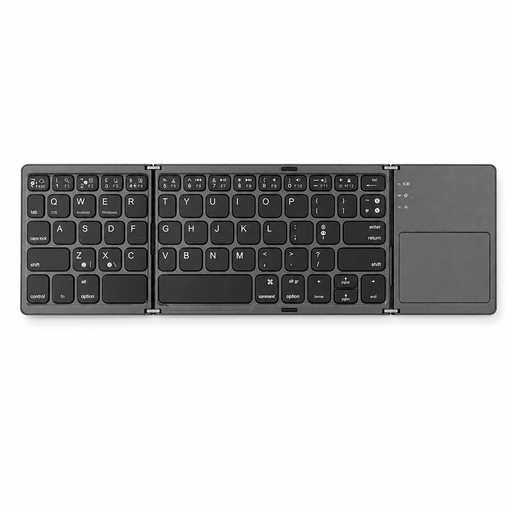 Image unavailable
VoxorAI B033 Bluetooth Keyboard, Black
Consider this keyboard if you want Bluetooth typing across the computers or mobile devices named in its product description. Before choosing it for a shared workspace, check the key noise and exact keyboard layout against your needs.
View on Joybuy
 Image unavailable
AULA F75 75% Wireless Mechanical Keyboard, US Layout
Consider this 75% layout if you want a smaller keyboard arrangement for your study desk and US key placement works for you. The product name lists wired, Bluetooth and 2.4 GHz modes. Confirm compatibility with your study device, as well as carrying size and typing noise, before using it in a shared space.
View on Joybuy
Common questions
Should I get a Bluetooth keyboard or an iPad keyboard case for revision cards?
Choose a separate Bluetooth keyboard if you expect to type on a laptop, phone or different tablets; choose an iPad keyboard case if one compatible iPad is your main study device and you want its stand and trackpad together. Check the exact iPad model and size before buying a case, because Apple lists model-specific compatibility.
How do I make sure I get a UK keyboard layout?
Select a listing that explicitly says UK or UK-ISO layout, then compare its key photographs with the layout you expect. Keychron identifies a UK-ISO variant of the B1 Pro, so the product-family name alone is not enough to establish the layout.
Will a portable keyboard need frequent battery changes or charging?
That depends on the particular keyboard and how you use it. Check whether your chosen model uses replaceable batteries or recharging, and read any manufacturer battery-life claim alongside its stated usage conditions rather than treating a maximum as your expected runtime.
What should I do with a battery-powered keyboard at the end of its life?
Take the keyboard to an appropriate electrical-waste collection point rather than putting it in household rubbish. GOV.UK advises separate collection of electrical products and batteries; follow the collection point's instructions for any removable battery.


