Tablet-first chapter summariser
You read and write mainly on a tablet, then put the keyboard away when the study session ends. Check that the keys and screen position will work for paragraphs and bullet-point notes, not just short searches.


For writing chapter summaries across a tablet, phone and laptop, consider a portable Bluetooth keyboard; if most writing happens at the same table, a compact separate keyboard gives you another format to consider. An iPad keyboard case makes sense only when it fits your exact iPad and you want an integrated stand and trackpad, while a compact mechanical model suits those who specifically want its layout or connection options. Whichever format you choose, check where the screen will sit during a longer writing session.
You read and write mainly on a tablet, then put the keyboard away when the study session ends. Check that the keys and screen position will work for paragraphs and bullet-point notes, not just short searches.
You expect to type several pages at one sitting. A stable place for the keyboard and an independently positioned screen matter alongside your preference for quieter keys. University Hospitals Sussex NHS Foundation Trust advises raising a laptop screen when using a separate keyboard.
You move between a laptop, tablet and phone for reading, references and drafting. Check compatibility with each device and how switching works before prioritising an integrated case.
For chapter-summary writing, settle your device and screen arrangement first; then weigh typing space against how quickly the keyboard needs to be packed away.
| Concern | What to check | Who this matters to |
|---|---|---|
| Long-form typing | Check the selected key layout and space for the keyboard beside your textbook. Position the screen separately if needed. | If I am drafting several pages, I need keys I can use comfortably without crowding the table. Around 40% of consumers put sustained typing first. |
| Storage and carrying | Check the keyboard’s footprint when stored and whether its keys have a cover. | When the kitchen table must be cleared after study, I want a keyboard that is easy to put away. For around 30% of consumers, quick clear-away is the primary need. |
| iPad setup | Match a case to the exact iPad model and generation; check whether it provides the stand and trackpad you want. | If I write on a compatible iPad, I may want the screen angle and cursor controls in the same assembly. Integrated iPad use comes first for around 20% of consumers. |
| Device switching | Check support for your devices and operating systems, plus pairing, wired or receiver requirements. | When my notes move between devices, I need the connection options to fit that routine. Around 10% of consumers prioritise switching or customisation. |
A matching screen size does not establish that the attachment and keyboard will work with your iPad. Apple lists its Magic Keyboard Folio for iPad (A16) and iPad (10th generation), rather than every iPad.
Find your exact iPad model and generation, then compare them with the case maker’s compatibility list before buying.
A separate keyboard does not raise a low screen. University Hospitals Sussex NHS Foundation Trust advises using a separate keyboard and mouse when raising a laptop screen to a more comfortable position.
Plan where the screen and textbook will sit, keep the keyboard centred and close, and change position or task regularly.
Keychron offers a UK layout option in its K3 Max ISO range, while its cited model has Bluetooth, 2.4 GHz and wired connection options. Those details should not be assumed for a different keyboard or variant.
Check the exact regional layout, device support and required cable or receiver for the version you select.
GOV.UK identifies household waste recycling centres as a route for waste electrical products.
Check your local collection arrangements and follow the keyboard’s instructions if its batteries are removable.
Its cited range spans the covered Keys-To-Go 2, Pebble Keys 2 K380s and MX Keys Mini, giving you different portable and desk-oriented formats to examine.
Apple’s iPad keyboard range is relevant when you want a keyboard, stand and trackpad designed around a specific compatible iPad.
The K3 Max ISO range is relevant if you want a compact mechanical layout with several connection options and customisable keys.
These choices cover separate compact keyboards, a folding keyboard and an iPad keyboard case for writing at a kitchen table. Check each model’s layout, connection and device fit against your own setup.
 No image available
Consider this separate keyboard if you want to write summaries and switch between study devices; check compatibility with each device before relying on that setup.
The product name specifies 78 keys, a QWERTY US layout, 2.4 GHz and Bluetooth 5.0/4.0 connections, and support for four devices. Check whether the US layout suits your typing.
 No image available
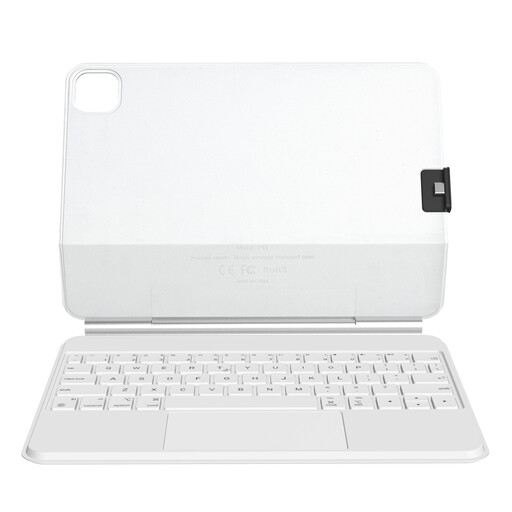
Consider an integrated case if you draft on an iPad and want keyboard and cursor controls together. Match your exact iPad model and generation before buying.
The product name describes a magnetic design, detachable cover and trackpad, and identifies iPad Pro 11-inch and iPad Air 10.9-inch or 11-inch variants. Check the case’s keyboard layout if it affects your writing.
 No image available
Consider this compact separate keyboard if its layout and connection choices fit the devices you use for summaries. Check how you would access any keys you use frequently.
The product name specifies 68 keys, Jellyfish switches, Bluetooth 5.1 and a wired mode. Its QWERTY US layout is worth checking against your punctuation and Enter-key preferences.
 No image available
Consider this compact keyboard for a study setup where its connection and operating-system requirements fit your device. Check those requirements before choosing it for a tablet or laptop.
The product name identifies a 65% keyboard with a UK layout. Check that the compact arrangement includes convenient access to the keys you use for editing summaries.
 No image available
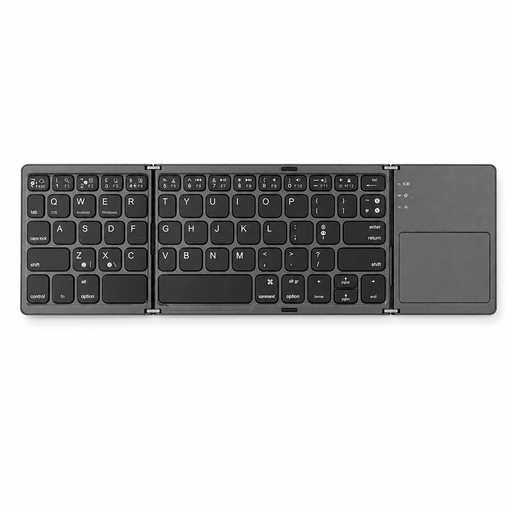
Consider a folding keyboard if clearing the kitchen table or carrying your typing setup is a priority. Check the key layout and how you will position your screen for longer summaries.
The product name identifies Bluetooth connectivity and use with computers, laptops, iPads and smartphones; confirm compatibility with your particular device.
It can give you more freedom to position the screen and keys separately, provided you arrange both comfortably. University Hospitals Sussex NHS Foundation Trust advises raising a laptop screen and using a separate keyboard and mouse to help maintain a more comfortable neck and upper-spine position.
Yes—change posture or task regularly rather than staying at the keyboard continuously. Chelsea and Westminster Hospital NHS Foundation Trust advises stopping keyboard and mouse work every 10–20 minutes, before pain increases; that is general ergonomic guidance, not a feature of any keyboard.
No; check the exact model and generation against the case’s compatibility list. Apple lists its Magic Keyboard Folio for iPad (A16) and iPad (10th generation), so the product family name or screen size alone is not enough to establish a fit.
Use an appropriate electrical-waste collection route rather than placing it in household waste. GOV.UK says waste electrical products can be taken to a local household waste recycling centre; check local arrangements and follow the product instructions for removable batteries.