Tablet-and-library researchers
If you search records away from a fixed desk, a keyboard you can carry with a tablet or phone may make it easier to enter names, source details and research-log notes while you work.


Choose a covered, easy-to-carry keyboard if you mainly record notes on a tablet or phone away from home; prioritise multi-device switching if you regularly move between records and a research log on different screens. For longer typing sessions, consider key spacing and typing position alongside portability, and confirm the exact layout, device compatibility and power method before buying. FamilySearch emphasises keeping research notes as part of organised genealogy work.
If you search records away from a fixed desk, a keyboard you can carry with a tablet or phone may make it easier to enter names, source details and research-log notes while you work.
If you consult records on a computer but update notes on a tablet or phone, look for a keyboard that can switch between your particular devices without repeating the pairing process.
If you spend longer sessions recording citations, search results and next steps, pay close attention to key spacing and typing position rather than choosing on packed size alone.
Start with where you will type and which devices you will use. Then weigh the space saved in your bag against the layout and power arrangement you will live with during a research session.
| Concern | What to check | Who this matters to |
|---|---|---|
| Carrying and protection | Check the exact keyboard’s dimensions and weight, plus whether a cover is included. | When I take a tablet to a library or family visit, I want keys that are practical to pack and protect; about 31% of consumers would put carrying and protection first. |
| Switching devices | Check supported operating systems, Bluetooth availability and how many pairings the keyboard can store. | If records are open on one device and my notes are on another, I want to change where I type without setting up the keyboard again; roughly 25% of consumers would make device switching their primary concern. |
| Longer typing sessions | Consider key spacing and typing angle, and try the key feel where possible. | When I enter several source citations and research steps, the typing position matters more to me than the smallest packed size; around 25% of consumers would prioritise sustained typing comfort. |
| Layout and power | Confirm the exact key-layout variant and whether the keyboard uses replaceable batteries or charging. | I want familiar punctuation keys and a power routine I can manage away from home; approximately 19% of consumers would put layout and power certainty first. |
Physical key labels and punctuation placement can differ. Targus notes that illustrations of its UK-layout AKF003UK folding keyboard may show a US keyboard.
Check the exact layout variant and model number in the product description rather than relying on the image.
Stored Bluetooth pairings do not establish that every operating system or shortcut will work as you expect.
Compare the manufacturer’s supported systems with each laptop, tablet or phone you intend to use, and check that those devices have Bluetooth available.
Power arrangements differ even within one brand: Targus specifies two AAA batteries for its AKB862UK compact keyboard and USB-C charging with a stated 36-hour battery life for its AKF003UK folding model.
Check the arrangement for the exact model and plan for spare batteries or charging access when travelling. GOV.UK advises against putting unwanted batteries and electrical products in household rubbish.
FamilySearch highlights the importance of research logs and notes. A small packed size does not, by itself, establish that a keyboard’s spacing or typing angle will suit a long session.
If you frequently transcribe records or enter citations, assess the physical layout and key feel as well as portability. Treat an ergonomic design as a shape to evaluate, not a promise of comfort.
Its covered Keys-To-Go 2 and compact Pebble Keys 2 K380s illustrate different ways to carry a keyboard between research locations.
Its AKB862UK compact multi-device keyboard and AKF003UK folding UK-layout keyboard offer two different physical formats to consider.
Its Multi-Device Wireless Keyboard, part number ZG38C05805, is a reference point if UK-English labelling and tablet use are priorities.
These keyboards offer different formats for entering family-history notes: compare their stated layouts and connections against the devices you use, then check whether their size suits where you research. A compact keyboard and a full-size one will not solve the same carrying problem.
 No image available
Consider this UK-labelled Bluetooth keyboard if you want to type research notes across devices, but check its dimensions against the space available in your bag.
Confirm the exact key layout, device compatibility and whether a protective cover is included if you plan to carry it regularly.
 No image available
Consider the full-size format if you usually settle at a desk to enter longer research notes, while allowing for its size when you need to travel.
The product title identifies a UK variant. Check the exact key layout, device compatibility and power method before ordering.
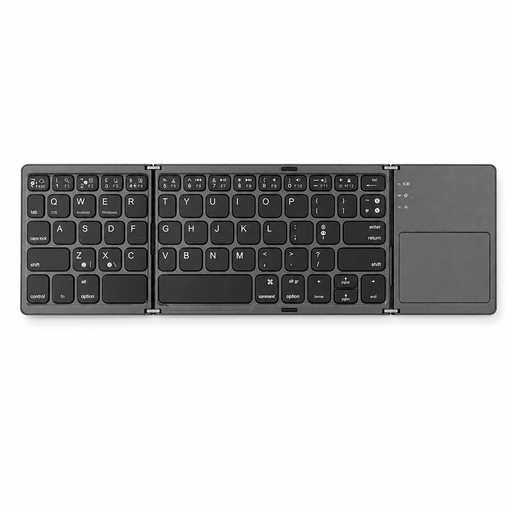 No image available
Consider this wireless keyboard for notes on a compatible computer, tablet or phone, subject to confirming the setup you need for each device.
Check its physical key mapping before choosing it for UK punctuation, and confirm switching behaviour and battery arrangements if you will use it away from home.
 No image available
Consider this compact keyboard only if its stated US layout suits the punctuation and key positions you use for research notes.
The title specifies 68 keys, Bluetooth 5.1 and a wired mode. Confirm whether the listed mouse is included, and check device-switching behaviour if you use more than one screen.
Turn on the keyboard, put it in pairing mode and select it in your laptop, tablet or phone’s Bluetooth settings. Logitech’s pairing guidance describes this sequence; follow the instructions for your exact model for its pairing controls and any code prompt.
Choose the physical layout you are accustomed to using, particularly if you enter punctuation frequently in notes and citations. Check the named variant rather than its pictures: Targus says images of its UK-layout AKF003UK may show a US keyboard.
Replaceable batteries suit a routine where you can carry spares; charging suits one where you can reliably access a cable and power. As model-specific examples, Targus lists two AAA batteries for its AKB862UK and USB-C charging with a stated 36-hour battery life for its AKF003UK.
Keep unwanted electrical products and batteries out of household rubbish, as GOV.UK advises, and use an appropriate recycling collection route. Check the collection point’s instructions for keyboards and batteries before taking them in.