Choose a keyboard that fits your kitchen table and works with your lecture device, but check that its layout feels workable for a full session before prioritising the smallest format. For prolonged laptop use, a separate keyboard lets you raise the screen independently, as the Health and Safety Executive advises; compact and foldable layouts save space but call for closer checks of key placement and compatibility.
Who needs a portable keyboard?
Laptop users improving a temporary study setup
If you raise your laptop screen on a stand or books for a longer session, a separate keyboard lets you position the screen and keys independently. That arrangement follows the Health and Safety Executive’s guidance for prolonged laptop use.
Tablet-first lecture note takers
If you mainly type on a tablet or phone, look for wireless compatibility and a format you can pack away without taking over the table. Logitech’s Keys-To-Go 2 illustrates the slim keyboard-and-cover format.
Students switching between devices
If notes move between a laptop, tablet and phone, check which operating systems a keyboard supports and how it switches devices. Logitech specifies three-device switching for Pebble Keys 2 K380s; connection options differ across models.
What matters when choosing?
Plan where the screen and keyboard will sit, then check the keyboard’s footprint, physical layout and connections against the devices you actually use.
| Concern | What to check | Who this matters to |
|---|
| Long-session setup |
Can you raise the screen separately and place the keyboard comfortably with your chair and table? |
If I type through a whole lecture on a laptop, I need to position the keys without leaning towards its screen. Around 33% of consumers put sustained typing and table arrangement first. |
| Space and storage |
Check the exact dimensions and weight, and whether a cover would help when packing the keyboard away. |
When the table has to make room for notes and return to household use afterwards, I want a keyboard that is easy to move and store; around 27% of consumers make footprint and portability their main concern. |
| Device and UK layout |
Confirm operating-system support, the physical key layout and how shortcuts behave on your device. |
I do not want familiar punctuation or lecture shortcuts to change unexpectedly when I connect my device. For around 27% of consumers, compatibility and a familiar layout are the primary need. |
| Switching connections |
Check how many devices can be paired and whether the stated wireless or wired modes suit your ports. |
If I write on one device and edit on another, I want to switch without repeatedly setting up the keyboard. Connection flexibility comes first for around 13% of consumers. |
Buying and setup mistakes to avoid
-
Choosing the smallest keyboard before planning the table
A separate keyboard cannot raise a screen or fix an awkward chair-and-table combination by itself. The Health and Safety Executive advises separating the keyboard and mouse from a laptop so its screen can be elevated for prolonged use.
Check where the screen, keyboard and notes will sit together before choosing a size.
-
Assuming every compact keyboard has a familiar UK layout
Physical layouts and operating-system requirements vary by model and variant. Apple lists requirements for its Magic Keyboard (USB-C), while Keychron offers a UK-ISO option for the K3 Max.
Check the selected variant’s key layout, device support and shortcut behaviour, rather than relying on the product-family name.
-
Treating multi-device support as a connection guarantee
Device switching and connection modes are separate details: Logitech specifies switching between three devices for Pebble Keys 2 K380s, while Keychron lists Bluetooth, 2.4 GHz wireless and wired modes for K3 Max.
List the devices you will use and check the switching method, required ports and any receiver or cable you would need.
-
Putting an old keyboard or battery in household rubbish
GOV.UK advises taking electrical products and batteries marked with the crossed-out wheelie-bin symbol to an appropriate recycling point instead of putting them in household rubbish.
Use a suitable local collection route when the keyboard or its removable batteries reach the end of their use.
Relevant brands to consider
Logitech
Its Keys-To-Go 2 and Pebble Keys 2 K380s are relevant to slim tablet setups and compact multi-device use respectively.
- Logitech specifies cross-platform support for these models, a built-in cover for Keys-To-Go 2 and three-device switching for Pebble Keys 2 K380s.
- Check the exact physical layout and whether the chosen format feels suitable for a long lecture; those specifications do not establish typing comfort.
Apple
The Magic Keyboard (USB-C) is a compact, rechargeable option to consider for a compatible Apple setup.
- Apple offers a British English version and specifies Bluetooth and USB-C charging.
- Check Apple’s operating-system requirements for your device; do not assume the same setup will suit Windows or Android.
Keychron
The K3 Max is relevant if you want a UK-ISO option and more connection and remapping choices in a 75% keyboard.
- Keychron lists Bluetooth, 2.4 GHz wireless, wired operation and QMK/VIA customisation for the K3 Max.
- A 75% layout has fewer dedicated keys than a full-size keyboard. Check the selected switch and layout variant, particularly if others share your study space.
Joybuy keyboards for this setup
These keyboards offer different ways to type at a temporary kitchen-table setup, from full-size boards to reduced and foldable layouts. Match the stated layout and connection method to your lecture device before deciding how much table space to give up.
 No image available
Hyper HyperSpace Next Bluetooth Keyboard (UK), White
Consider this standalone keyboard if you want to position laptop keys separately from a raised screen. The product name specifies Bluetooth and a UK version; check the physical key placement and available table space before buying.
Joybuy
 No image available
Rapoo E9050L 75% Wireless Keyboard, QWERTY US, White
The 75%, 78-key layout is worth considering when table space matters, provided QWERTY US key placement suits you. Its product name lists Bluetooth and 2.4 GHz modes, support for up to four devices, and Windows, Mac, Linux and Chrome compatibility; check support separately if your lecture device uses iOS or Android.
Joybuy
 No image available
Targus EcoSmart Full-Size Wireless Keyboard (UK)
A full-size format may suit you if you have room to leave a separate keyboard on the table during longer notes sessions. The product name identifies a UK version, but check its exact key placement and whether the larger format fits alongside your screen and notes.
Joybuy
 No image available
AULA F75 75% Mechanical Keyboard, QWERTY US
Consider its reduced layout if you want to keep more of the table clear, while allowing for its QWERTY US key placement. The product name lists wired, Bluetooth and 2.4 GHz modes; confirm operating-system compatibility and the accessories needed for your chosen connection.
Joybuy
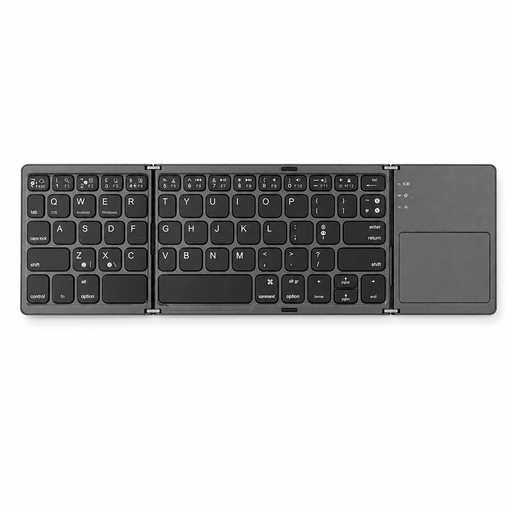 No image available
VoxorAI Bluetooth Wireless Keyboard, Black
This Bluetooth keyboard is worth checking if your lecture notes are typed on an iPad, smartphone or laptop, devices named in its product title. Confirm the physical layout and key spacing before choosing it for a full lecture.
Joybuy
Common questions
Will a separate keyboard improve a kitchen-table laptop setup?
It can help if it lets you raise the laptop screen independently and position the keys comfortably. The Health and Safety Executive recommends a separate keyboard and mouse for prolonged laptop use so the screen can be elevated; the chair, table and overall arrangement still matter.
Should I look for a UK-ISO or British English layout?
Choose a physical layout you are comfortable typing on, then match your device’s keyboard settings to it. Keychron lists a UK-ISO K3 Max option and Apple offers a British English Magic Keyboard; check the exact variant rather than assuming every version has the same keys.
Do workplace screen-equipment rules automatically apply to lecture notes at home?
No: taking lecture notes as a student does not automatically meet the employment conditions for an employer’s workstation assessment. The Health and Safety Executive describes that requirement for workers who use display screen equipment daily as part of normal work for continuous periods of an hour or more; its practical posture guidance can still help you arrange a study table.
How should I dispose of an old wireless keyboard or its batteries?
In the UK, take electrical products and batteries bearing the crossed-out wheelie-bin symbol to an appropriate collection point rather than putting them in household rubbish, as GOV.UK advises. Check your local collection arrangements for the keyboard and any removable batteries.


