Planners working across several devices
If you start a lesson plan on a tablet and finish it on a phone or laptop, a keyboard that switches between your compatible devices may save you from carrying separate keyboards.


Choose a standalone Bluetooth keyboard if you prepare lesson plans across a tablet, phone and laptop, but check compatibility and allow for a separate tablet stand. An iPad keyboard case suits one confirmed compatible iPad when an integrated viewing position and trackpad matter more than using the keyboard with other devices. If you type longer plans on both a laptop and tablet, consider a multi-device keyboard after checking its connections and layout.
If you start a lesson plan on a tablet and finish it on a phone or laptop, a keyboard that switches between your compatible devices may save you from carrying separate keyboards.
If one iPad is your main planning device, a case with a suitable viewing position and trackpad may make more sense than a separate keyboard and stand. Match the case to your exact iPad model.
If you write longer plans and alternate between a laptop and tablet, consider key layout, power and switching alongside packed size. Check which connection method each device can use.
Start with the device setup you actually take between visits: a keyboard for several devices calls for different checks from a case fitted to one iPad.
Choose it when: You need to type on more than one compatible tablet, phone or laptop.
Trade-off: You may also need to carry a tablet stand or protective case.
Choose it when: You mainly plan on one compatible iPad and want the viewing position and pointer control in the same setup.
Trade-off: Its fit is model-specific, and the case is less useful with other devices.
| Concern | What to check | Who this matters to |
|---|---|---|
| Packed size and setup | Compare the space taken by the keyboard and any stand or case; check how you will position the screen. | When I have teaching materials to carry between short visits, I want a keyboard I can pack quickly without making the whole setup cumbersome. Around 42% of consumers would put a lighter carry first. |
| Integrated iPad setup | Match the case to the full iPad model and generation; check for the viewing position and trackpad you need. | If I edit plans mainly on one iPad, I want its screen, keyboard and pointer ready to use together at each stop. For around 33% of consumers, that integrated setup would be the primary need. |
| Typing across devices | Check the stated operating systems, switching method, key layout and power arrangement. | When I move between a laptop and tablet to write longer plans, I care most about keeping my typing workflow consistent. Roughly 25% of consumers would prioritise that continuity. |
Cases can fit only particular iPad generations even when their advertised screen sizes look similar. Apple publishes model-specific compatibility lists.
Find your iPad’s full model and generation, then compare them with the case maker’s compatibility list before ordering.
A separate keyboard does not necessarily replace the stand or protective case you need to use and carry a tablet.
Check how the keyboard, tablet, charger and any stand fit together in the bag you take between visits.
Basic keyboard compatibility does not mean every shortcut is available on every operating system. Kensington specifies that the KB435 EQ’s Copilot key is Windows-only.
Check support for the devices and shortcuts you use to prepare plans, rather than treating an extra key as essential without confirming it works.
Keyboard variants can differ in physical key arrangement and symbols; Apple lists British English variants separately for some iPad keyboards.
Check the stated layout and the keys shown in product images, particularly Enter and symbols you use regularly.
Its portable standalone options include Keys-To-Go 2 and Pebble Keys 2 K380s.
Its Magic Keyboard and Magic Keyboard Folio options are iPad-specific accessories.
Its compact multi-device range includes keyboards with Bluetooth and a 2.4GHz receiver.
These choices include separate wireless keyboards for planning across devices and a keyboard case for a compatible iPad. Decide which setup you need before comparing individual models.
 No image available
Consider this separate keyboard if you prefer a full-size layout for writing plans rather than the smallest packed keyboard.
The product name identifies a wireless keyboard and UK variant. Check that its connections work with your planning devices and that its full-size footprint fits your bag.
 No image available
This separate Bluetooth keyboard may suit planning on more than one device, provided each device is compatible.
It is the white UK variant. Check its packed size and plan for a stable viewing position when typing on a tablet.
 No image available
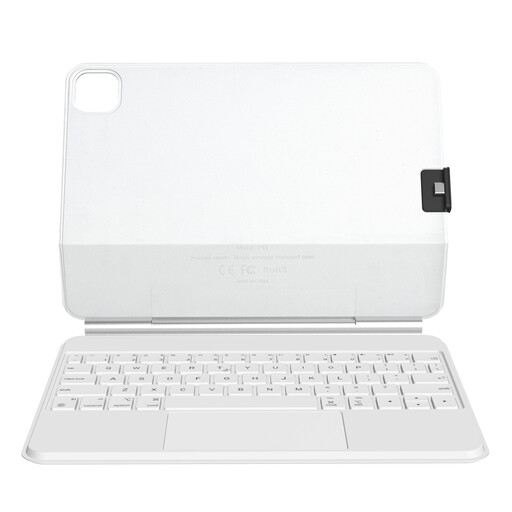
Consider this case if you plan mainly on one iPad and want a keyboard, trackpad and cover in the same setup.
The product name identifies a magnetic floating design, detachable protective cover and precision trackpad. Match your exact iPad model and generation to the compatible versions before buying; screen size alone is not enough.
 No image available
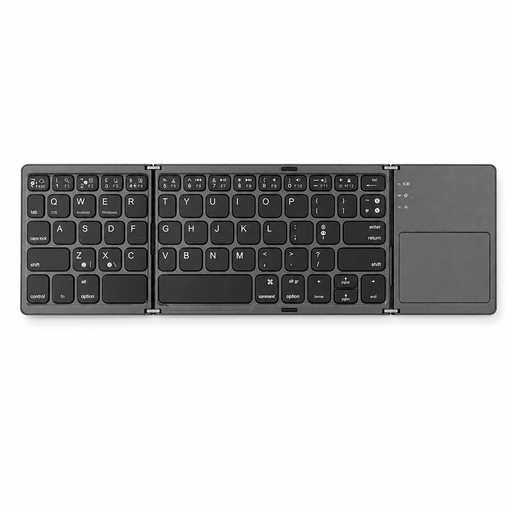
This separate keyboard is worth considering when you want Bluetooth typing without tying the keyboard to an iPad case.
Check its physical key layout against your typing needs, and make sure you have a suitable way to position your tablet.
 No image available
Consider this separate keyboard only if a 75% mechanical layout suits how you write plans and carry your equipment.
Its title lists wired, Bluetooth and 2.4GHz connection modes and a US QWERTY layout. Confirm compatibility with your devices, how switching works and whether the layout meets your needs.
Choose a separate keyboard if you need to type on several compatible devices; choose a case if you mainly use one iPad and want an integrated viewing position and trackpad. Check the extra stand or case a separate keyboard would require, or the exact iPad models an integrated case will fit.
Compare your iPad’s full model and generation with the case’s stated compatibility list, not just its screen size. Apple lists compatibility by iPad model, and a case made for one generation should not be assumed to fit another.
It can if the keyboard supports both devices’ operating systems and the connection method you intend to use. Check whether it can switch between paired devices; if it also uses a USB receiver, confirm that your laptop has a suitable port.
Check an appropriate electronics-recycling route rather than treating its battery power as a reason to put it in ordinary rubbish. GOV.UK notes that battery-powered products can still be electrical and electronic equipment; ask your local authority or retailer about current collection arrangements.