For a club timetable edited in a library, start with the rules for your study area, then choose a portable keyboard whose layout and connection suit the devices you use. A compact multi-device keyboard suits switching between devices; a slim tablet-oriented or folding design may be easier to pack, but check that its keys and power arrangement fit your editing sessions.
Who needs a portable keyboard?
Quiet-space timetable editors
If you prepare schedules near other library users, typing noise matters alongside the rules for your particular study area. The University of Birmingham, for example, asks users to keep noise to a minimum and observe Quiet Zone notices.
Multi-device organisers
If you start a timetable on a laptop and amend it on a tablet or phone, check that the keyboard supports each device and operating system you intend to use.
Carry-everywhere planners
If you bring a keyboard only for longer editing sessions, a slim or folding design may be easier to pack. Check whether its layout still gives you convenient access to the keys you use for the timetable.
What should you check before buying?
Check the library zone and your devices before deciding how small the keyboard needs to be. A portable design is useful only if you can use its keys comfortably for the timetable entries you make.
| Concern | What to check | Who this matters to |
|---|
| Typing noise |
Check the library zone rules and the maker’s description of the keys; wireless connection alone says nothing about typing sound. |
If I edit beside people studying quietly, I want my typing to cause as little disturbance as possible. Roughly 31% of consumers put low-noise operation first. |
| Portability |
Compare the stated size and carrying design with your bag, then check that you can still reach the navigation keys you use. |
When I bring a keyboard only for club work, I need it to pack away without making timetable editing awkward; around 25% of consumers prioritise easy carrying. |
| Device compatibility |
Check each device’s operating system and Bluetooth capability against the exact keyboard model, including any switching feature you need. |
If I move the timetable between a laptop and a tablet or phone, I need the keyboard to work with both. For about 25% of consumers, cross-device use is the primary concern. |
| Longer editing sessions |
Consider key spacing, navigation keys and typing angle, as well as the keyboard’s battery or charging arrangement. |
When I enter many names, times and rooms in one sitting, a workable typing layout matters more to me than minimum size; roughly 19% of consumers put sustained entry first. |
Common buying mistakes
-
Assuming wireless means quiet
Bluetooth describes the connection, not the sound of the keys. The University of Birmingham asks users to minimise noise and observe Quiet Zone notices; the University of Reading distinguishes between quiet and silent study areas.
Look for a description of the key design, type gently and check the rules for the exact area where you plan to work. A keyboard described as quiet is not automatically suitable for a silent area.
-
Checking the size but not the layout
A keyboard can fit your bag yet have unfamiliar keys or shortcuts, or fail to meet a device’s operating-system and Bluetooth requirements.
Confirm the regional key layout, supported operating systems and connection requirements for each device used to edit the timetable.
-
Overlooking how the keyboard is powered
Power arrangements differ by model. Microsoft states that its Designer Compact Keyboard uses four CR2032 coin-cell batteries; Targus states that its AKF003UK is rechargeable, with a two-hour USB-C charge time and a stated 36-hour battery life.
Choose an arrangement you can manage before and during library visits, rather than assuming every portable keyboard charges the same way.
Depending on the model, you may need replacement batteries or time to recharge.
-
Putting an old keyboard or batteries in household rubbish
UK government guidance says electrical products and batteries bearing the crossed-out wheelie-bin symbol should not go in household rubbish.
Check the appropriate electrical-waste and battery collection options when you replace a keyboard.
Brands to consider
Logitech
Its Pebble Keys 2 K380s and Keys-To-Go 2 illustrate different portable Bluetooth designs.
- Logitech states that the compact Pebble Keys 2 K380s can switch among three devices and supports Windows, macOS, iPadOS, iOS and Android. It describes Keys-To-Go 2 as slim and light, with a built-in cover.
- Check the exact regional layout and whether the compact keys suit the timetable entries and shortcuts you use.
Targus
Its AKF003UK offers a folding, split keyboard design for buyers who want a UK layout.
- Targus states that the AKF003UK has Bluetooth 5.1, stores pairing for up to three devices and closes magnetically for travel.
- Its split layout may take getting used to. Targus specifies a rechargeable battery with a stated 36-hour life and two-hour USB-C charge time, so plan for charging.
Microsoft
The Designer Compact Keyboard is relevant to people preparing the timetable on a compatible Windows PC.
- Microsoft states that it can pair with up to three devices.
- Microsoft specifies Windows 10 or Windows 11 and Bluetooth 4.0 or later for setup. Check a different model’s requirements separately if you also edit on a tablet or phone.
Joybuy keyboard choices
These keyboard choices cover different approaches to editing a timetable away from a fixed desk. Check each model’s layout, device fit and typing sound against your library session before choosing.
 No image available
Hyper® HyperSpace Next Bluetooth Keyboard (UK), White
Consider this UK-labelled Bluetooth model if you want a keyboard for timetable work across your devices; confirm pairing with each device you intend to use.
Check its carrying size and typing sound against your bag and the rules of your library area.
View on Joybuy
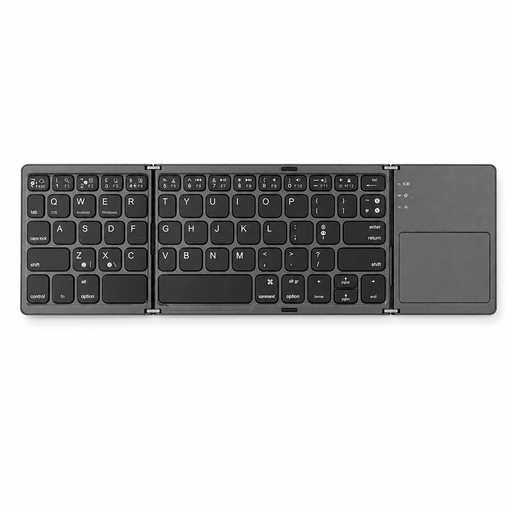 No image available
VoxorAI Bluetooth Keyboard, Black
Consider this Bluetooth model if carrying a keyboard to the library is a priority; check its packed size and whether its keys suit your timetable workflow.
Confirm the physical layout, device compatibility and typing sound before relying on it in a quiet area.
View on Joybuy
 No image available
AULA F75 75% Wireless Keyboard, US QWERTY
Its stated 75% layout is worth considering if you prefer a compact key arrangement for timetable entry, provided the US QWERTY layout suits you.
The product name lists wired, Bluetooth and 2.4G connection modes. Confirm compatibility, carrying size and actual typing sound; sound-dampening construction alone does not establish suitability for a quiet library area.
View on Joybuy
Questions about library keyboard use
Can I use a keyboard in a silent library area?
Check that area’s rules before using one. The University of Birmingham asks users to observe Quiet Zone notices, while the University of Reading requires silence in its silent study areas. Quietly described keys do not guarantee that typing is permitted there.
How can I tell whether a Bluetooth keyboard will work with my devices?
Match the exact keyboard model’s stated operating-system and Bluetooth requirements to every device you will use. Logitech lists Windows, macOS, iPadOS, iOS and Android for Pebble Keys 2 K380s; Microsoft specifies a Windows 10 or Windows 11 PC with Bluetooth 4.0 or later for Designer Compact Keyboard setup. Compatibility for one model does not establish it for another.
What should I do with an old keyboard or its batteries in the UK?
Use an appropriate electrical-waste or battery collection route rather than household rubbish for items marked with the crossed-out wheelie-bin symbol. UK government guidance distinguishes these items from ordinary household waste; check the collection arrangements for the keyboard and any removable batteries.


