Small-desk laptop editors
If you edit mainly at a laptop or desktop, a reduced keyboard footprint can leave room for a mouse and notes. Check that the keys and shortcuts you use for proofreading and formatting remain easy to reach.


Choose a compact desk-oriented keyboard if most newsletter editing happens in one place and you need room for a mouse; choose an ultra-portable keyboard if it must regularly travel with a tablet or phone. Before buying, compare the actual footprint, key layout, device compatibility and connection method. A 75% mechanical keyboard offers another route if configurable controls and switch choice matter enough to justify checking the exact variant.
If you edit mainly at a laptop or desktop, a reduced keyboard footprint can leave room for a mouse and notes. Check that the keys and shortcuts you use for proofreading and formatting remain easy to reach.
If you draft or revise on a tablet or phone, packed size, key protection and compatibility with your device may matter more than desk-oriented extras.
If you frequently edit and want to remap commands or choose a mechanical switch, a compact configurable keyboard may suit you. Check whether its layout and configuration process fit the devices you use.
Start with where you edit most often, then check that the keyboard fits both your desk and your usual newsletter-editing commands.
| Concern | What to check | Who this matters to |
|---|---|---|
| Desk footprint and typing | Measure available space for the keyboard and mouse; check the key arrangement you would use for sustained editing. | If I edit long stretches at a small desk, I need space for a mouse without giving up the keys I reach for repeatedly. Around 36% of consumers put that desk-and-typing balance first. |
| Portability | Compare packed dimensions, key protection and compatibility with the tablet or phone you intend to use. | When edits happen away from my desk, I need a keyboard I can carry and set up with my mobile device. For around 29% of consumers, portability is the primary concern. |
| Layout and devices | Confirm the exact UK-ISO or British-English variant, supported devices and any multi-device switching. | I move between devices and rely on familiar punctuation when proofreading, so the selected layout and connections must suit my setup. Those needs come first for around 21% of consumers. |
| Key feel and shortcuts | Check the switch variant and whether remapping works with your computer and preferred connection. | If I regularly use the same editing commands, I may value configurable keys and a particular switch feel more than minimum carry size. Around 14% of consumers prioritise that customisation. |
A desk keyboard can have a reduced footprint yet still include a numeric keypad or device cradle. Logitech’s K780, for instance, has both a keypad and a cradle, giving it a different desk role from a thin travel keyboard.
Measure usable desk width and depth, including space for a mouse or tablet stand, and compare them with the exact keyboard dimensions and anything you plan to carry alongside it.
UK-ISO and British-English configurations depend on the selected model and variant. An unfamiliar Enter key or symbol position can interrupt proofreading and formatting.
Confirm the layout in the exact variant’s title or specifications before buying, rather than relying on a picture of the keyboard family.
Keychron’s K3 Max line includes different layout and switch variants. Remapping is useful only if you want to configure it and its workflow suits your computer.
Choose the exact UK-ISO variant and switch option, then check the remapping requirements against the shortcuts you actually use.
GOV.UK guidance says battery-powered products can be electrical and electronic equipment. Recycle Your Electricals warns that batteries in waste streams can create fire risks.
Use an appropriate electricals or battery-recycling point. Remove a battery only if the manufacturer instructs that it is removable.
Logitech offers different approaches to this task: the travel-oriented Keys-To-Go 2, the compact MX Keys Mini and the K780 with a device cradle.
The K3 Max line is relevant if you want a compact low-profile mechanical keyboard with configurable controls.
Apple’s compact British-English Magic Keyboard is an option for people using compatible Apple devices.
These choices cover a foldable mobile keyboard, two 75% mechanical keyboards and a larger Bluetooth keyboard. Compare their layouts and actual dimensions before deciding which leaves enough space for your editing setup.
 No image available
Consider this reduced layout if you want a mechanical keyboard for a small desk and are comfortable checking its key positions before editing UK text.
The title specifies wired, Bluetooth and 2.4 GHz modes, RGB backlighting and PBT keycaps.
Its US QWERTY layout may put symbols in unfamiliar places. Compare its exact dimensions with your available desk space.
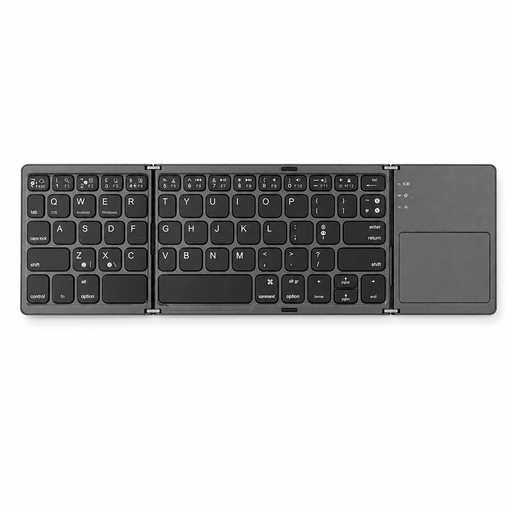 No image available
Consider this for mobile newsletter edits if a keyboard you can carry matters more than a conventional desktop layout.
The product name lists Bluetooth connectivity and use with computers, laptops, iPads and smartphones.
Check the selected device’s compatibility, UK symbol placement and access to the editing keys you use most often.
 No image available
Consider this if you want a Bluetooth keyboard and can accommodate a larger layout beside your mouse and notes.
The product name identifies a UK keyboard; check the exact key arrangement for the selected variant.
Its stated 380 × 150 mm footprint and numeric keypad make desk measurements particularly important.
 No image available
Consider this if a reduced mechanical layout and switch choice matter to your desk-based editing setup.
The title specifies hot-swappable Star Vektor switches, a TFT display and a knob.
Confirm its dimensions, exact key layout and connection modes for the variant you select.
Choose a travel-oriented keyboard if you regularly edit on a tablet or phone away from your desk; choose a compact desk-oriented model if most editing happens in one place and you value its key arrangement or configurable controls. Compare actual dimensions and layout before assuming either will be more comfortable for you.
Choose a UK-ISO or British-English variant if familiar UK punctuation and symbol positions matter to your workflow. Keychron lists a UK-ISO K3 Max version and Apple lists a British-English Magic Keyboard, but confirm the layout of the exact variant you intend to buy.
Faulty consumer goods are covered by the UK Consumer Rights Act 2015, so contact the seller about the fault rather than assuming a manufacturer warranty is your only route. Keep your order details and describe what happens when you use the keyboard with its intended device.
Use an appropriate electricals or battery-recycling route instead. GOV.UK says battery-powered products can be electrical and electronic equipment, and Recycle Your Electricals warns that discarded batteries can create fire risks. Remove a battery only if the manufacturer instructs that it is removable.