What matters when choosing
Standalone Bluetooth keyboard
Choose it when: you edit across several devices and want a keyboard you can pack separately.
Trade-off: plan how you will position a tablet and navigate without an integrated trackpad.
Keyboard with receiver and wired modes
Choose it when: an alternative to Bluetooth matters in your laptop-first workflow.
Trade-off: the receiver or cable adds items and ports to manage.
Fitted iPad keyboard case
Choose it when: you work on a confirmed compatible iPad and want its keyboard and trackpad in one case.
Trade-off: the fit is model-specific, so it offers less flexibility when you change devices.
For a field-trip newsletter edit, decide which device you will use most, then weigh carrying space against your connection and longer-session typing needs.
| Concern |
What to check |
Who this matters to |
| Packing and protection |
Check packed size and weight, and whether the keys have a cover or need a separate sleeve. |
If I am carrying the keyboard between stops, I need it to fit in my bag without leaving the keys exposed. Around 36% of consumers would put packing and protection first. |
| Device and layout fit |
Confirm the stated operating systems and exact UK/ISO variant; for a fitted case, match the iPad model and size. |
When I revise copy on different devices, familiar punctuation and a keyboard that fits the device matter more than a small saving in bag space. Device and layout fit comes first for around 29% of consumers. |
| Connection options |
Identify your primary connection, then check the receiver connector or wired port if you need an alternative. |
If Bluetooth is not the connection I want to rely on for a particular device, I need another route I can actually use. Around 21% of consumers would prioritise connection options. |
| Longer editing sessions |
Inspect key spacing, arrow-key access and typing stability; decide whether you need a separate pointing device. |
For a full newsletter revision, I need a typing position and navigation controls I can work with beyond a few quick notes. Longer-session comfort would be the primary concern for around 14% of consumers. |
Relevant brands to consider
These product lines illustrate different keyboard formats; a brand name alone does not establish that a particular model fits your devices or editing routine.
Logitech
Its Keys-To-Go 2 and Pebble Keys 2 K380s are standalone Bluetooth options for editors considering portable, multi-device typing.
- Logitech lists switching among up to three devices for these models and describes a built-in cover on Keys-To-Go 2.
- If you edit on a tablet, check how you will support its screen and whether you need a separate trackpad or mouse.
Keychron
The B1 Pro UK-ISO is relevant to laptop-first editors seeking a compact keyboard with more than one connection mode.
- Keychron UK lists Bluetooth, 2.4 GHz receiver and wired connections for the B1 Pro.
- The compact layout has no numeric keypad; using the receiver also means checking and managing the device’s USB connection.
Apple
Apple’s iPad Magic Keyboard range is relevant when newsletter editing centres on a listed compatible iPad.
- Apple describes trackpad and adjustable viewing-position options in the range; features vary by model.
- Check the compatibility list for your exact iPad rather than treating a fitted case as a keyboard for other devices.
Joybuy products for field-trip editing
These choices include a folding Bluetooth keyboard, larger standalone wireless keyboards and an iPad keyboard case. Compare each with the devices you will take and the space available in your field-trip bag.
 No image available
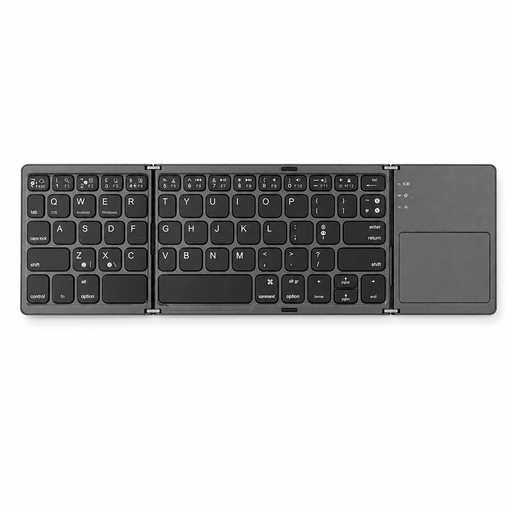
VoxorAI B033 Black Bluetooth Keyboard
Consider this standalone keyboard when you want to pack a keyboard for typing on a laptop, iPad or smartphone. Its title identifies Bluetooth connectivity; check the exact key arrangement and the charging routine against the length of your editing sessions.
View on Joybuy
 No image available
Hyper HyperSpace Next Bluetooth Wireless Keyboard (UK), White
This standalone Bluetooth option is worth considering if you move between editing devices but prefer a larger keyboard in your bag. Check the actual physical key layout behind the UK designation and whether its carrying size works for your trip.
View on Joybuy
 No image available
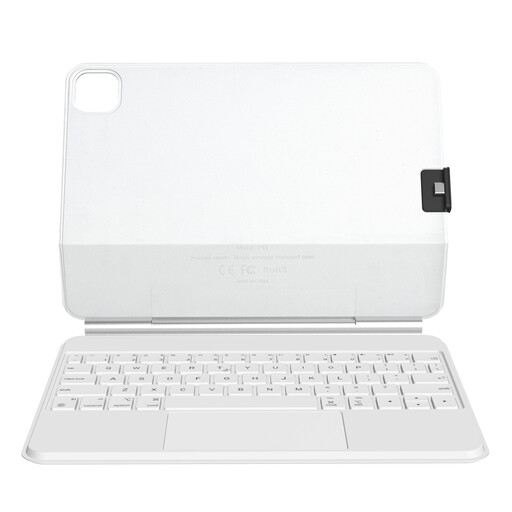
Rexsun P11-2 Keyboard Case for iPad Pro 11-inch and Air 10.9-inch/11-inch, White
For an iPad-centred edit, this magnetic case combines a keyboard, detachable protective cover and trackpad. The listed sizes do not establish a fit for every iPad generation: check your exact model against the listing, along with the keyboard layout.
View on Joybuy
 No image available
Targus EcoSmart Full Size Wireless Keyboard (UK)
Consider this full-size keyboard if a familiar typing area matters more to your laptop-first edit than packing a smaller travel model. Check the exact UK key arrangement, the connection you intend to use and whether a full-size keyboard fits your bag.
View on Joybuy
Frequently asked questions
Should I get an iPad keyboard case or a standalone keyboard?
Choose a standalone keyboard if you also edit on a phone, laptop or another tablet. A fitted case suits an iPad-centred workflow when the maker lists your exact iPad as compatible and you want its integrated viewing position and trackpad.
Does the UK keyboard layout matter for newsletter editing?
It matters if you rely on familiar UK punctuation and physical key positions while editing. Check the particular variant and its layout designation: Keychron, for example, identifies a UK-ISO version of its B1 Pro.
What if field-trip editing is part of my regular job?
Ask your employer about your display screen equipment arrangements if editing on screens is a regular, significant part of your work. The Health and Safety Executive says the DSE Regulations apply to employers whose workers regularly use such equipment as a significant part of their normal work; a portable keyboard does not, by itself, determine whether those duties apply.
How should I dispose of an old wireless keyboard?
Use a suitable electrical-equipment collection or retailer take-back route where one is available, rather than treating the keyboard as ordinary rubbish. The UK Office for Product Safety and Standards and Department for Environment, Food & Rural Affairs describe WEEE measures as encouraging the recovery, reuse and recycling of electrical products and components.


