What should you check before buying?
Start with a workable power plan and compatibility with the device you will take. Then weigh what you can carry against the typing space you need.
| Concern | What to check | Who this matters to |
|---|
| Keyboard power |
Confirm the exact battery type or charging method, and plan how you will keep the keyboard running for the trip. |
If I cannot count on a socket, I need to know whether to pack the specified cells or arrange charging. Around 36% of consumers put keyboard power planning first. |
| Device compatibility |
Match the keyboard to your device and operating-system version; check the exact iPad model for a keyboard case. |
When I move records and notes between devices, pairing with each one is my starting point. For around 29% of consumers, compatibility is the primary concern. |
| Carry weight and protection |
Compare the stated weight and dimensions, and check whether you need a separate cover. |
If I travel between research locations with one bag, I want a keyboard I will actually bring along. Carrying and protecting it comes first for around 21% of consumers. |
| Typing comfort |
Check key spacing, the UK layout if you need it, and whether a number pad matters for your notes. |
For a long transcription, I would accept more to carry if the layout suits sustained typing. Around 14% of consumers make typing comfort their primary concern. |
Joybuy keyboard choices
These choices include full-size wireless keyboards, compact layouts and a Bluetooth travel option for family-history note-taking. Check each keyboard’s power arrangement and compatibility against the device and trip you have planned.
 No image available
Hyper HyperSpace Next Bluetooth Wireless Keyboard, UK, White
A full-size Bluetooth option for notes if you have room to carry it. Confirm its charging arrangements and pairing with your research device before an off-grid trip.
View on Joybuy
 No image available
Targus EcoSmart Full Size Wireless Keyboard, UK
Consider this full-size wireless keyboard if you expect to type at a table rather than prioritising the smallest item in your bag. Check its battery arrangements and fit with your device before travelling.
View on Joybuy
 No image available
ASUS ROG Strix Scope II 96 Wireless, White, UK Layout
Its stated 96% UK layout may appeal if you want that key arrangement for longer note-taking sessions. Check the carrying weight, charging method and compatibility for your setup.
View on Joybuy
 No image available
HyperX Alloy Rise 75 Wireless Keyboard, UK
The 75% layout is an option if you want a smaller key arrangement than a full-size keyboard for research notes. Confirm that its weight, charging arrangements and device support fit your trip.
View on Joybuy
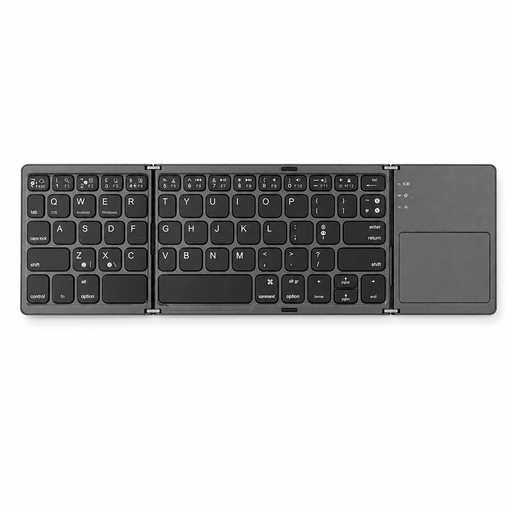 No image available
VoxorAI B033 Bluetooth Wireless Keyboard, Black
A Bluetooth option to examine if packing space is a priority. Check the key layout for your usual punctuation, along with charging needs and compatibility with your exact device.
View on Joybuy
Common questions
Will a portable keyboard work away from mains power?
Yes, provided its own battery has sufficient charge or usable replacement cells. Logitech specifies two replaceable CR2032 cells for Keys-To-Go 2, while Apple’s standalone Magic Keyboard is rechargeable; neither powers the phone, tablet or laptop used for research.
Should I choose replacement cells or a rechargeable keyboard?
Choose according to the power you can arrange for the trip: specified spare cells suit a plan without charging, while a rechargeable keyboard needs a compatible charging opportunity. Check the exact model rather than assuming that every keyboard using AAA cells has the same battery-access arrangement.
Is a UK keyboard layout necessary for family-history notes?
A UK layout is a usability choice, not a requirement for researching family history. If familiar punctuation and key positions matter to your work, confirm the precise layout variant before purchase; Keychron, for example, lists UK-ISO variants of its K3 Max.
Can an iPad keyboard case replace a Bluetooth keyboard?
It can be a suitable alternative when the case is listed for your exact iPad model and its integrated design suits how you work. Apple publishes model-specific compatibility for its iPad keyboard cases, so do not assume a case will fit another iPad or serve as a general keyboard for your other devices.
Where should I take spent keyboard batteries in the UK?
Take spent batteries to a suitable battery collection point rather than putting them in household rubbish. GOV.UK also advises using an appropriate electrical-waste recycling route for an old keyboard.


