Quiet-space revision editors
If you edit notes near classmates, colleagues or library users, the sound of the keys may matter more to you than mechanical feedback. Check the sound of the exact keyboard, not just whether it is described as compact.


For revision-note editing beside other people, start with a portable keyboard whose key design is explicitly described as quiet, then check its layout and compatibility with every device you use. A slim model with a cover suits frequent bag travel; device-switching controls matter if you alternate between a laptop and tablet. Neither a compact shape nor a low-profile label guarantees that nearby people will find the typing sound acceptable.
If you edit notes near classmates, colleagues or library users, the sound of the keys may matter more to you than mechanical feedback. Check the sound of the exact keyboard, not just whether it is described as compact.
If your notes move between a tablet, phone and laptop, check operating-system compatibility and how you switch connections. Support for several devices is more useful when you can move between them without pairing again each time.
If you carry a keyboard between campus, home and shared desks, consider how it fits in your bag and how its keys are protected. A smaller keyboard still needs a layout you can use for regular editing.
For revision editing in a shared workspace, consider typing sound alongside the space the keyboard takes in your bag. Then check device support and whether the physical keys suit your editing habits.
| Concern | What to check | Who this matters to |
|---|---|---|
| Typing sound | Check the exact key mechanism and look for useful sound information; a quiet-key claim is not a measured noise level. | I need to correct notes beside other people without distracting them, so key noise comes before typing feel. Roughly 36% of consumers put low-disruption typing first. |
| Carrying it | Check the exact model’s size and whether a cover or sleeve protects the keys in a bag. | Moving between study locations, I need a keyboard I can pack and protect without giving up keys I use often. Portability is the main concern for around 28% of consumers. |
| Device connections | Confirm operating-system support, connection methods and how many devices the exact model can switch between. | If I edit the same notes on a laptop and tablet, I need both devices to work with the keyboard and a practical way to switch. That is the primary need for roughly 22% of consumers. |
| Editing layout | Check key positions, spacing and any lighting or shortcuts you actually need for your software. | During longer editing sessions, I rely on familiar keys for corrections and navigation rather than a layout chosen solely for its small size. Around 14% of consumers prioritise editing comfort and controls. |
Low-profile describes the keyboard’s shape, not a guaranteed sound level. RTINGS.com notes that switch type, stabilisers and case construction can all affect typing noise, and that clicky mechanical switches can be loud.
If other people are particularly sensitive to noise, check the sound of the exact model rather than relying on its shape or a quiet-key description alone.
Bluetooth-only, receiver-based and wired-capable keyboards offer different ways to connect. The supported operating systems and switching controls also depend on the model.
List the devices on which you edit notes, then check each one’s software requirements, the available connections and how switching works.
A small keyboard may be awkward to protect in a bag, while a reduced layout can remove keys you use for editing. Logitech lists a built-in cover for Keys-To-Go 2, but that does not settle whether its key arrangement suits your shortcuts.
Check the protection and the exact layout together before choosing a keyboard for regular travel.
GOV.UK guidance from the Office for Product Safety and Standards says the crossed-out wheelie-bin symbol on electrical products and batteries means they should not go in household rubbish.
Use an appropriate electrical-waste or battery collection route when replacing a keyboard or disposing of its removable batteries.
These product lines illustrate different choices for shared-space editing; a feature listed for one model does not apply to every keyboard from the same brand.
Its referenced compact keyboards cover different needs: a protected travel design, a multi-device model marketed as quiet, and an illuminated editing-oriented model.
The Keychron B1 Pro UK-ISO listing is relevant if connection options are a priority.
Apple’s British English Magic Keyboard is an option to examine for a primarily Mac, iPad or iPhone editing setup.
These keyboards offer different starting points for editing notes: full-size wireless layouts, a mechanical model with several connection modes, and Bluetooth options to assess for mobile use. Check each model’s sound and carrying fit against your own shared workspace.
 No image available
Consider this if you want a full-size layout for note editing rather than the smallest keyboard to carry. Its product name specifies a wireless keyboard and UK layout; check its bag fit and typing sound if you will use it beside others.
 No image available
This Bluetooth keyboard is worth considering if a UK variant fits the devices on which you edit notes. Check its key sound and the space it takes in your bag before choosing it for a quiet, mobile study routine.
 No image available
Consider this if you prefer a mechanical keyboard and can accommodate a full-size, 108-key US layout. The product name specifies Bluetooth, 2.4 GHz and USB-C connection modes, an 8000mAh battery and silent tactile switches; check the sound of this exact variant before using it beside others.
 No image available
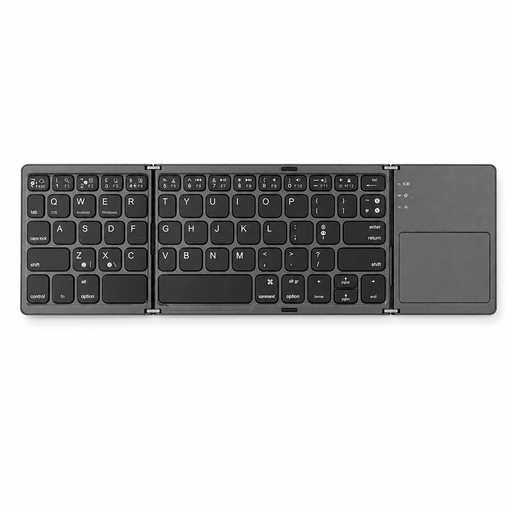
If you want to use one keyboard with a computer or mobile device, check how this model pairs and whether its keys suit your editing shortcuts. Its product name identifies Bluetooth connectivity and use with laptops, iPads and smartphones; assess its typing sound separately for a shared desk.
 No image available
This model suits a desk-based editing setup if you want wired, Bluetooth and 2.4G connection options and can use a US QWERTY layout. Confirm the fitted switch before choosing it for a shared space: the product title says Reaper Switch, while other product descriptions name LEOBOG Greywood V3.
Scissor and rubber-dome mechanisms are generally among the quieter options, according to RTINGS.com, while clicky mechanical switches can be loud. The case and larger-key stabilisers also affect sound, so check the exact model if noise could disturb your workspace.
Yes, if the exact keyboard supports those devices and lets you switch between their connections. Logitech lists switching between up to three devices for Pebble Keys 2 K380s and Keys-To-Go 2; check operating-system support for the variant you intend to use.
Choose the physical layout whose key positions work for your usual typing and editing shortcuts. Check the exact variant for British English, UK or UK-ISO wording rather than assuming every colour or model version has the same layout.
Use an appropriate electrical-waste collection route rather than household rubbish for a keyboard marked with the crossed-out wheelie-bin symbol. GOV.UK guidance from the Office for Product Safety and Standards gives the same household-rubbish warning for batteries bearing that symbol.