What matters when choosing?
Start with the device on which you make cards, then decide whether carrying size, switching, typing feel or a familiar layout will govern your choice.
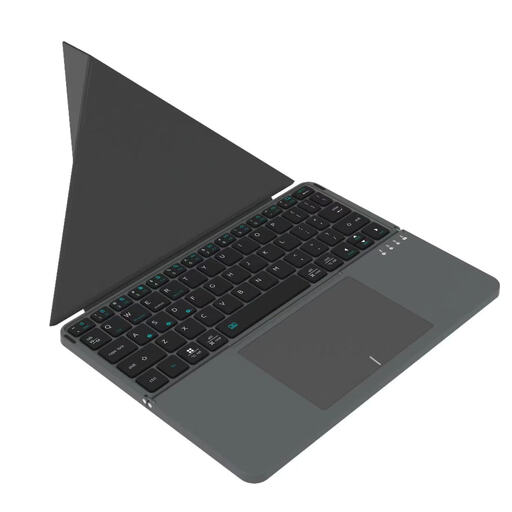
Covered tablet keyboard
Choose when: You mainly type on a tablet or phone and carry the keyboard often; Logitech describes Keys-To-Go 2 as slim and light, with a built-in cover.
Trade-off: Its compact format does not replace the space or dedicated keys of a larger keyboard.
Compact multi-device keyboard
Choose when: You move between a laptop and mobile devices; Logitech says Pebble Keys 2 K380s switches between three paired devices.
Trade-off: Check whether its compact physical layout retains the keys you use for card-making shortcuts.
Rechargeable Apple keyboard
Choose when: Your study devices meet Apple’s Magic Keyboard system requirements and you prefer its rechargeable, USB-C-equipped design.
Trade-off: Do not assume the same support for Android, ChromeOS or Windows devices.
75% mechanical keyboard
Choose when: Mechanical key feel or remapping takes priority over the smallest travel format; Keychron lists a UK-ISO K3 Max option.
Trade-off: Switch, layout and connection options require a closer check of the exact variant.
| Concern | What to check | Who this matters to |
|---|
| Packability and protection |
Compare the exact keyboard’s dimensions and weight, and check whether it has a key cover. |
If I carry my card-making setup between study locations, I need it to fit my bag without leaving the keys exposed; around 40% of consumers put easy, protected carrying first. |
| Compatibility and switching |
Check your device’s operating system and connection method, plus how many devices the keyboard can switch between. |
Moving from drafting cards on a laptop to editing them on a tablet makes one compatible keyboard appealing. Around 30% of consumers prioritise switching between their study devices. |
| Typing feel and noise |
Compare key mechanism and profile, particularly if you work in a shared study space; manufacturer descriptions cannot guarantee personal comfort. |
When I enter many short prompts and answers, the feel and sound of each keystroke matter more to me than minimum bulk; roughly 20% of consumers make typing feel or noise their primary concern. |
| Layout and key access |
Confirm the selected physical layout and whether you can use the shortcuts your revision-card app needs. |
Familiar symbol positions and shortcut keys help me enter cards without changing my usual typing habits. Around 10% of consumers put layout or key customisation first. |
Relevant brands for reference
These product lines illustrate different ways to meet the revision-card brief; brand inclusion does not imply that a particular model suits every device or is available on Joybuy.
Logitech
Its portable keyboard range includes the covered Keys-To-Go 2, the multi-device Pebble Keys 2 K380s and the compact MX Keys Mini.
- Logitech states that Keys-To-Go 2 supports Android, ChromeOS, Windows, iPadOS, iOS and macOS wireless devices, while Pebble Keys 2 K380s can switch between three devices.
- Check the layout and power arrangement of the specific model. Logitech’s descriptions of comfortable or quiet typing are manufacturer claims, not a prediction of how it will feel to you.
Apple
The British English Magic Keyboard is a compact wireless option for buyers whose devices meet Apple’s listed system requirements.
- Apple describes a rechargeable internal battery, a USB-C port and about a month or more between charges for this keyboard.
- Confirm support for your exact device; do not assume equivalent compatibility with Android, ChromeOS or Windows.
Keychron
The K3 Max range is relevant if you want a low-profile, 75% mechanical keyboard with a UK-ISO option.
- Keychron lists Bluetooth, 2.4 GHz wireless and wired connections, alongside QMK/VIA key remapping for the K3 Max.
- Check the selected variant’s physical layout, switches and connection requirements rather than assuming every K3 Max configuration is alike.
Portable keyboard options on Joybuy
These keyboards offer different formats for preparing revision cards away from mains power, from a folding Bluetooth model to compact mechanical and larger wireless designs. Match the physical layout, device compatibility, carrying size and power arrangement to your own setup rather than treating them as interchangeable.
 No image available
VoxorAI BOX1 Black Bluetooth keyboard
Consider this wireless keyboard if you want to type revision cards using Bluetooth. Confirm compatibility with your study device, the physical key layout and how long you can use it away from a charging point.
View on Joybuy
 No image available
Lofree OE907 65% mechanical keyboard, US layout, mouse gift listed
The 68-key format suits consumers considering a smaller mechanical keyboard for card entry. Its title specifies a QWERTY US layout, Jellyfish switches and Bluetooth 5.1 or wired connection; check that layout against your UK typing habits and confirm whether the advertised mouse is included with the selected option.
View on Joybuy
 No image available
Hyper HyperSpace Next Bluetooth keyboard (UK), White
This UK-labelled Bluetooth option may suit a study setup where the keyboard does not need to fold. Check the exact physical layout, bag fit and charging arrangement before planning a session away from mains power.
View on Joybuy
 No image available
AULA F75 75% wireless mechanical keyboard, US layout
Consider the 75% mechanical format if key feel matters more to you than the smallest possible travel setup. The named version has a QWERTY US layout and wired, Bluetooth and 2.4 GHz modes; confirm device compatibility, carrying weight and expected use between charges for your revision routine.
View on Joybuy
 No image available
ASUS ROG Strix Scope II 96 Wireless, Black, UK layout
This UK-layout wireless model is worth considering if familiar key positions matter and you can accommodate a larger keyboard in your study setup. Check its carrying dimensions, the exact switch configuration and the conditions attached to any stated battery-life figure before taking it away from mains power.
View on Joybuy
Frequently asked questions
Will one portable keyboard work with my tablet, phone and laptop?
It can if the exact model supports all three devices’ operating systems and connection methods. Logitech lists Android, ChromeOS, Windows, iPadOS, iOS and macOS wireless-device support for Keys-To-Go 2; its Pebble Keys 2 K380s supports switching between three devices and lists Windows, macOS, iPadOS, iOS and Android. Check your specific devices before ordering.
Can I use a rechargeable keyboard away from mains power?
Yes, provided it is charged for the session you have planned. Apple says its Magic Keyboard has a rechargeable internal battery, charges through USB-C and runs for about a month or more between charges; check the power and cable requirements of whichever model you choose rather than applying Apple’s claim to other keyboards.
Should I choose a British English or UK-ISO layout?
Choose a physical layout that matches your typing habits if symbol positions, the Enter key or card-making shortcuts matter to you. Apple lists a British English Magic Keyboard and Keychron offers a UK-ISO K3 Max option, but you must confirm the layout of the particular variant you order.
What should I do with an old keyboard or its batteries?
Take them to an appropriate electrical-waste or battery collection point rather than putting them in household rubbish. GOV.UK gives this advice for unwanted electrical products and batteries; use the collection route appropriate to whether the battery can be removed.


