What matters when choosing?
Start with the device you use for notes and the layout you need. Then weigh typing space against how easily the keyboard can be put away; choose a tablet case only if its integrated features justify its narrower compatibility.
| Concern |
What to check |
Who this matters to |
| Device fit and UK layout |
Check operating-system support, the connection needed and the physical key layout. If you switch devices, check the pairing and switching arrangements. |
If I edit on both a laptop and a tablet, I need the keys to work with each device and put familiar symbols where I expect them. Around 31% of consumers put compatibility and layout first. |
| Typing feel and noise |
Compare key spacing and key type; where possible, try the keyboard before relying on descriptions of quietness or comfort. |
When I spend a longer session rewriting notes near other people, cramped keys or distracting noise could matter more than a thin design. For around 25% of consumers, typing feel and quietness are the primary concern. |
| Tablet integration |
Match a case to the exact iPad or Surface Pro model and check which trackpad, viewing and attachment features that case provides. |
If I mainly revise on a tablet, I want the screen positioned for editing and a pointer close to the keys. Integrated tablet use comes first for around 19% of consumers. |
| Storage and power |
Compare the keyboard’s size and cover, then check whether it charges or uses replaceable batteries. |
I need to clear the table after studying, so the keyboard must be practical to store and ready when I return. Around 25% of consumers prioritise pack-away convenience and the power routine. |
Joybuy products for different setups
These choices span an iPad-specific case, standalone wireless keyboards and smaller layouts for a table that needs clearing. Compare each model’s device fit, key layout and footprint rather than treating every portable keyboard as interchangeable.
 No image available
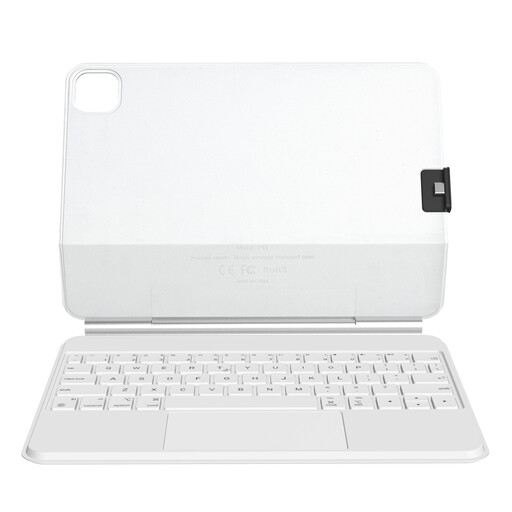
Rexsun P11-2 Magnetic Floating iPad Keyboard Case, White
Consider this case if you edit primarily on a compatible iPad and want a detachable cover and trackpad in the same setup.
The product title names iPad Pro 11-inch and iPad Air 10.9-inch and 11-inch models. Check the exact supported generation before ordering; this is not a universal laptop or tablet keyboard.
View on Joybuy
 No image available
Targus EcoSmart Full-Size Wireless Keyboard (UK)
A full-size option if you would rather keep a broader keyboard layout on the table than choose the smallest model.
Its stated 433 mm width needs room on a crowded table. Check the product photographs and selected variant if British English key legends are important to you.
View on Joybuy
 No image available
Hyper HyperSpace Next Bluetooth Wireless Keyboard (UK), White
Consider this standalone Bluetooth keyboard if you edit on different devices but do not want a tablet-specific case.
Its full-size layout needs more table space than a folding keyboard. Check the physical key layout rather than assuming that UK in the title confirms British English key placement.
View on Joybuy
 No image available
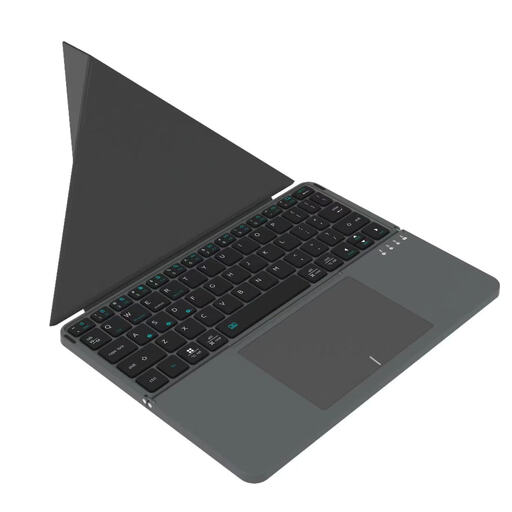
VoxorAI BOX1 Bluetooth Keyboard, Black
A foldable option to examine if putting the keyboard away between revision sessions matters more to you than having a larger key area.
Its stated 64-key layout may take adjustment for sustained editing. Check its physical key layout and whether the key feel suits you.
View on Joybuy
 No image available
Lofree OE907 65% Mechanical Keyboard, US Layout, Jellyfish Switches
This compact standalone option is worth considering if its US key layout works for the symbols and shortcuts you use when editing notes.
The title specifies 68 keys, Bluetooth 5.1 and wired operation. Check whether its mechanical key feel and noise suit a shared kitchen table.
View on Joybuy
Common questions
Should I choose a Bluetooth keyboard or a tablet keyboard case?
Choose a standalone Bluetooth keyboard if you edit notes across devices or want to keep the keyboard when you change tablets. A keyboard case makes more sense if you mainly use one compatible iPad or Surface Pro and value its integrated trackpad and screen support; confirm the exact tablet model first.
How do I pair a portable Bluetooth keyboard?
Put the keyboard into pairing mode, open your device’s Bluetooth settings and select the keyboard. Logitech’s pairing guidance describes selecting the keyboard from the available devices; follow your model’s instructions for any pairing-code prompt or device-switching buttons.
Will a portable keyboard make long kitchen-table sessions comfortable?
Not by itself. The Health and Safety Executive notes that overuse and poor workstation design can contribute to fatigue and discomfort. Consider key spacing, screen position, seating and breaks alongside how easily the keyboard packs away.
What should I do with an old keyboard or its batteries?
Use an appropriate electrical-waste or battery collection route rather than household rubbish. GOV.UK advises that unwanted electrical products and batteries should be recycled separately; check how your local collection route handles removable and integrated batteries.
What if the keyboard is faulty after purchase?
Contact the seller and keep your order record and a description of the fault. GOV.UK explains that consumer rights apply to goods bought remotely or in person; a retailer’s change-of-mind returns policy is not the same question as the remedy for faulty goods.


