Small-desk handout writers
You work with worksheets or notes beside a laptop or tablet and a pointing device. The keyboard needs to fit without crowding the materials you are using.


Start with a compact keyboard that leaves room for handout drafts and a mouse, then check its exact UK layout and compatibility with the device you use to write. A low-profile Bluetooth model suits work across devices, while a 75% mechanical layout is worth considering if you want configurable keys and can accommodate its key arrangement. For prolonged laptop work, the Health and Safety Executive advises using a separate keyboard and mouse so the screen can be raised; a small keyboard alone does not make the whole setup comfortable.
You work with worksheets or notes beside a laptop or tablet and a pointing device. The keyboard needs to fit without crowding the materials you are using.
You draft or edit handouts on more than one device, such as a school laptop, home computer or tablet. Check switching features and operating-system support on the exact keyboard.
You write handouts often enough that key access and the whole desk setup matter alongside portability. The Health and Safety Executive advises separating the keyboard and mouse from a laptop for prolonged use so its screen can be raised.
Check the space available for the keyboard and mouse, then confirm the selected layout and device compatibility. If handout writing involves long sessions, assess the full workstation rather than keyboard size alone.
| Concern | What to check | Who this matters to |
|---|---|---|
| Desk space and portability | Measure the clear space beside your papers and mouse; compare the selected keyboard’s width and depth with it. | If I spread out handout drafts while typing, I need the keyboard to leave usable space for both paper and a pointing device. Around 45% of consumers put desk space and portability first. |
| Device and UK layout | Confirm the selected British English or UK-ISO variant and its stated compatibility with your devices. | When I move a handout between devices, I need a connection that works with each one and familiar punctuation keys. About 33% of consumers make compatibility and layout their primary concern. |
| Typing and workstation comfort | Check access to the keys you use for editing and whether a separate keyboard and mouse fit with a raised laptop screen. | For repeated, longer writing sessions, I need a key arrangement I can work with and space to position the laptop screen sensibly. Roughly 22% of consumers prioritise typing and workstation comfort. |
Keychron’s K3 Version 3 has a UK-ISO option, but that does not make every configuration UK-ISO. Regional variants can place punctuation differently.
Check the selected variant’s layout name and key image before ordering, rather than relying on a general product-family picture.
A compact arrangement can leave less direct access to number entry or navigation keys you use while formatting handouts.
Check how the exact layout provides arrows, Home and End, function keys and any number pad you regularly use.
Keyboard size alone does not address laptop screen height or mouse placement. The Health and Safety Executive recommends a separate keyboard and mouse for prolonged laptop use so the screen can be elevated.
Make room for the complete setup and position the separate keyboard centrally when working for longer periods.
Compatibility depends on the model: Logitech lists several operating systems for Pebble Keys 2 K380s, while Apple specifies requirements for Magic Keyboard.
Check the exact keyboard against your device and software, including whether you need switching between devices or a wired connection.
Logitech’s Pebble Keys 2 K380s is a compact Bluetooth example for handouts prepared across different device types.
Keychron’s K3 Version 3 offers a 75% mechanical-keyboard route for a compact desk setup.
Apple’s British English Magic Keyboard (USB-C) is an option for a compact desk centred on compatible Apple devices.
These options cover compact wireless and wired keyboards, a keyboard suited to storage between sessions, and a 96-layout model to consider if number entry matters. Compare each exact layout and connection type with the device and desk space you use for handouts.
 No image available
Consider this wireless 75% keyboard if you want a compact arrangement while preparing handouts. Check its dimensions against the space left beside papers and a mouse before choosing it for a small desk.
 No image available
Consider this compact UK-layout model if a wired keyboard fits your desk arrangement. Its USB-C connection needs cable space, and the stated Windows 10/11 compatibility should match the device used for your handouts.
 No image available
If dedicated number entry matters for your handout work, assess this UK-layout 96 model rather than choosing the smallest arrangement automatically. Check that its footprint still leaves space for drafts and a mouse, and confirm compatibility if your device is not running Windows 11 or macOS.
 No image available
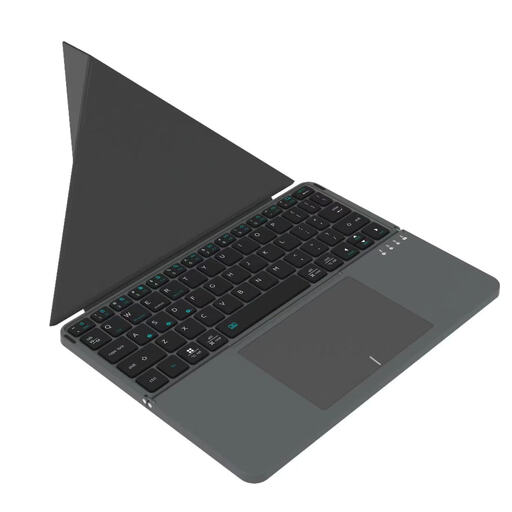
If you clear the desk after writing, consider whether the BOX1’s folding arrangement suits how you store your keyboard. Confirm the delivered key legends and access to your handout-editing shortcuts before ordering, particularly if you need a UK layout.
 No image available
This 75% model offers wired, Bluetooth and 2.4G connection choices for a desk shared with handout materials. The listed variant has a US QWERTY layout, so check its punctuation keys against your needs; also confirm its dimensions and compatibility with your working device.
A compact layout is a useful starting point when papers and a mouse need desk space too. Measure the available area and compare the exact keyboard dimensions, then check whether you need a dedicated number pad or direct access to navigation keys.
Choose a British English or UK-ISO variant if you want familiar UK key legends and punctuation positions. Check the selected configuration, not just the product-family name: Keychron, for example, lists UK-ISO as an option for the K3 Version 3.
For prolonged laptop use, the Health and Safety Executive advises a separate keyboard and mouse so the screen can be elevated. Check that your desk can accommodate that arrangement while keeping the keyboard central.
Check whether the exact keyboard uses replaceable batteries or charging, what is supplied with it, and the retailer’s terms before purchase. Apple lists a rechargeable internal battery for Magic Keyboard (USB-C); battery arrangements should not be assumed to be the same across models.