Choose a compact standalone Bluetooth keyboard if you need to clear the desk between sessions or use different devices. Consider a multi-mode keyboard if a wired or 2.4 GHz connection matters, or an attached keyboard case if you have a compatible iPad Pro or iPad Air. Whichever route you take, check the space left after positioning your screen, the key layout and compatibility with your practice device.
Who these keyboards suit
Small-desk tablet practisers
If you type timed answers on a tablet or phone, you need room for both the screen and your hands, plus somewhere to put the keyboard away afterwards. A separate keyboard also calls for a suitable way to position the screen.
Multi-device revision switchers
If you alternate between a computer, tablet and phone, check each device’s operating system and connection method. A keyboard’s wireless label alone does not establish compatibility with every device you use.
iPad keyboard-case users
If you have a compatible iPad Pro or iPad Air, an attached case can combine typing and adjustable screen support. Check the exact iPad model against the case before choosing this route.
What to check before buying
Standalone Bluetooth keyboard
Choose it when: You want a keyboard you can put away or use with different compatible devices.
Trade-off: A separate keyboard does not hold up your screen, so its support arrangement also needs desk space.
Compact multi-mode keyboard
Choose it when: You want a wired or 2.4 GHz option alongside Bluetooth for your practice setup.
Trade-off: Check the reduced key layout and the ports or receiver needed for the connection you intend to use.
iPad keyboard case
Choose it when: You have a compatible iPad Pro or iPad Air and want an attached keyboard with adjustable viewing support.
Trade-off: The case is specific to compatible iPad models rather than a keyboard you can switch freely between unrelated devices.
| Concern |
What to check |
Who this matters to |
| Desk space and storage |
Measure the clear area after placing the screen and notes, then compare it with the keyboard’s width and depth. Keychron specifies the B1 Pro at 296 × 130 mm. |
I need enough surface to see my questions and type, then put the keyboard away between sessions; around 42% of consumers put desk space and storage first. |
| Device and connection |
Check support for your device’s operating system and whether you need Bluetooth, a wired connection or a 2.4 GHz receiver. |
If I move between a tablet and computer, I need a connection that works with each one; roughly 33% of consumers make device compatibility their primary concern. |
| Typing layout |
Check the regional key layout and the position of punctuation and navigation keys. If you plan to use a keyboard in a formal assessment, ask your exams office about that assessment’s arrangements. |
For timed answers, I want familiar keys so I can concentrate on writing; about 25% of consumers prioritise layout and their answer-entry routine. |
Mistakes to avoid
-
Judging desk fit by the word “portable”
A keyboard can be easy to carry yet leave too little room for your screen, notes and hands.
Position the screen first, measure the remaining surface and compare it with the keyboard’s stated dimensions. Keychron specifies the B1 Pro at 296 × 130 mm.
-
Assuming Bluetooth works the same way on every device
Pairing requires a compatible keyboard and device. Microsoft says a Windows device needs Bluetooth to pair a Bluetooth accessory.
Check the keyboard maker’s operating-system support and test pairing with your practice device before a timed session.
-
Overlooking the key layout
A compact layout or a different regional arrangement may put punctuation and navigation keys somewhere unfamiliar during answer entry.
Check the exact variant’s layout image or manual. Keychron offers a UK-ISO B1 Pro variant, so confirm that variant rather than relying on the product-family name.
-
Treating a practice setup as exam permission
Being able to type practice answers on your own device does not establish which equipment or word-processing features you may use in a formal assessment.
Ask your exams office or SENCo about the arrangements for your specific assessment before building a routine around that setup.
Brands to consider for these setups
Logitech
The Keys-To-Go 2 is a standalone option for people who want a keyboard they can move between compatible devices.
- Logitech UK lists Android, ChromeOS, Windows, iPadOS, iOS and macOS support, a built-in cover and switching among up to three devices.
- Check the exact key layout and where your screen will stand; the keyboard does not itself provide screen support.
Keychron
The B1 Pro is a compact option if you want Bluetooth, 2.4 GHz and wired connection choices.
- Keychron specifies a 77-key, 75% layout, 296 × 130 mm dimensions and a weight of 425 g; its UK store offers a UK-ISO variant.
- The B1 Pro is non-backlit. Confirm the selected layout and any connection accessories you need for your device.
Apple
A compatible Magic Keyboard offers an attached setup for certain iPad Pro and iPad Air models.
- Apple Support says that, once attached to a compatible iPad, the keyboard does not need separate pairing, power-on or charging and allows viewing-angle adjustment.
- Compatibility is model-specific; this is not a keyboard-case option for unrelated tablets or computers.
Joybuy keyboard options
These are separate keyboards to consider for practice-answer typing, including compact Bluetooth, wired and multi-mode options. Check each model’s desk fit, layout and connection against your own setup; an attached iPad keyboard case is a different route.
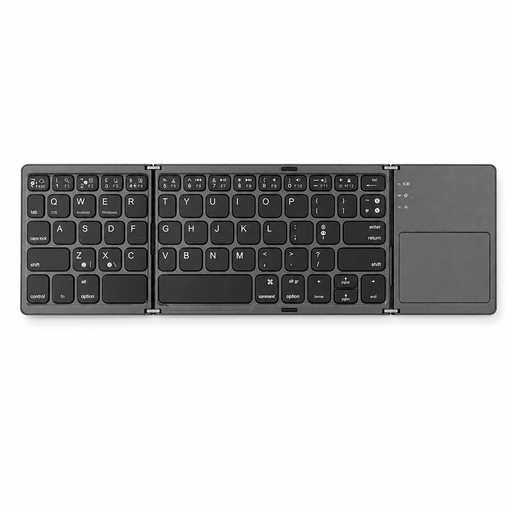 No image available
VoxorAI B033 black Bluetooth keyboard
Consider this separate keyboard if you use a Bluetooth-capable practice device and need to clear your desk between sessions.
The product name identifies Bluetooth wireless connectivity. Check its unfolded dimensions against your available surface and confirm the regional key layout before buying.
View on Joybuy
 No image available
Lofree OE907 65% mechanical keyboard, US QWERTY, with mouse
Consider this compact standalone keyboard if a US QWERTY layout suits the punctuation you use for practice answers.
Its name specifies 68 keys, Bluetooth 5.1, a wired mode and white backlighting. Confirm the desk space it needs and the mouse bundle details in the listing.
View on Joybuy
 No image available
ASUS ROG Falchion Ace HFX 65 analogue keyboard, UK layout
This is a compact option to assess if you practise on a computer and want the UK-layout variant.
The product name specifies a 65% layout. Check the key positions you use for answering questions and confirm the connection works with your practice device.
View on Joybuy
 No image available
ASUS ROG Strix Scope II 96 wireless keyboard, white, UK layout
Consider this model if you want to assess a 96% keyboard against your available desk space rather than choosing the smallest layout.
The product name identifies a wireless, UK-layout variant. Measure the clear surface beside your screen and confirm the selected switch option and connection requirements in the listing.
View on Joybuy
 No image available
HyperX Alloy Rise 75 wireless keyboard, UK-labelled variant
This is a 75% wireless option to consider if you want a compact keyboard for practice answers.
Check its dimensions against your clear desk area, and confirm both the precise key mapping and operating-system support for your practice device.
View on Joybuy
Frequently asked questions
Will a standalone Bluetooth keyboard work with my iPad for practice questions?
It can if the keyboard supports your iPad and its operating system. Check the keyboard maker’s compatibility information, then follow Apple Support’s pairing steps; Apple advises keeping the accessory within about 10 metres of the iPad while pairing.
What should I check before using a Bluetooth keyboard with a Windows computer?
Confirm that the computer has Bluetooth, it is enabled and the keyboard supports your Windows setup. Microsoft Support says a Windows device needs Bluetooth for Bluetooth pairing; if you choose a keyboard’s wired or 2.4 GHz mode instead, check the ports and receiver needed.
Can I use my practice keyboard in a formal exam?
Do not assume that practice use gives you permission to use the same keyboard or word-processing setup in an exam. Ask your school or college’s exams office which arrangements apply to your specific assessment before relying on it.


