Small-desk family-history researchers
If a laptop or tablet shares the desk with notes, scanned records and reference books, keyboard footprint matters—but only if the remaining keys still support your research tasks.


Choose a compact keyboard that leaves room for records while retaining the keys you use for names, dates and citations; the smallest design is not necessarily suitable for long transcription sessions. Check the exact layout, device compatibility and connection options before buying, and make sure the keyboard still lets you position your mouse and screen comfortably.
If a laptop or tablet shares the desk with notes, scanned records and reference books, keyboard footprint matters—but only if the remaining keys still support your research tasks.
Entering names, dates, places and citations for extended periods puts more emphasis on a usable layout and a comfortable workstation than on the smallest possible keyboard.
Moving between a computer, tablet and phone makes device compatibility and switching controls worth checking alongside size.
Start with the space available beside your records, then decide which keys and devices your work actually requires. A keyboard that clears the desk is less useful if its layout interrupts frequent date entry or its connection does not suit your computer.
| Concern | What to check | Who this matters to |
|---|---|---|
| Footprint and essential keys | Compare dimensions with your usable desk space, then inspect the number row, arrow keys and navigation layout. | I need space for documents and a pointing device, but still use keys for dates and moving through records; around 33% of consumers put usable desk space first. |
| Long-session typing | Assess the physical layout and whether the keyboard and pointing device can sit within comfortable reach. | When I transcribe records for an extended session, cramped typing matters more to me than maximum portability; roughly 27% of consumers prioritise typing comfort. |
| Device compatibility | Match supported operating systems and versions, connection types and switching options to your devices. | I move between a computer and mobile devices while consulting records, so a workable connection to each takes priority; around 27% of consumers put compatibility first. |
| Carrying and power | Check the carrying format and whether the model uses replaceable batteries or charging. | If I take my keyboard to archives or relatives' homes, packing and powering it matters most; about 13% of consumers prioritise use away from the main desk. |
Mini keyboards can omit keys found on traditional layouts. Saving desk space may be a poor exchange if you frequently enter dates or navigate long records.
Inspect photographs of the exact variant for its number row, arrows, symbols and navigation controls. Consider a separate numeric keypad only if your workflow and available space justify one.
Apple lists separate British-English, International English and US English Magic Keyboard variants. A familiar product name alone does not identify the key arrangement or confirm compatibility with every device.
Match the selected variant, connection type and supported operating-system version to the devices you plan to use.
A desktop setup needs a compatible connection. Kensington lists both Bluetooth and 2.4GHz wireless for its K75502UK compact keyboard, giving buyers a receiver-based option to consider.
Check your computer's Bluetooth capability and available USB ports before choosing a connection type.
A smaller keyboard does not by itself put the screen, mouse and your arms in comfortable positions. The Health and Safety Executive considers these parts of the wider display-screen workstation.
Arrange the whole desk for your longer transcription sessions; if a very small layout makes typing awkward, consider whether a larger keyboard is the more workable trade-off.
Compare specific models and layout variants rather than treating a brand name as a guarantee of fit.
Logitech lists both the covered Keys-To-Go 2 for carrying and the compact Pebble Keys 2 K380s for a multi-device desk.
Apple offers a British-English Magic Keyboard (USB-C) for buyers using compatible Macs, iPads or iPhones.
Kensington has compact models for buyers considering both Bluetooth and a 2.4GHz receiver connection.
These keyboards offer different ways to manage a small research desk, from a folding Bluetooth model to compact layouts for more fixed setups. Use the key layout and connection details to narrow the choice before deciding whether its footprint works beside your records.
 No image available
Consider this UK-layout option if you want a keyboard for a more fixed small-desk setup rather than a folding travel format.
Check its actual footprint and key arrangement against the space left for your records and mouse.
 No image available
Its 75 layout is worth considering when desk space is limited but you want to inspect a fixed keyboard rather than a folding one.
Confirm its dimensions and the position of the keys you rely on for record navigation before buying.
 No image available
Consider its compact format if you want to switch between devices at a small desk, provided the US key layout suits your typing.
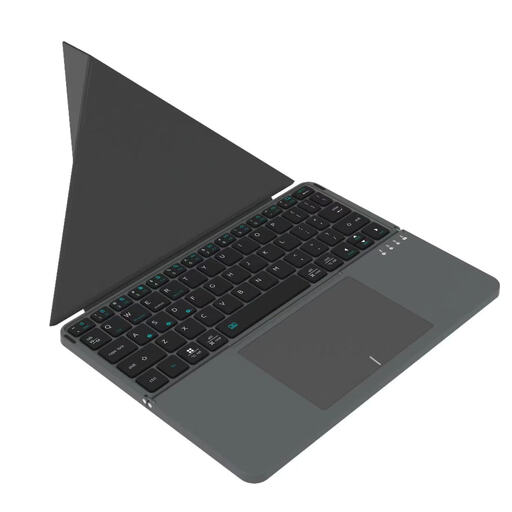
The product name specifies a 78-key membrane keyboard with Bluetooth and 2.4GHz wireless modes and support for four devices. Check the exact navigation keys and dimensions for your workspace.
 No image available
Consider this model if a keyboard used with a computer, tablet or phone needs to be put away between research sessions.
Inspect its exact key arrangement before relying on it for frequent dates, symbols or navigation, and confirm switching support if you will alternate between devices.
 No image available
Its compact format is an option to assess for a desk shared with records, if a US-layout keyboard meets your typing needs.
The product name specifies Bluetooth 5.1 and wired modes. Check the precise number-row and navigation-key arrangement, and confirm the mouse bundle contents before ordering.
Not automatically: some mini layouts omit keys found on traditional keyboards. For family-history research, inspect the exact number row, arrows, symbols and navigation controls, especially if you enter many dates or use spreadsheets.
It can if the exact model supports each device and its operating-system version. Logitech specifies switching among up to three devices for Keys-To-Go 2 and Pebble Keys 2 K380s; Kensington specifies up to three for K75502UK. Check the connection method as well as the device count.
Choose British English if that is the key arrangement and set of legends you expect for typing names and citations. Apple lists distinct British-English, International English and US English Magic Keyboard variants, so confirm the selected variant rather than relying on the product-family name.
Not on its own: comfort also depends on the layout and how the keyboard, mouse and screen are positioned. The Health and Safety Executive treats them as parts of the wider display-screen workstation; if compact keys make extended typing awkward, consider a larger layout and reassess the desk arrangement.