Choose a separate Bluetooth keyboard if you organise notes across several devices or want to pack the keyboard apart from your screen. If you study mainly on an iPad and want a fitted keyboard with screen support and a trackpad, check the exact iPad model before choosing a case. Either way, account for typing noise, screen position and the space your complete setup will occupy on the train.
Who is each setup for?
Students using several devices
If you move between a laptop, tablet and phone to review notes, check operating-system compatibility and how the keyboard switches between paired devices. Logitech describes both multi-platform keyboards and device-switching options in its range.
Typists in shared carriages
If nearby passengers make typing noise a concern, look for a keyboard described as quiet rather than assuming a compact model will be discreet. Logitech describes the Pebble Keys 2 K380s as having quiet, low-profile keys.
Students working mainly on an iPad
If you want the keyboard, trackpad and screen support in a fitted setup, an iPad keyboard case may suit you. Apple lists compatibility by iPad model, so establish your exact model before choosing a case.
What matters when choosing?
Separate Bluetooth keyboard
Choose it when: You type on more than one kind of device or want to pack the keyboard separately.
Allow for: Bluetooth pairing and a way to support and protect your screen.
Fitted iPad keyboard case
Choose it when: A compatible iPad is your main study device and you want integrated pointing and screen support.
Allow for: Model-specific fit and less use with devices outside that iPad setup.
| Concern | What to check | Who this matters to |
|---|
| Space and packability |
Check the keyboard’s carried dimensions and how you will support the screen. National Rail says luggage must not block doors or aisles or occupy wheelchair spaces. |
I need to carry my notes setup and use it without spreading into shared space. For around 33% of consumers, keeping the complete setup manageable is the primary concern. |
| Typing noise |
Look for a stated quiet-key design; consider key spacing as well as how loudly you tend to type. |
If I plan to type near other passengers, I want to limit distracting clicks. Roughly 27% of consumers put low-disruption typing first. |
| Device compatibility |
Match the keyboard’s operating-system and Bluetooth requirements to your devices; check its layout and device-switching controls. |
I move notes between devices and need the keyboard to work with each one. About 20% of consumers make compatibility and switching their main priority. |
| Integrated iPad setup |
Match the case to your exact iPad model and check which screen-support and trackpad features the chosen case includes. |
With an iPad as my main study screen, I would rather manage a fitted setup than separate pieces. For approximately 20% of consumers, that integration is the primary need. |
Mistakes to avoid
-
Assuming Bluetooth means universal compatibility
Operating-system requirements and device switching differ between keyboards. Microsoft Support, for example, specifies a Windows 10 or Windows 11 PC with Bluetooth 4.0 or later for its Designer Compact Keyboard.
Compare the exact model’s compatibility list with every device you intend to use, and pair the keyboard before travelling.
-
Choosing an iPad case by screen size alone
Apple identifies keyboard compatibility by iPad model and generation; a similar screen size does not establish that a case will fit.
Find your iPad model in Settings, then match it to the case’s stated compatibility list.
-
Treating the keyboard as the whole train setup
A separate keyboard does not necessarily hold or protect the screen, while a fitted case is tied to compatible devices. The bag and equipment also need to stay clear of other passengers’ space.
Plan where the screen and keyboard will sit before choosing a format, and keep your equipment clear of doors, aisles and wheelchair spaces.
If your chosen keyboard has no screen support or protective case, you may need to carry those separately.
-
Putting an old keyboard or batteries in household rubbish
UK government guidance directs consumers to recycle electrical products and batteries rather than discard them with household rubbish.
Use an appropriate electrical-waste or battery collection route when the keyboard or its batteries reach the end of their use.
Relevant brands to consider
Logitech
A reference for separate Bluetooth keyboards, including the covered Keys-To-Go 2 and the Pebble Keys 2 K380s.
- Logitech lists multi-device features for these models and describes the Pebble Keys 2 K380s as having quiet, low-profile keys.
- A separate keyboard does not by itself provide a fitted tablet case or a stable viewing position.
Apple
A reference for fitted keyboards intended for specific compatible iPad models.
- Apple’s iPad keyboard range includes trackpad, viewing-position and protective-case options; check the features of the particular model.
- Compatibility is iPad-model-specific, so these cases are not a substitute for a standalone keyboard used across different platforms.
Microsoft
A compatibility reference for Windows-oriented buyers considering the Designer Compact Keyboard.
- Microsoft Support describes pairing with up to three devices.
- For this model, Microsoft specifies Windows 10 or Windows 11 and Bluetooth 4.0 or later; check the keyboard layout before purchase.
Joybuy product choices
These choices include separate wireless keyboards for different packing and device needs, plus a fitted iPad keyboard case. Check the complete study setup, not just the keyboard, against the space you expect to use on the train.
 No image available
Targus EcoSmart full-size wireless keyboard (UK)
Consider this separate keyboard if you have room for a full-size layout while organising notes. Check its carried dimensions against your bag and available train-table space.
View on Joybuy
 No image available
VoxorAI B033 black Bluetooth keyboard
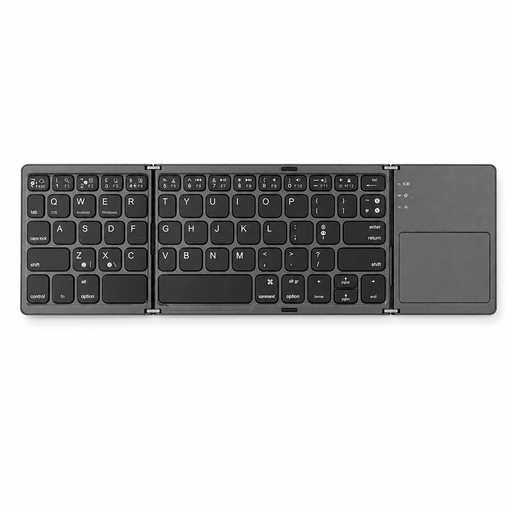
Consider it for typing notes on a computer, tablet or phone. The product name lists Bluetooth connectivity; check the keyboard layout and how you will position your screen before travelling.
View on Joybuy
 No image available
Lofree OE907 65% mechanical keyboard with mouse, US QWERTY
Consider the 68-key layout if you want a separate keyboard for note organisation and are comfortable typing on US QWERTY. Its title specifies Jellyfish switches and Bluetooth 5.1 or wired connection; check whether its sound and the listed mouse suit a shared-carriage setup.
View on Joybuy
 No image available
Hyper HyperSpace Next Bluetooth wireless keyboard (UK), white
Consider this separate Bluetooth keyboard if you expect to work across study devices. Check its full-size footprint against the space available for both keyboard and screen, and assess typing noise if you will use it near other passengers.
View on Joybuy
 No image available
Rexsun P11-2 iPad keyboard case with trackpad, white
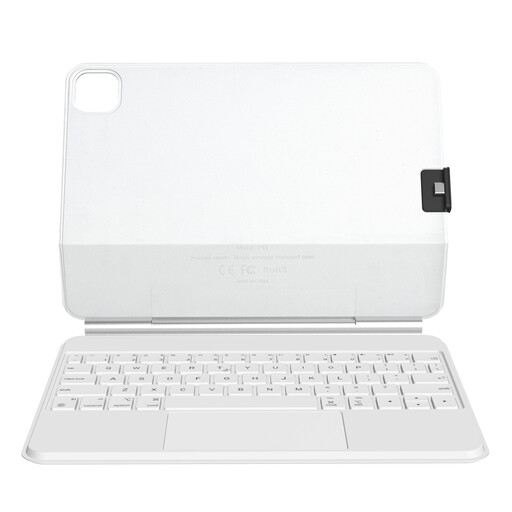
Consider this fitted option if you organise notes primarily on an iPad and want a keyboard with a trackpad and detachable protective cover. Its title names iPad Pro 11-inch and iPad Air 10.9-inch or 11-inch variants; confirm your exact model and generation against the case’s compatibility list.
View on Joybuy
Frequently asked questions
Can I use a portable keyboard on a UK train?
Yes, provided your complete study setup stays clear of other passengers and access areas. National Rail says luggage must not block doors or aisles or occupy wheelchair spaces; check your train operator’s luggage policy for your journey.
Should I get an iPad keyboard case instead of a separate Bluetooth keyboard?
Choose a fitted case if your exact iPad model is compatible and you want its keyboard and screen support together. A separate Bluetooth keyboard gives you a route to typing across different devices, provided you check each device’s compatibility and arrange screen support.
How should I connect a Bluetooth keyboard before travelling?
Pair and test it with your study device before the journey. Logitech’s pairing instructions say to put the keyboard in pairing mode, select it in the device’s Bluetooth settings and complete any code prompt; on its Easy-Switch keyboards, each paired device uses its own key or slot.
What should I do with an old keyboard or its batteries?
Use an appropriate electrical-waste or battery collection route rather than household rubbish. UK government guidance describes collection points for portable batteries and recycling routes for electrical products; keep a non-removable battery with the product for electrical-waste recycling.


