Choose the smallest keyboard that still gives you practical access to the playback, timestamp and editing commands you use repeatedly. A programmable compact layout is worth considering for shortcut-heavy work; a slim Bluetooth keyboard may suit someone who moves between devices or regularly clears the desk. For longer sessions, check the whole workstation setup as well as the keyboard’s layout, noise and device compatibility.
Who needs which features?
Shortcut-heavy transcript editors
If you repeatedly pause playback, add timestamps or label speakers, inspect the exact key arrangement and consider whether you need remapping. Keychron documents remapping options on its K3 models, but you still need to match them to your editing software.
Small-desk hybrid workers
If the keyboard must be put away after work or used with another device, consider its physical size and switching method. Logitech describes three-device switching on Pebble Keys 2 K380s; check that any keyboard you choose supports your particular devices.
Long-session home transcribers
If you edit for extended periods, leave enough room to position the keyboard and mouse comfortably. The Health and Safety Executive advises a separate keyboard and mouse for prolonged laptop use so the screen can be positioned independently.
What matters when choosing?
Start with the commands you use most, then decide how much desk clearance and device switching you need. Finally, check whether the keyboard can sit comfortably within your complete workstation.
| Concern |
What to check |
Who this matters to |
| Shortcut access |
Compare the exact key layout with your editing commands; check whether remapping works with your software and operating system. |
If I pause playback, insert timestamps and label speakers throughout a transcript, I need those commands within easy reach. Around 40% of consumers put shortcut access first. |
| Portability and quiet use |
Check the keyboard’s dimensions, connection and device-switching options; seek a typing-noise demonstration if sound matters. |
When I share a room or need to clear a shallow desk, I want a keyboard that is practical to move without disrupting others. Portability or quiet use comes first for around 30% of consumers. |
| Long-session positioning |
Allow space to centre the keyboard and place the mouse nearby; check keyboard height against your working position. |
For extended editing, I need the screen, keyboard and mouse to fit together comfortably, not just a smaller board. Around 30% of consumers prioritise workstation positioning. |
What is easy to overlook?
-
Assuming every compact layout keeps familiar shortcuts
Saving desk space can move navigation or editing functions onto key combinations. That matters when you use the same commands throughout an interview transcript.
Write down your frequent commands and inspect the exact keyboard layout. If remapping matters, check the model’s configuration method and its suitability for your software.
-
Treating a small keyboard as a complete ergonomic setup
A narrower board does not by itself set the screen, mouse and typing position. The Health and Safety Executive advises positioning the keyboard centrally and just below elbow height.
For prolonged laptop work, make room for a separate keyboard and mouse so you can position the screen independently.
-
Assuming wireless keyboards switch between devices alike
Logitech specifies three-device switching for Pebble Keys 2 K380s, while Apple describes automatic Mac pairing for its Magic Keyboard. Those descriptions address different workflows.
List the devices you will edit on and check their operating systems, connection methods and switching steps against the exact model.
-
Confusing a manufacturer warranty with seller remedies
Keychron UK says its direct-purchase warranty policy applies to products bought directly from Keychron UK. A manufacturer warranty does not take away UK statutory rights concerning faulty goods.
Keep your order record and check the seller’s process for handling a fault separately from any manufacturer warranty.
Brands to consider
These brands offer relevant compact keyboard lines; compare individual models and layouts rather than treating a brand name as a shortcut to the right choice.
Logitech
Its compact range spans the portable Pebble Keys 2 K380s and the illuminated MX Keys Mini.
- Logitech specifies three-device switching for Pebble Keys 2 K380s and programmable keys with Logi Options+ customisation for MX Keys Mini.
- Check each model’s physical layout and shortcut positions; compactness alone does not establish access to your preferred editing commands.
Keychron
Its compact lines include UK-ISO 75% K3 models and the slim B1 Pro.
- Keychron describes VIA remapping on K3 Max, alongside Bluetooth, 2.4 GHz wireless and wired connection options.
- Confirm the selected layout, switches and configuration steps for the particular variant you intend to buy.
Apple
Its British-English Magic Keyboard is a compact option to consider for a Mac-first desk.
- Apple describes the Magic Keyboard as wireless, rechargeable and able to pair automatically with a Mac.
- If your transcripts move between operating systems or devices, check compatibility and switching behaviour rather than assuming a Mac-focused pairing description covers that workflow.
Joybuy product choices
These compact keyboards cover different ways to make room on a small desk, from configurable mechanical models to a foldable Bluetooth option. Compare each listing’s exact layout and controls with your transcript-editing routine.
 No image available
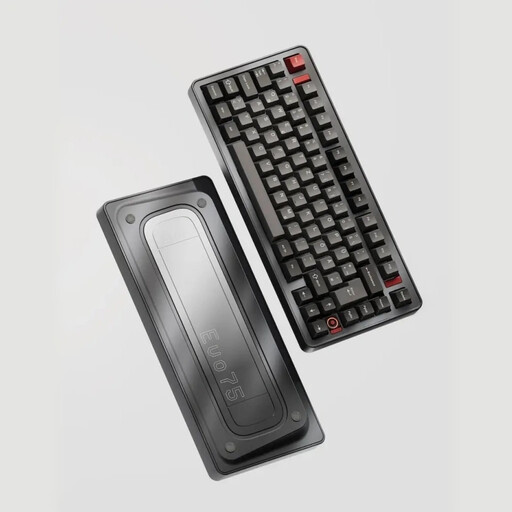
Ticktype EVO75 US-layout keyboard, Creamy Rye switches, Anodized Basalt Grey
Consider this model if configuring repeat commands is important, but check how its VIA-compatible controls work with your transcription software. The listing names a US layout, tri-mode connection, hot-swappable switches and an 8000mAh battery; check the key positions before choosing it for UK-layout typing.
View on Joybuy
 No image available
HyperX Alloy Rise 75 Wireless Keyboard UK
Consider it if you want a wireless keyboard for a small desk. Inspect the physical key arrangement and confirm that the shortcuts you use in your transcript editor are accessible; the product name’s UK designation alone does not establish every key position.
View on Joybuy
 No image available
VoxorAI BOX1 Black Bluetooth keyboard
This is worth checking if you want to put your keyboard away between editing sessions or carry it with other devices. Confirm its physical layout, editing-key access and compatibility with every device you intend to use before ordering.
View on Joybuy
 No image available
AULA S75 Pro 75% keyboard, Star Vektor switches
Consider its 75% layout if desk width is limited, then compare the actual navigation keys with your editing commands. The product name specifies tri-mode connection, hot-swappable switches, a TFT display and a knob; check the selected key layout rather than assuming those features provide your required shortcuts.
View on Joybuy
 No image available
Lofree OE907 65% US-layout keyboard, Jellyfish switches
Its compact layout may appeal if you need room beside the keyboard for notes or a mouse; check whether its navigation-key arrangement suits transcript editing. The product name specifies 68 keys, Bluetooth 5.1 and a wired connection. It also mentions a mouse, so confirm what is included with this variant.
View on Joybuy
Common questions
Should I choose a 75% keyboard or a smaller Bluetooth keyboard for transcripts?
Choose a 75% model if access to repeat commands and a configurable layout are central to your editing routine; consider a smaller Bluetooth model if clearing the desk or moving between devices matters more. Keychron documents remapping on its K3 models, but compare any keyboard’s exact layout with the shortcuts in your own transcription application.
Does a compact keyboard make long laptop editing sessions comfortable?
Not on its own. For prolonged laptop work, the Health and Safety Executive advises using a separate keyboard and mouse so the screen can be positioned independently, with the keyboard central and just below elbow height.
What if a keyboard bought in the UK is faulty?
Keep your order record and contact the seller about the fault. GOV.UK states that sellers cannot take away consumers’ statutory rights; check any manufacturer warranty separately, as its coverage may depend on where the keyboard was bought.
How should I dispose of an old wireless keyboard or its batteries?
Use an appropriate electrical-waste or battery collection route rather than putting them in household rubbish. GOV.UK advises taking waste electrical products to a household waste recycling centre and using suitable collection points for most portable batteries; a non-removable battery should remain with the electrical product for disposal.


