For short notes on a phone or tablet, choose a compact Bluetooth keyboard that is easy to carry; a cover is useful if its keys will share a bag with other items. If charging opportunities are limited, check the exact model’s power arrangement and the conditions behind its battery claim. For longer typing sessions, a fuller layout may be worth the extra bulk, but confirm the physical key layout and device compatibility before buying.
Who needs which keyboard?
Light-pack phone and tablet reviewers
If you make brief flashcard notes or look up words between classes or while travelling, a keyboard’s packed size matters as much as its typing layout. A cover can protect the keys in a bag, but check whether it protects the keyboard only or also supports your device.
Study travellers with limited charging access
If you may be away from a socket for several days, compare how each keyboard is powered and what you would need to carry to keep it working. A quoted battery interval should be read alongside the manufacturer’s usage conditions.
Frequent vocabulary-list typists
If you regularly enter spellings, answers or example sentences, key arrangement and noise may matter more to you than the thinnest possible design. Check the layout you will actually receive and allow for the space a fuller keyboard takes in your bag.
What matters when choosing?
Start with what would interrupt a review session: carrying the keyboard, keeping it powered or typing comfortably. Then check that the selected variant has the physical layout and device compatibility you need.
| Concern |
What to check |
Who this matters to |
| Carry size and protection |
Compare packed dimensions and weight; check what any built-in cover protects. |
If I review words in short breaks, I need a keyboard I can bring along without making my bag awkward to carry. Around 40% of consumers put carry size and key protection first. |
| Power away from a socket |
Identify the battery or charging arrangement and read active-use claims under their stated conditions, rather than using standby time as a guide. |
On a longer study trip, I do not want a flat keyboard to end a session before I can charge it or replace its batteries. Power continuity is the primary concern for around 30% of consumers. |
| Repeated typing |
Check the physical layout and key arrangement; weigh a roomier typing area against packed bulk. |
When I enter whole lists and example sentences, cramped or unfamiliar keys slow down the task I bought the keyboard for. Around 30% of consumers prioritise a comfortable, suitable layout for repeated entry. |
Buying pitfalls
-
Assuming wireless means no power planning
A wireless keyboard still needs charging or replacement batteries. Keychron, ProtoArc and Apple describe different power arrangements for the models discussed here, and quoted intervals are model-specific manufacturer claims.
Before travelling, check how the exact variant is powered, distinguish active use from standby claims and bring the appropriate cable or batteries.
-
Choosing a product family instead of a UK-layout variant
Regional variants can place punctuation and symbols differently, which matters when you repeatedly enter spellings and example sentences.
Check the selected variant’s physical key legends at checkout. Look for the applicable UK, UK-ISO or British English designation rather than relying on the product-family name.
-
Assuming a foldable full layout will fit anywhere
A fuller keyboard can still take up substantial space when folded. ProtoArc lists its UK-layout XK01 at 215.50 × 119.70 × 20.95 mm folded and 297.72 g.
Compare those folded measurements with the compartment you intend to use, then decide whether the unfolded typing area is worth carrying.
-
Putting an old keyboard or battery in household rubbish
UK government guidance says electrical products and batteries bearing the crossed-out wheelie-bin symbol should be recycled separately.
When a keyboard or its batteries reach end of life, use an appropriate battery or electrical-waste collection route.
Relevant brands to consider
These brands illustrate different keyboard formats for this task; their inclusion does not establish that every model or layout will suit your devices.
Logitech
Logitech’s Keys-To-Go 2 and Pebble Keys 2 K380s are relevant to compact, multi-device typing on phones and tablets.
- Logitech says Keys-To-Go 2 connects to up to three devices and has an integrated cover. It lists Pebble Keys 2 K380s compatibility across Windows, macOS, iPadOS, iOS and Android.
- Check the selected physical layout and power arrangement. A keyboard cover should not be assumed to double as a tablet stand.
Keychron
Keychron’s B1 Pro ISO range is relevant if you want a slim keyboard with a UK-ISO option and several connection modes.
- Keychron lists Bluetooth, 2.4 GHz wireless and wired modes for the B1 Pro, and claims up to 1,200 hours on one charge under its stated usage assumption.
- That runtime is a manufacturer claim, not a promise for every use pattern. Confirm the selected layout variant and the connection your device can use.
ProtoArc
ProtoArc’s UK-layout XK01 is a foldable option for people who want a fuller typing layout after unpacking.
- ProtoArc lists 105 keys, three-device Bluetooth and USB-C recharging for the XK01.
- Its listed folded size is 215.50 × 119.70 × 20.95 mm and its weight is 297.72 g, so check whether both suit your bag.
Apple
Apple offers a British English standalone Magic Keyboard and keyboard cases for specified iPad models.
- Apple describes its standalone Magic Keyboard as rechargeable, with about a month or more between charges under its stated conditions.
- Check software compatibility for the standalone keyboard. For an iPad keyboard case, match the named compatible iPad model rather than relying on screen size alone.
Joybuy keyboards for vocabulary review
These choices include compact and full-size keyboards for entering vocabulary away from a socket. Compare what you can comfortably carry, the physical key layout and how you will keep your chosen model powered.
 No image available
Hyper HyperSpace Next Bluetooth Keyboard (UK), White
Consider this model for longer vocabulary entries if carrying a larger keyboard suits your study kit.
Confirm the selected variant’s physical key legends and its charging arrangements before taking it away from a socket.
View on Joybuy
 No image available
Targus EcoSmart Full Size Wireless Keyboard (UK)
This is an option for repeated vocabulary entry when a full-size keyboard is practical to carry.
Check its packed dimensions and plan for the batteries needed on longer trips; confirm the selected key layout before buying.
View on Joybuy
 No image available
HyperX Alloy Rise 75 Wireless Keyboard UK
Consider the 75% layout if you want a smaller key arrangement for vocabulary entry and can accommodate the keyboard in your bag.
Read battery claims alongside their lighting conditions, and check packed size, charging requirements and the selected variant’s key legends.
View on Joybuy
 No image available
Lofree OE907 65% Mechanical Keyboard, US Layout
This compact option suits short entries if its US key layout works for the punctuation and symbols you use.
The product title identifies 68 keys, Bluetooth 5.1 and a wired mode. Check expected battery endurance before relying on wireless use throughout a longer trip.
View on Joybuy
 No image available
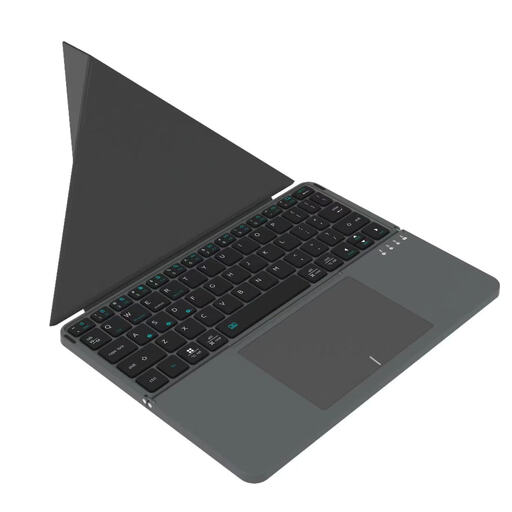
VoxorAI BOX1 Bluetooth Keyboard, Black
Consider this keyboard for vocabulary review on a compatible mobile device if its key arrangement suits the way you type.
Check its physical layout, carry dimensions and expected time between charges before depending on it away from mains power.
View on Joybuy
Frequently asked questions
Can a wireless keyboard keep working away from mains power indefinitely?
No. Wireless keyboards still need charging or replacement batteries. Keychron claims up to 1,200 hours on one charge for its B1 Pro under its stated usage assumption; ProtoArc describes the XK01 as USB-C rechargeable, while Apple says its standalone Magic Keyboard lasts about a month or more between charges. Check the exact model’s power arrangement and prepare for the length of your trip.
Should I choose a UK keyboard layout for vocabulary work?
Choose a UK-layout variant if familiar physical key legends and punctuation placement matter to your typing. Keychron lists a UK-ISO B1 Pro option, ProtoArc labels its XK01 as UK Layout, and Apple offers a British English Magic Keyboard. Confirm the selected variant rather than assuming every keyboard in a product family has the same layout.
When does an iPad keyboard case make more sense than a separate keyboard?
An iPad keyboard case makes sense when it fits your exact iPad model and you want the keyboard and device to travel together. Apple ties its cases to named iPad models; if you need to move between different types of device, check a separate Bluetooth keyboard’s stated compatibility instead.
What should I do with an old keyboard or battery in the UK?
Use an appropriate electrical-waste or battery collection route rather than putting an item bearing the crossed-out wheelie-bin symbol in household rubbish. UK government guidance calls for electrical products and batteries with that symbol to be recycled separately.


