
24/7 Customer Support

Free returns

Same-day & Next-day Delivery

Quality Guaranteed

Unlock Your Welcome Offers: FREE Delivery | Up to 80% OFF | Free 30-day JoyPlus trial
Download the APP
For the modern professional in the UK, working from a coffee shop, a co-working space or a train carriage is the new normal. But this freedom comes with a challenge: keeping your high-performance devices powered up. Juggling a bulky laptop brick, a separate phone charger and a tablet adapter is inefficient and clutters your bag. The search for a single, powerful and truly portable laptop charging station can be frustrating.
This guide is designed to cut through the clutter. We'll explain the key technologies you need to know about and recommend a complete, high-performance charging system. Our goal is to help you build a reliable remote work power solution that keeps you productive, whether you're at home, in the office or on the move.
Choosing the right gear involves more than just picking the one with the most ports. To ensure you're investing in a system that meets the demands of devices like a MacBook Pro or a gaming laptop, consider these factors.
The wattage (W) of a charger determines how quickly it can power your devices. A standard phone charger might offer 20W, but a power-hungry laptop requires significantly more—often 65W to 100W or higher. For the latest generation of high-performance laptops, the PD 3.1 charging standard is a game-changer. It enables a single USB-C port to deliver up to 240W of power. When looking for a 140W power bank for laptop use, ensuring it supports this standard is crucial for achieving maximum charging speeds. Always check your laptop's power requirements to match it with the right charger.
GaN, or Gallium Nitride, is a semiconductor material that is rapidly replacing traditional silicon in modern chargers. Its main advantage is efficiency. GaN chargers can handle higher voltages and run cooler, allowing manufacturers to create chargers that are significantly smaller and lighter without sacrificing power. A 100W GaN travel charger can be half the size of an old silicon-based model, making it an essential part of any digital nomad tech accessories kit.
Your charging setup is only as strong as its weakest link, and that is often the cable. A standard USB-C cable is not designed to handle the high power of modern chargers. To unlock the full potential of a 140W power bank or a next-generation laptop, you need a cable specifically rated for that wattage. Investing in a certified 240W USB-C cable not only ensures safety and top performance today but also future-proofs your kit for the more powerful devices of tomorrow. Always look for cables that meet UK and EU safety standards.
A true portable laptop charging station isn't just one device; it's a cohesive system. We've selected three components that work together to create a comprehensive fast charging travel kit: a versatile wall charger, a high-capacity power bank and a robust cable.
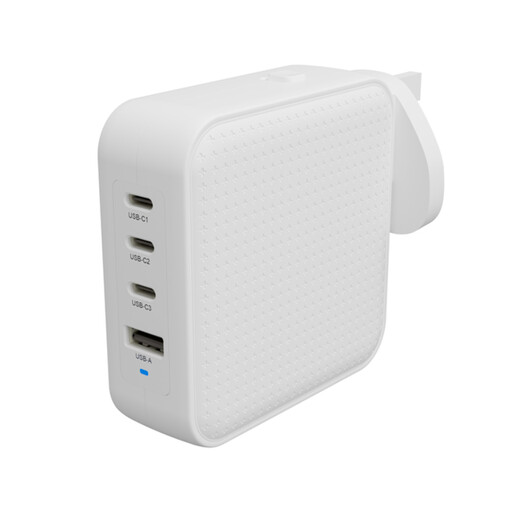
Why It Stands Out This charger from Hyper is the definition of versatility. It leverages 100W GaN technology to deliver serious power in a compact form. What makes it unique is its dual-purpose design. With interchangeable UK, EU and AU plugs, it's a globetrotter's companion. Back at your desk, the included C8 adapter converts it into a tidy desktop charging station, reducing cable clutter. Its three USB-C ports and one USB-A port can power a laptop, tablet, phone and accessory all at once, with intelligent power distribution that sends the most juice where it's needed most.
Pros
Who is it for? The frequent traveller and remote worker who needs a single, reliable charger for their entire tech ecosystem, seamlessly transitioning from a hotel room to a home office.
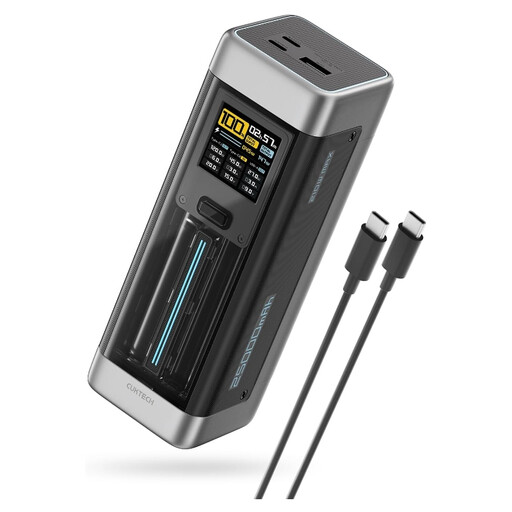
Why It Stands Out When you're away from a wall socket, the CUKTECH NO.20 takes over. This is no ordinary power bank. It is a PD 3.1 portable charger capable of delivering a massive 140W from a single USB-C port—enough to fast-charge a 16-inch MacBook Pro. Its 25,000mAh capacity provides a full charge for most laptops or multiple charges for smaller devices and it's generally compliant with airline carry-on regulations. The standout feature is the colour digital display, which provides real-time information on input/output wattage and remaining capacity, giving you complete control over your power.
Pros
Who is it for? The digital nomad, photographer or professional who works with power-intensive hardware and cannot afford to be tethered to a wall. It's the ultimate safety net for maintaining productivity anywhere.
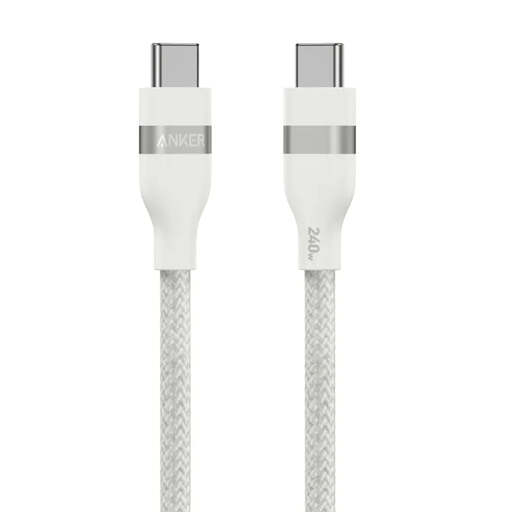
Why It Stands Out To connect the power bank and charger to your laptop, you need a cable that can handle the current. This braided USB-C cable from Anker is engineered for the future. With its 240W rating, it far exceeds the 140W output of the CUKTECH power bank, ensuring maximum speed and safety with zero bottlenecks. According to Anker, its durable construction is rated for a 30,000-bend lifespan and the braided exterior is crafted from post-consumer recycled materials. It’s a component built for both performance and longevity.
Pros
Who is it for? This cable is an essential purchase for anyone investing in a high-wattage charging system. It's the key that unlocks the full performance of your powerful new charger and power bank.
This recommended kit provides a powerful, all-in-one solution, but every user's needs are different. If you're looking for a different cable length, a charger with more ports or a power bank with a different capacity, there are many other options available.
Explore our full range of charging cables and accessories here.
Q1: Can I take a 140W power bank on a plane in the UK? Generally, yes. Airline regulations focus on Watt-hours (Wh), with the typical limit being 100Wh for carry-on luggage. A 25,000mAh power bank is approximately 90-92.5Wh, which falls under this limit. However, policies can vary, so it is always best to confirm with your specific airline before you travel. Remember, power banks of this capacity are strictly forbidden in checked baggage.
Q2: Do I really need a 240W cable if my charger is only 100W? While a 100W-rated cable would suffice for a 100W charger, opting for a 240W USB-C cable is a smart, forward-thinking choice. It guarantees you are getting the maximum safe speed from your current equipment and ensures you are prepared for future devices that may require more power, such as a PD 3.1 portable charger.
Q3: What is GaN and why is it important for a travel charger? GaN (Gallium Nitride) is a modern semiconductor material that is more efficient at conducting electricity than traditional silicon. For a travel charger, this means it can deliver high power (like a 100W GaN travel charger) from a much smaller and lighter package while generating less waste heat. This makes it the ideal technology for any compact and powerful fast charging travel kit.