
24/7 Customer Support

Free returns

Same-day & Next-day Delivery

Quality Guaranteed

Unlock Your Welcome Offers: FREE Delivery | Up to 80% OFF | Free 30-day JoyPlus trial
Download the APP
Whether you are filming TikTok videos in a flat, photographing products for an online shop, recording a vlog outdoors or taking portraits in low light, portable LED photography lights can improve visibility without the size of a studio lighting kit.
However, compact lighting products vary widely. A light described as a “camera light” may be a continuous LED panel, a handheld video light, a phone selfie fill light or a manual camera flash. Choosing by lumen figures alone can lead to disappointing results, particularly when battery life, mounting and colour accuracy matter more than headline brightness.
Lumens describe the total light output, while lux indicates how much light reaches a surface at a specified distance. A high lumen figure does not automatically mean better illumination for a face or product.
A camera flash is different again: it produces a short burst rather than continuous light. A continuous LED camera light is easier to preview while filming, but may need more battery power during long recordings.
An RGB video light may offer hundreds of colours and special effects, but that does not necessarily mean it renders skin tones or product colours accurately. For interviews, beauty content and product photography, check the CRI rating. A CRI of 95 or above is a useful specification to look for, although results also depend on brightness, distance and the surrounding light.
A colour temperature adjustable light is also practical. Warm settings around 2,700K suit atmospheric scenes, while daylight settings around 5,600K generally integrate more naturally with window light.
A small rechargeable photography light may be convenient, but continuous operation at high brightness can generate heat and reduce running time. Check the stated battery capacity, charging connection and runtime at different power levels rather than relying on a single maximum figure.
Also consider how the light will attach. Magnetic mounting is useful on compatible surfaces, while a cold shoe, 1/4-inch thread, clip or handheld grip may be more suitable for cameras and tripods. Lights described as waterproof should be distinguished from products that specifically warn against rain or humidity.
For vlogging, livestreams, Zoom calls and beauty videos, a portable video light or dimmable LED panel provides a constant source that can be positioned before recording. For still photography, a camera flash can freeze movement and provide a stronger burst, but manual models require you to adjust exposure yourself.
Some compact flashes also include a continuous video light, offering two functions in one unit. Confirm whether the flash supports TTL automatic exposure. A single-contact manual flash, such as the Ulanzi SL03 range, requires manual camera settings and is not the same as a TTL speedlite.
A wide flood beam creates softer, broader illumination for faces and small products. A zoomable or spotlight-style beam is more useful when you need directional light, outdoor visibility or a concentrated effect.
A diffuser or soft front panel can reduce harsh shadows. If a product has no diffuser, placing it slightly farther away or bouncing it off a pale wall may produce a more comfortable result. Avoid pointing bright LEDs directly at the eyes, and allow ventilation around the housing.
Battery capacity is usually shown in mAh, but capacity alone does not predict runtime. Brightness level, colour mode and heat management all affect how long a light operates. USB-C charging is convenient for UK users who already carry a compatible cable, while a built-in battery means you should check whether it can be replaced when its capacity declines.
For outdoor use, look for a clear charging indicator and consider carrying a power bank. Do not expose non-waterproof lights to rain, splashes or high humidity, and dispose of built-in lithium batteries through appropriate electrical waste channels.
The following products suit different types of buyer rather than one universal specification. Check the current product page for availability, included accessories, delivery information and the latest manufacturer instructions.
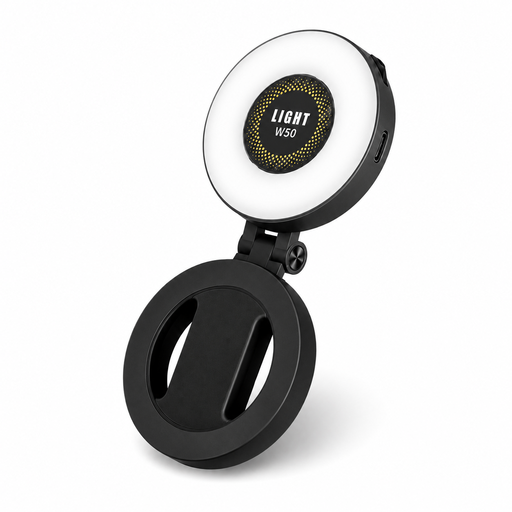
Why This Fits Their Persona: A pocket-sized option for phone photography, selfies, Zoom calls and beginner content creation in UK rooms with a small footprint.
It offers brightness adjustment from 10% to 100% and three stated colour temperatures: 2700K, 5600K and 7500K. Confirm the current battery specification before ordering, as the supplied listing presents differing capacity figures.
CRI 95+ rating, USB-C charging, magnetic attachment and an included metal ring adapter for non-MagSafe devices.
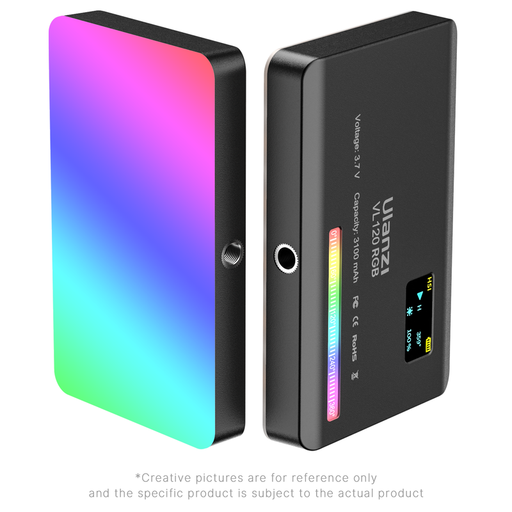
Why This Fits Their Persona: Suitable for creators who want continuous vlog lighting with adjustable white light and creative colour effects.
The specification identifies a 2500–9000K range, 360° colour control and 20 lighting effects, so buyers can distinguish adjustable colour from a fixed daylight panel.
CRI ≥95, integrated 3100mAh battery and compact panel format for photography or filming.
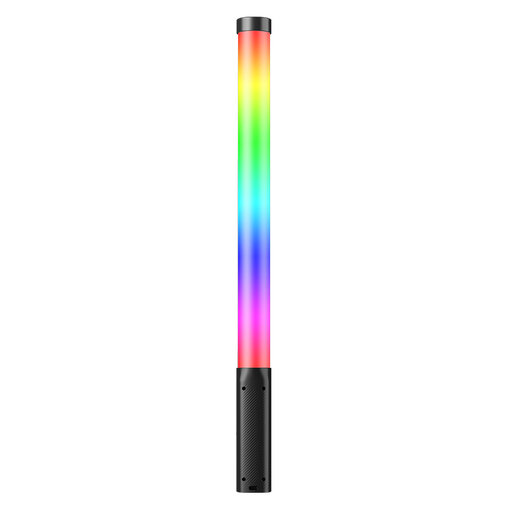
Why This Fits Their Persona: A light-stick format for portrait work, product scenes, handheld video and controlled creative lighting.
Its stated 2500K–9000K adjustment and RGB operation provide more control than a single-colour outdoor LED spotlight. Use it indoors or in dry conditions because the instructions warn against water and humidity.
10W output, 3300mAh battery and handheld tube design for repositioning during a shoot.
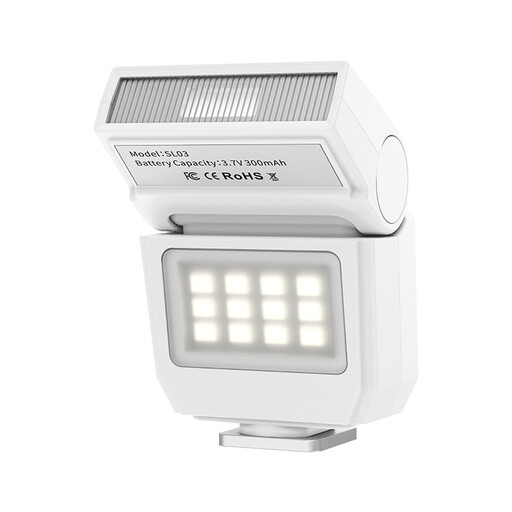
Why This Fits Their Persona: Designed for photographers using compatible Sony, Canon or Fuji cameras with a universal single-contact hot shoe.
The product information clearly identifies it as a manual flash without TTL. This prevents buyers expecting automatic exposure control from selecting it by mistake.
GN8 output, 90-degree adjustment, four power levels from 1/8 to full power and a continuous video-light mode.
We have compiled a complete, real-time list of products that fully satisfy these strict selection criteria and UK safety regulations.
Yes. Phone-compatible options commonly use a clip, magnet or included metal ring adapter. Check the phone’s case thickness and whether the attachment leaves the camera lenses unobstructed.
Runtime depends on brightness, colour mode and battery capacity. A light used at low brightness may operate for considerably longer than the same unit at full power. Check whether the manufacturer provides separate runtime figures for different settings.
Both consume relatively little electricity compared with larger studio fixtures, but they work differently. An LED light draws power continuously during filming, while a flash uses energy in short bursts. For regular filming, compare battery runtime and charging convenience; for occasional still images, flash power consumption may be less significant.