
24/7 Customer Support

Free returns

Same-day & Next-day Delivery

Quality Guaranteed

Unlock Your Welcome Offers: FREE Delivery | Up to 80% OFF | Free 30-day JoyPlus trial
Download the APP
A portable mini fridge can be useful for road trips, camping, caravanning, bedrooms, offices and skincare storage. However, product listings often make compact coolers sound more powerful and versatile than they are. The important question is not simply how many cans a unit holds, but whether its cooling method, power supply and capacity match the way you intend to use it.
Before buying, watch for these common pitfalls:
A thermoelectric portable car fridge is usually compact, light and capable of both cooling and warming. Its cooling performance is normally stated as a reduction below ambient temperature, such as 18–22°C below room temperature. This means the result depends on the surrounding temperature. On a warm summer day, the contents may remain cool rather than chilled to refrigerator temperature.
Thermoelectric models suit drinks, snacks, skincare products and short journeys. They require continuous power to maintain their temperature and are not normally suitable as a portable freezer.
A compressor model works more like a conventional refrigerator. It can offer a wider adjustable range, including below-freezing settings. For longer camping trips, fishing, boating or storing frozen food, a compressor cooler box is generally the more appropriate format. Check the stated temperature range rather than relying on terms such as “powerful cooling”.
Small units of around 4–6 litres can hold several cans, snacks or personal-care items without taking much room. They are practical as a skincare fridge, bedside cooler or office appliance.
An 18-litre 12V portable fridge gives more flexibility for meals and drinks on a weekend trip. Larger models, such as a 49.4-litre portable refrigerator, are designed for families, campervans and extended stays, but require more room and should be secured during travel.
Measure the available space in your boot, footwell, boat or caravan. Also check the internal dimensions. A compact unit may hold cans efficiently but leave insufficient height for bottles or food containers.
An AC/DC mini fridge is more versatile because it can connect to a household socket and a 12V or 24V vehicle supply. Confirm whether the AC cable is included; some car coolers require a separate mains adapter.
For vehicle use:
Noise is also relevant in bedrooms, tents and campervans. A stated operating level around 40–42 dB may be more suitable for quiet environments than a model without any noise information.
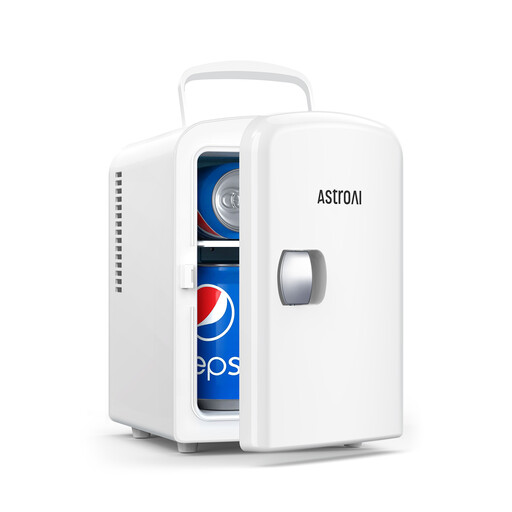
Why This Fits Their Persona: Its compact footprint suits a bedroom, home office or occasional car journey, while the 4-litre capacity is sized for up to six 330ml cans or small personal items.
The listing clearly identifies thermoelectric cooling and states that it cannot freeze, helping buyers avoid expecting compressor-style freezer performance.
AC and 12V DC cables are included; it provides cooling up to 20°C below ambient temperature and warming up to 66°C.
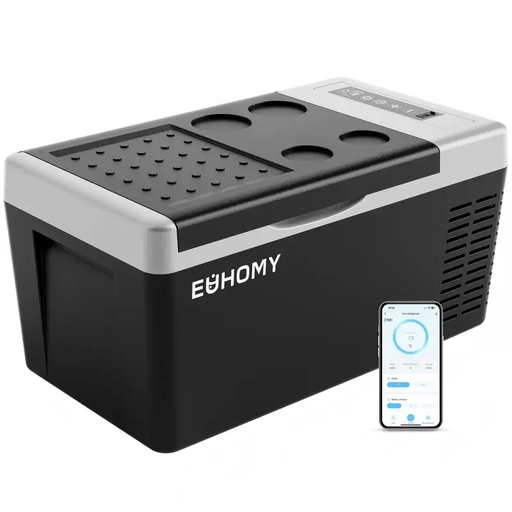
Why This Fits Their Persona: This 18-litre model suits UK campers, road-trippers, boat owners and campervan users who need chilled or frozen storage rather than simple temperature reduction.
Its compressor design and stated range of -20°C to +20°C distinguish it from a thermoelectric mini fridge cooler and warmer.
It supports 12/24V DC and 100–240V AC, includes three-stage battery protection and offers app control.
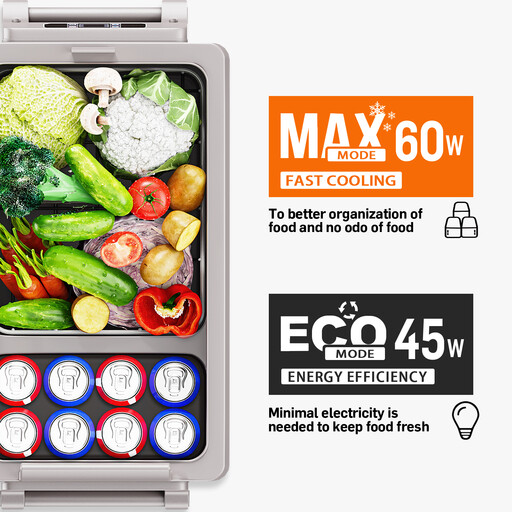
Why This Fits Their Persona: Its larger capacity is suited to families, extended camping, caravanning, fishing trips and people carrying varied food and drinks.
The dual storage areas help separate different foods, while the specifications state that the unit should be secured and ventilated during vehicle use.
It has a 49.4-litre capacity, adjustable -20°C to +20°C settings, 12/24V DC and 240V AC compatibility and battery protection.
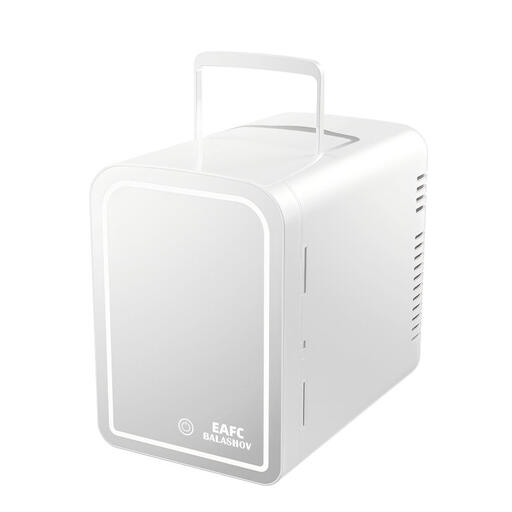
Why This Fits Their Persona: The compact 6-litre format is designed for skincare, cosmetics and small personal items in a bedroom, dressing area, car or travel bag.
The listing identifies thermoelectric cooling and advises keeping vents clear, placing the unit level and disconnecting it during prolonged vehicle shutdown.
It includes a built-in LED light mirror, 12V vehicle compatibility and a compact design for personal-care storage.
We have compiled a complete, real-time list of products that fully satisfy these strict selection criteria and UK safety regulations.
Only if the vehicle’s socket and battery setup support continuous operation. Many car sockets switch off with the ignition. Use the appliance’s battery protection settings where available, and check the vehicle manual before leaving a mini fridge for car use connected while parked.
Running cost depends on wattage, usage time, ambient temperature and electricity tariffs. Thermoelectric models often draw power continuously while cooling. Compressor models may cycle on and off, but their actual consumption still depends on temperature settings, ventilation and how often the lid is opened. Check the stated wattage and use an electricity-rate calculator for a more realistic estimate.
Lifespan depends on ventilation, transport, cleaning and power stability. Keep vents unobstructed, avoid overloading, protect the appliance from water unless it is specifically rated for it and secure it during travel. Compressor models also need sufficient clearance around the ventilation area, while thermoelectric units should not be operated with blocked fan openings.