
24/7 Customer Support

Free returns

Same-day & Next-day Delivery

Quality Guaranteed

Unlock Your Welcome Offers: FREE Delivery | Up to 80% OFF | Free 30-day JoyPlus trial
Download the APP
Planning a camping trip, upgrading a caravan or preparing for a power cut? The right portable off-grid power equipment can run lights, phones, cooling appliances and tools away from the mains. However, choosing by headline wattage alone can lead to an expensive setup that performs poorly in real UK conditions.
This guide explains the specifications that matter, common buying traps and suitable equipment for different usage profiles.
An inverter or portable power station may advertise a high peak figure, but this usually applies only for a short period while starting a motor or compressor. The rated or continuous output is the figure that determines what can run normally.
For example, a 2,000W peak inverter may provide 1,000W continuously. A coffee machine, kettle or power tool can exceed that limit even if its start-up demand appears acceptable. Check the appliance label and allow headroom rather than matching the numbers exactly.
A battery’s watt-hours indicate stored energy, not guaranteed output time. Conversion losses, temperature, battery protection settings and depth of discharge all affect runtime.
A simple estimate is:
Runtime in hours = battery capacity in Wh × expected efficiency ÷ appliance load in W
A 518Wh portable power station running a 50W device will not necessarily last 10.36 hours because the inverter and other electronics consume some energy. For longer stays, compare the battery capacity with your daily energy use instead of relying on a capacity figure in isolation.
A solar panel’s rated output is measured under controlled conditions. In the UK, cloud cover, low winter sun, shade, panel angle and cable losses can significantly reduce charging speed.
A foldable solar panel charger is useful for topping up a solar generator or portable power station, but it should be positioned in direct sunlight and moved as the sun changes. Avoid placing it behind glass or assuming that a 100W panel will produce 100W throughout the day.
LiFePO4 battery systems are commonly selected for motorhome, marine and off-grid applications because they offer a high cycle rating and stable output. Compare the stated cycle conditions carefully: cycle figures may depend on discharge depth, temperature and charging method.
Traditional lead-acid and deep-cycle battery systems can still suit certain installations, but they are generally heavier and require closer attention to discharge limits. Also check the battery’s physical dimensions, terminal type, maximum charge current and whether the built-in BMS includes overcharge, over-discharge, overcurrent and temperature protection.
A pure sine wave inverter produces an AC waveform suitable for many sensitive electronics, including laptops, televisions and certain chargers. Confirm:
UK mains electricity is nominally 230V, while some product listings use “220V” as a broad description. Check the exact output specification and use correctly rated UK plugs, sockets and installation components.
For a camping power system, portability matters as much as output. Check folded dimensions, weight, kickstand design, connector compatibility and whether the panel can charge devices directly.
A panel is not automatically waterproof simply because it is designed for outdoor use. Keep connectors dry, avoid standing water and follow the product instructions. For a caravan or boat, consider whether the equipment can be secured during transport and stored safely when not in use.
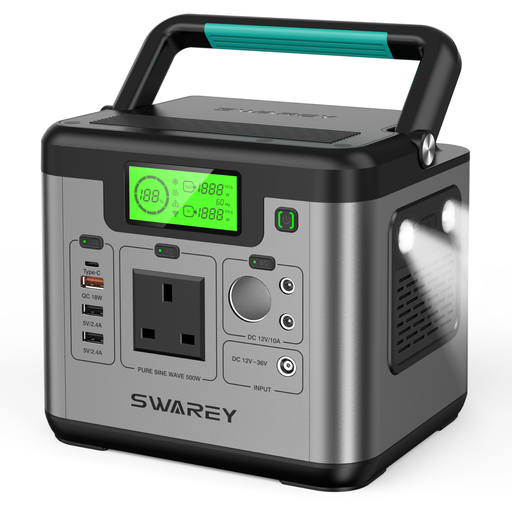
Why This Fits Their Persona: A compact starting point for campers or households wanting emergency backup power without immediately building a larger battery-and-inverter system.
Its 518Wh capacity and stated 500W output make the storage and continuous-power figures clearer than relying on a peak figure alone.
Includes a pure sine wave AC output, 65W USB-C charging and a 1,000W peak rating.
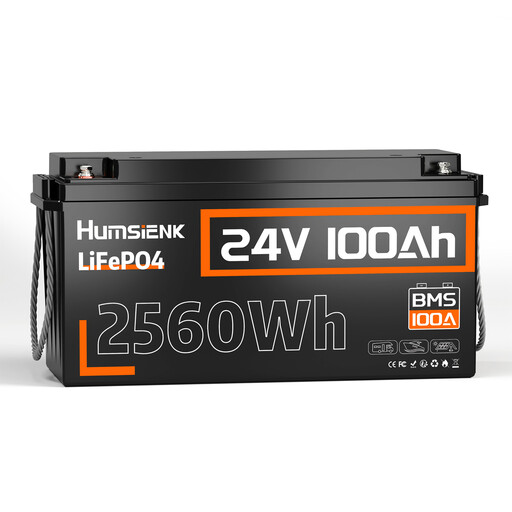
Why This Fits Their Persona: Suitable for a planned 24V motorhome, marine or off-grid solar power installation where higher system voltage can support substantial loads.
The 24V, 100Ah format and 100A smart BMS provide concrete system-planning information instead of only a general “long life” statement.
Includes protection functions for overcharge, over-discharge, overcurrent and short circuit.
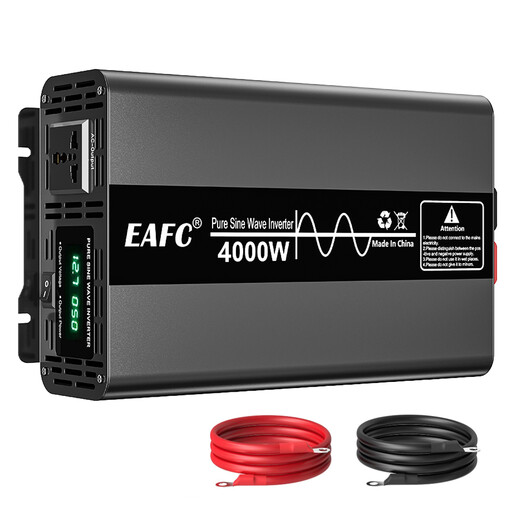
Why This Fits Their Persona: Designed for users connecting a 12V battery bank in a motorhome, lorry, work vehicle, yacht or backup installation to higher-demand AC equipment.
The product separates its 2,000W rated output from its 4,000W peak capacity, helping buyers assess continuous loads correctly.
Offers pure sine wave output, dual cooling fans and multiple protection functions, including reverse-polarity protection.
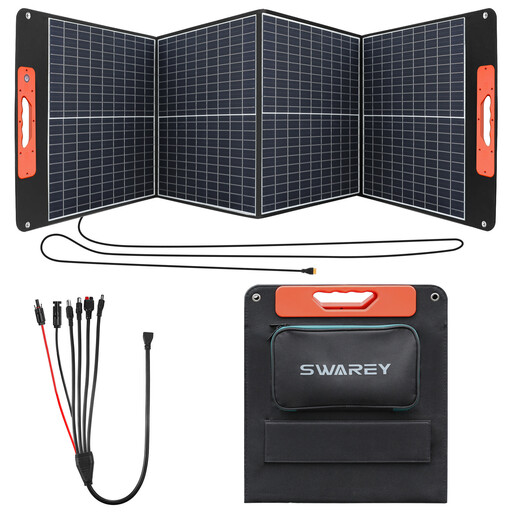
Why This Fits Their Persona: A portable charging option for campers and caravan owners who need to replenish a compatible power station or charge smaller devices outdoors.
The four-fold design, adjustable kickstands and Ray Tracer setup aid make panel positioning more practical than a flat, fixed panel.
Provides USB-C PD up to 60W, USB QC3.0 up to 18W and an XT60 to 5-in-1 cable.
A portable power station can operate a 12V car fridge, lights and chargers, while a suitably sized inverter can provide AC power for selected tools or appliances. For longer-term use, match the battery, solar charge controller, inverter and fuse protection as one system.
Vehicle users may also benefit from a reversing camera kit, particularly when manoeuvring a long caravan, lorry or van. The dual-camera kit listed above supports 12V/24V systems and includes a 7-inch monitor, two cameras and a 10-metre video cable. It should be installed securely and wired according to the vehicle manufacturer’s guidance.
For product selection across storage, charging and vehicle equipment, browse the camper van accessories category.
We have compiled a complete, real-time list of products that fully satisfy these strict selection criteria and UK safety regulations.
List each device, its wattage and expected daily running time. Multiply watts by hours to estimate watt-hours, then add a margin for inverter losses and variable usage. A fridge compressor may cycle rather than run continuously, so use its stated average consumption where available.
It can be suitable when the battery voltage, charger profile, BMS, compartment size and cable ratings are compatible. Check low-temperature charging guidance and ensure the battery is secured against movement. Marine installations may also require additional isolation, ventilation and fuse protection.
It can still generate power in diffuse daylight, but output is generally lower than the panel’s rated figure. Keep the panel clear of shade, angle it towards the brightest available sky and use a power station with a compatible solar input range. Solar charging is usually most useful as a gradual replenishment method rather than a guaranteed replacement for mains electricity.