
24/7 Customer Support

Free returns

Same-day & Next-day Delivery

Quality Guaranteed

Unlock Your Welcome Offers: FREE Delivery | Up to 80% OFF | Free 30-day JoyPlus trial
Download the APP
A portable personal blender can make breakfast smoothies, post-workout protein drinks and quick fruit blends more convenient. However, a compact design does not automatically mean strong blending performance or easy ownership. The right choice depends on how often you will use it, where you will use it and which ingredients you expect it to handle.
Before buying, watch for three common pitfalls:
Portable cups commonly range from around 475ml to 500ml, while larger personal blender cups may approach 900ml. A 475ml cup is practical for one smoothie or protein shake and is easier to carry on a commute. A 900ml cup may suit larger servings or sharing, but the motor base and cup assembly will generally take up more space.
Check whether the drinking lid is included and whether the cup detaches from the motor base. A detachable vessel means you do not need to carry the full appliance after blending.
A USB-C rechargeable blender can be topped up from a laptop, power bank or USB mains adaptor. Check the stated number of blends per charge, charging time and whether the cable is included. The portable models listed here specify more than 15 blending cycles per charge, although actual results can vary with ingredients, temperature and battery condition.
A corded mini blender may offer a more consistent power supply at home. For example, the Tefal Mix & Move has a 300W motor, two 0.6-litre bottles and a pulse function. This may be more suitable for a kitchen worktop than a cordless travel blender.
Look for a stainless-steel extractor blade or another clearly stated blade specification. Cups described as BPA-free and dishwasher-safe can simplify routine cleaning, but the motor base should never be immersed in water.
A removable blade assembly is useful because residue can collect around the blade housing. Always unplug or switch off the appliance before removing parts and handle sharp blades carefully. For hot soups, check the manual: many personal and portable blenders are not designed for hot liquids.
The most suitable product depends on your daily setting. A student may prioritise light weight and USB-C charging, while a family cook may need a hand blender for soups, sauces and purées. Fitness users may only need a shaker bottle for powdered supplements rather than a motorised appliance.

Why This Fits Their Persona: A practical starting point for UK households wanting smoothies and protein shakes at home, with two 0.6-litre bottles for separate servings.
The two included bottles reduce the need to transfer drinks into separate containers, while removable blades make cleaning more straightforward.
300W motor, 0.6-litre Tritan bottles, one-button control, pulse function and dishwasher-safe parts.

Why This Fits Their Persona: Suitable for shoppers seeking a powerful worktop personal smoothie blender with a larger 900ml cup for regular home use.
Its specifications clearly state the motor rating, cup capacity, control options and dishwasher-safe components, helping buyers compare more than appearance alone.
1200W motor, 900ml Tritan Renew cup with 50% recycled content, automatic 30-second cycle and manual pulse function.
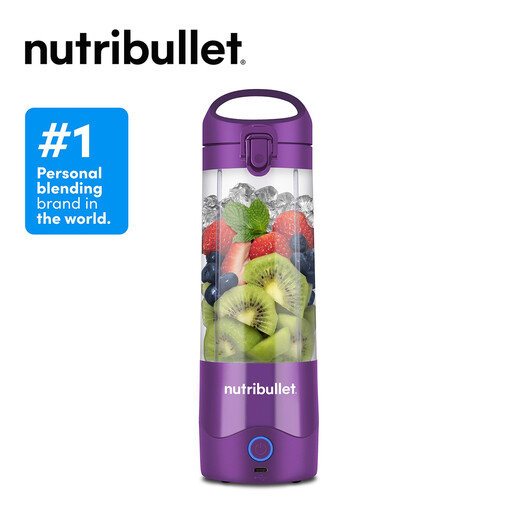
Why This Fits Their Persona: Its cordless format suits office workers, students, gym users and travellers who want to blend without a nearby socket.
The built-in rechargeable battery and USB-C cable address the inconvenience of mains-only blending, while the leak-proof to-go lid supports transport.
475ml BPA-free cup, USB-C charging, one-touch operation, dishwasher-safe removable parts and stated 15+ cycles per charge.
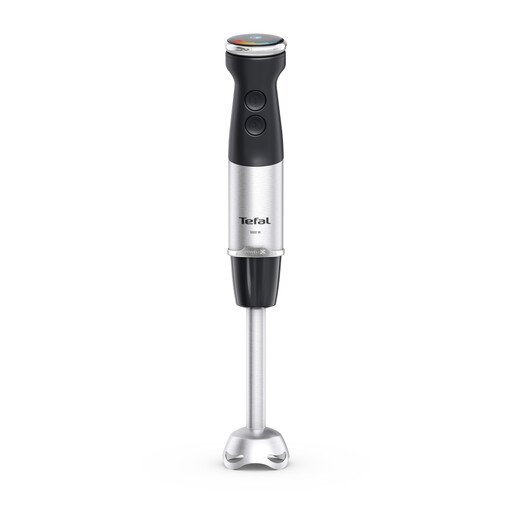
Why This Fits Their Persona: Home cooks making soups, sauces, purées and smoothies may prefer a corded hand blender with adjustable control rather than a travel appliance.
It is not limited to a small travel cup and offers speed adjustment for different textures. Users should still follow the manual for hot liquids and pan use.
1000W power, 20 variable speeds plus Turbo, anti-splash guard, 800ml beaker and dishwasher-safe removable parts.
We have compiled a complete, real-time list of products that fully satisfy these strict selection criteria and UK safety regulations.
Yes, many models are designed for protein powders, milk, water, fruit and similar soft ingredients. Add sufficient liquid, avoid exceeding the fill line and allow powder to settle before starting. If you only need to mix powder with water, a shaker bottle with a mesh insert may be simpler and lighter than a motorised blender.
Some models specify ice or frozen fruit compatibility, but performance depends on the size and quantity of the ingredients, battery charge and liquid level. Use small pieces where permitted and follow the manufacturer’s instructions. Do not assume that every mini blender is an ice-crushing blender.
The electricity cost of recharging a USB-C blender is generally small, but the exact amount depends on battery capacity, electricity tariff and charging frequency. Corded models use power while operating, with running cost influenced by wattage and blending time. Cleaning effort, replacement parts and battery lifespan are also worth considering when comparing total ownership cost.