
24/7 Customer Support

Free returns

Same-day & Next-day Delivery

Quality Guaranteed

Unlock Your Welcome Offers: FREE Delivery | Up to 80% OFF | Free 30-day JoyPlus trial
Download the APP
We’ve all been there: you’re navigating with your phone’s last 5% of battery, miles from a plug socket, when the screen finally goes dark. A portable power bank is the obvious solution, but choosing the right one in the UK market can be a minefield of confusing specifications and overblown marketing claims.
Many shoppers end up with a device that underdelivers, fails after a few months or simply isn't right for their needs. Before you spend your money, it’s crucial to understand the common pitfalls.
As the Joybuy Product Recommendation Officer, my role is to help you see past the hype. This guide will break down the essential features to look for, ensuring you get a reliable device that fits your life.
To make an informed choice, focus on these three core parameters. They determine a power bank's performance, safety and longevity.
Capacity tells you how much energy a power bank can store. It's measured in milliamp-hours (mAh) or Watt-hours (Wh).
The speed at which a power bank charges your devices is measured in watts (W). A higher wattage means a faster charge, but only if your device and cable are compatible.
The type of battery cell inside affects the power bank's safety, weight and lifespan.
Instead of providing an endless list, we've matched specific products to the people they are designed for.
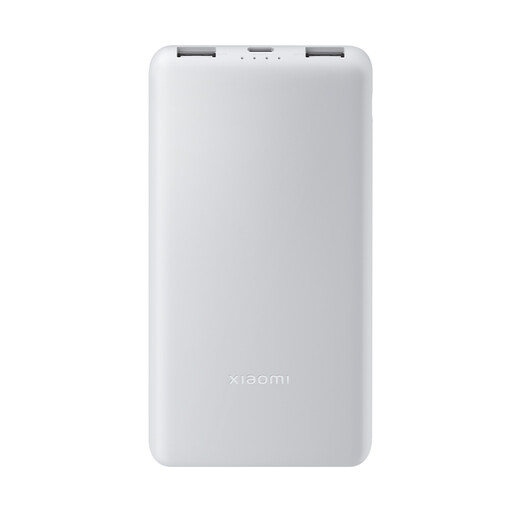
Why This Fits Their Persona: This power bank is lightweight and compact, making it ideal for slipping into a jacket pocket or handbag for daily top-ups on the train or between meetings. Its 10,000mAh capacity is ample for a full day away from a wall socket.
It cuts through the "fast charging" fog by clearly stating its 22.5W maximum output, a respectable speed for modern smartphones. This avoids the ambiguity of vague marketing terms.
Features a convenient power bank with built-in cable, plus two additional ports, allowing you to charge up to three devices at once. It's also airline-approved for hassle-free travel.
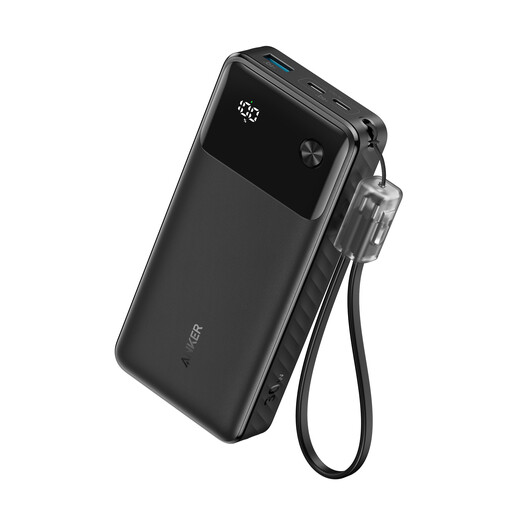
Why This Fits Their Persona: For those juggling a phone, tablet and wireless earbuds, this 20,000mAh unit provides enough power for a full weekend. The 30W PD output is strong enough to charge a tablet or even a small laptop at a decent speed.
This power bank avoids the capacity myth by coming from a brand known for its reliable battery technology and accurate ratings. The clear 30W Power Delivery specification ensures you know exactly what charging speed to expect.
It can charge three devices simultaneously via its two USB-C and one USB-A port. The digital display shows the exact percentage remaining, removing any guesswork.
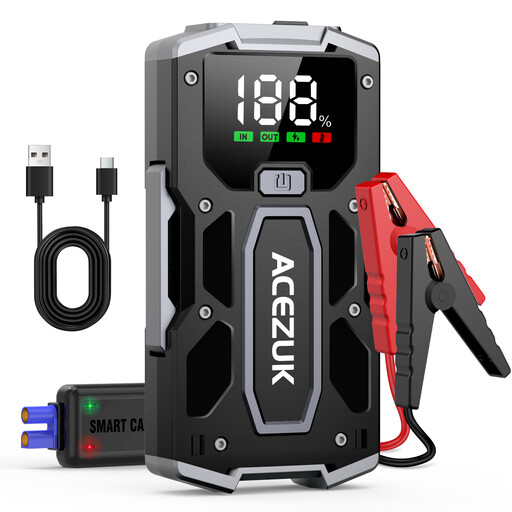
Why This Fits Their Persona: This is for the driver who wants to be ready for anything. Stored in the boot or glove compartment, it provides peace of mind that a flat battery won't leave them stranded. It's powerful enough for larger petrol and diesel engines.
It avoids the all-in-one trap by being a powerful, dedicated car jump starter first and foremost. Its high 6000A peak current is designed for the demanding task of starting an engine, not just charging a phone.
It includes dual fast-charging USB ports to function as a high-capacity power bank. The smart LCD screen and 8-layer safety system provide clear status updates and protection against incorrect use.
We have compiled a complete, real-time list of products that fully satisfy these strict selection criteria and UK safety regulations.
This depends on your phone's battery size and the power bank's efficiency. Due to energy loss during charging (the difference between cell capacity and rated capacity), a 10,000mAh power bank will realistically charge a typical smartphone (with a 4,000-5,000mAh battery) about 1.5 to 2 times from empty.
Modern, certified power banks are equipped with protection circuits that prevent overcharging. However, for peace of mind, it is always good practice to use the charger and cable that came with the device or a certified equivalent and to place the charging unit on a hard, non-flammable surface like a desk rather than a bed or sofa.
Yes. UK and international aviation rules limit batteries in carry-on luggage to 100 Watt-hours (Wh). A typical 20000mAh power bank has a rating of around 74Wh, which is well within the limit. You must carry it in your hand luggage; power banks are not permitted in checked baggage.