Buying priorities
Start with the devices you need to keep available, then check connections, output and how comfortably the power bank fits into your everyday carry.
| Priority |
What to check |
Your needs |
| Independent backup power |
Choose a self-contained power bank; check its stated capacity and whether it has a charge-level display. Treat train sockets as a convenience, not the only plan. |
I need my ticket, journey information or phone to remain available when my usual service has no usable outlet. |
| Daily portability |
Compare stated weight and dimensions. Decide whether an integrated cable suits your main connector, or whether a separate short cable would be easier to replace. |
I want backup power that fits a pocket or small bag without adding loose cables I may forget. |
| Output and compatibility |
Check the device’s supported USB-C charging input, the cable and whether the stated wattage applies to one port or shared charging. Check multi-port limits when charging more than one device. |
I want a useful top-up during the journey without paying for output my phone, tablet or laptop cannot use. |
| Safe everyday use |
Buy from a reputable retailer, inspect cables and plugs for damage, and stop using a battery that is swollen, damaged, crushed or punctured. |
I carry charging equipment in a bag every day and want to reduce avoidable electrical and battery risks. Electrical Safety First and London Fire Brigade both provide relevant safety guidance. |
Joybuy product options
These Joybuy options focus on power banks for keeping phones and other personal devices charged during regular rail journeys.
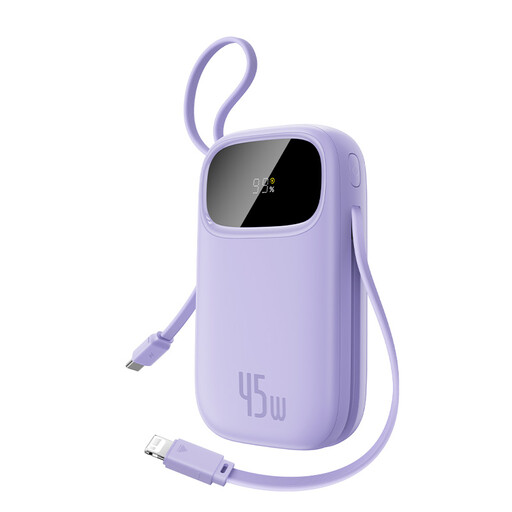 Image unavailable
Baseus EnerFill FC31 Qpow 3 10,000mAh 45W
A wired option for commuters carrying mixed-connector devices or needing to charge several items.
- 10,000mAh capacity with up to 45W USB-C output for one device.
- Built-in USB-C and Lightning cables, plus USB-C and USB-A connections.
- Supports up to four devices and includes a battery-percentage display.
- The listing states simultaneous charging reduces total output to 15W; listed weight is 470g.
Joybuy
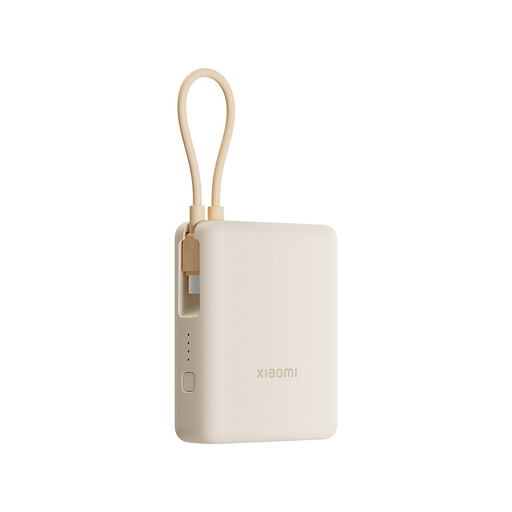 Image unavailable
Xiaomi 33W 10,000mAh Power Bank with Integrated Cable
A phone-centred commuting backup for USB-C users who want fewer separate accessories.
- 10,000mAh capacity and 33W maximum output.
- Integrated USB-C cable with additional USB-C and USB-A ports.
- Listed for charging up to three devices, with four battery indicators and a low-current mode.
- Users of other primary connectors will need a separate compatible cable.
Joybuy
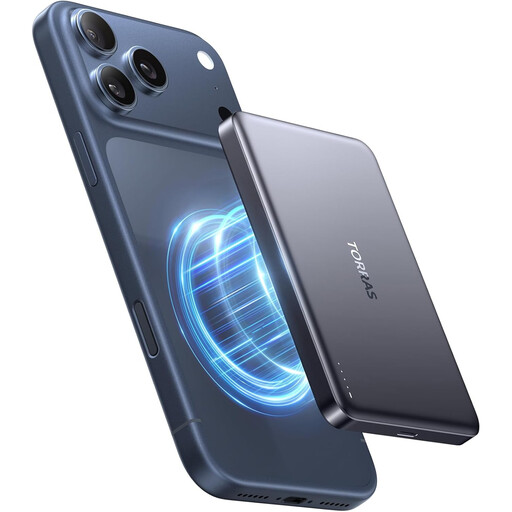 Image unavailable
TORRAS MiniMag 10,000mAh Magnetic Power Bank
A slimmer choice for commuters with a compatible magnetic phone or case who also want a wired fallback.
- 10,000mAh capacity with USB-C wired output up to 22.5W.
- Magnetic wireless charging and an included USB-C cable.
- Listed at 182g and 0.5 inches thick.
- Magnetic charging requires a compatible phone or case; the listing states 7.5W wireless output for iPhone.
Joybuy
 Image unavailable
Qi2 10,000mAh 20W Power Bank
A dual wired and magnetic option for compatible phone users who want cable-free attachment on the train.
- 10,000mAh capacity with a foldable built-in USB-C cable.
- 20W wired USB-C output and 15W Qi2 wireless output.
- The listing states simultaneous 15W wireless and 20W wired charging.
- Confirm compatibility with your phone and case; avoid charging in confined spaces if the unit becomes excessively hot.
Joybuy
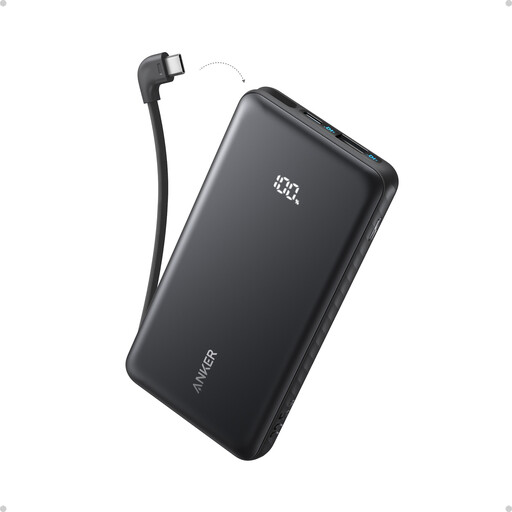 Image unavailable
Anker Zolo 10,000mAh 22.5W Power Bank
A phone-focused option for USB-C commuters who prefer an integrated cable and visible remaining charge.
- 10,000mAh capacity with stated 22.5W output.
- Built-in USB-C cable, plus USB-C and USB-A connections.
- Real-time charging display and trickle charging are listed.
- Users with another primary connector need a separate compatible cable.
Joybuy
Frequently asked questions
Should I rely on train sockets instead of carrying a power bank?
Not if keeping your phone available is important. National Rail says many train companies offer power outlets, but availability varies, so a small power bank gives you a route-independent backup while onboard power remains a convenience.
Is a 10,000mAh power bank a sensible size for regular phone commuting?
Usually, it is a practical compact capacity for a phone-centred commute. Actual usable recharges depend on conversion losses, battery size and health, charging conditions, and whether you also charge other devices, so nominal mAh does not translate into the same number of full charges for every phone.
When should I choose wired USB-C instead of magnetic wireless charging?
Choose wired USB-C when you need broad compatibility and want to check the power your phone or tablet can receive. Choose Qi2 magnetic charging when your phone and case are compatible and cable-free attachment matters more than a universal wired connection.
How should I use and charge a power bank safely?
Use a correct compatible charger and cable, keep the equipment dry and uncovered, and do not use a battery that is swollen, damaged, crushed or punctured. London Fire Brigade advises stopping charging immediately if a battery swells or expands.
Where can I check whether a charger or power product has been recalled in the UK?
Search the Office for Product Safety and Standards Product Safety Alerts, Reports and Recalls database by brand, model or product category before buying, or if you have concerns after purchase.


