
24/7 Customer Support

Free returns

Same-day & Next-day Delivery

Quality Guaranteed

Unlock Your Welcome Offers: FREE Delivery | Up to 80% OFF | Free 30-day JoyPlus trial
Download the APP
Running out of battery when you are far from a wall socket is a modern frustration we can all relate to. Whether you are a digital nomad working from a cafe, an adventurer exploring the great outdoors or simply preparing for an unexpected power cut at home, a reliable power source for your devices is no longer a luxury—it is a necessity.
Navigating the market for a portable power solution can be confusing, with a dizzying array of capacities, outputs and features. This guide is designed to cut through the clutter, helping you understand the key considerations and introducing you to a few standout options that cater to different needs, from keeping your laptop running to harnessing the power of the sun.
Before diving into specific products, let's clarify a few technical points. Understanding these will help you make a more informed decision tailored to your lifestyle.
It is easy to mix these two up, but they serve different functions.
laptop power bank requires 65W, 100W or even more to charge effectively. Always check the power requirements of your most demanding device.The days of waiting overnight for a full charge are behind us. Modern standards like USB-C Power Delivery (PD) allow for rapid charging of compatible devices, including tablets and laptops like the MacBook Pro. When selecting a fast charging portable charger, ensure its output ports and wattage match your devices' needs. A model with multiple ports (e.g., USB-C and USB-A) offers greater versatility for charging several items at once.
The ideal portable power solution is a balance between power and portability.
power bank for macbook pro or other laptops (20,000mAh and above) with a high wattage output is essential. Look for models that are flight-approved (typically under 100Wh).Camping Power & Off-Grid Power: This is where larger power stations or a foldable solar panel become invaluable. They offer sustained energy for longer trips, allowing you to power everything from laptops to small camping appliances, completely independent of the grid.Here are a few recommendations that address different power needs, selected for their features, design and user-centric functionality.
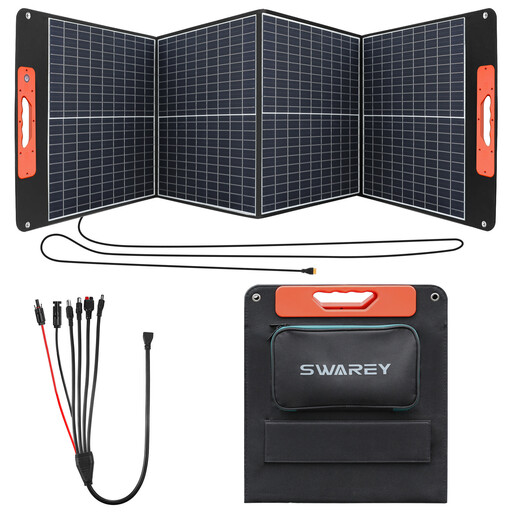
Why It Stands Out: This foldable solar panel is an excellent choice for those seeking true energy independence. It uses high-efficiency monocrystalline cells, which the brand states achieve up to a 23% conversion rate for effective charging even on less-than-perfect days. A clever feature is its "Ray Tracer" technology, which helps you quickly find the optimal angle to the sun for maximum power generation.
Pros:
Who is it for? Outdoor enthusiasts, RV owners and emergency preppers who need a reliable and renewable off-grid power source for their adventures or home backup plan.
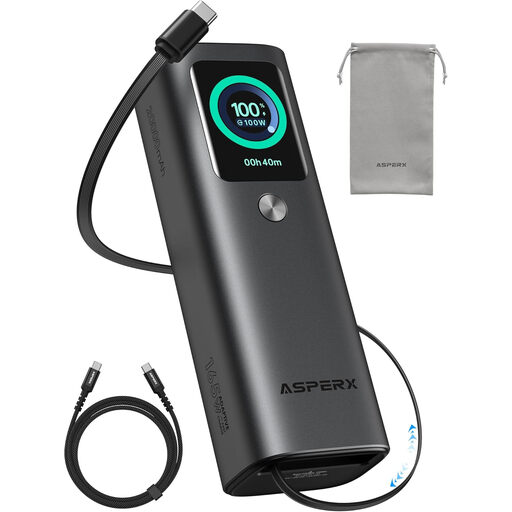
Why It Stands Out: This laptop power bank tackles a common annoyance: forgotten cables. Its standout feature is the built-in retractable USB-C and Lightning cables, allowing for immediate, tangle-free charging. The unit is housed in a durable aluminium alloy unibody, which aids in heat dissipation compared to plastic alternatives. A large, colourful TFT screen provides detailed real-time information on battery levels, power output and remaining charge time.
Pros:
Who is it for? Frequent travellers, mobile professionals and students who value convenience and need a powerful, all-in-one charging solution that minimises clutter.
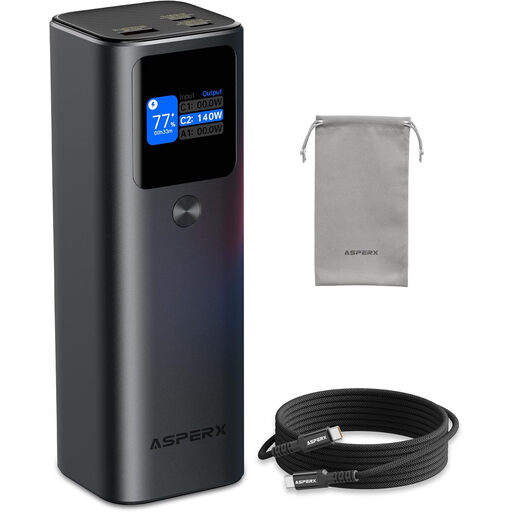
Why It Stands Out: For those who need the most power possible within flight regulations, this model is a strong contender. It packs a 27,600mAh battery, which translates to 99.36Wh—just under the 100Wh limit for air travel. Its main draw is the powerful PD3.1 charging protocol, capable of delivering up to 140W from a single USB-C port. This makes it one of the more powerful options available for charging demanding laptops like the 16-inch MacBook Pro at high speed.
Pros:
Who is it for? Power users, video editors, photographers and anyone with high-demand electronics who needs a substantial and fast power bank for macbook pro or similar devices without compromising on air travel compliance.
While a reliable power source is essential for your digital life on the go, sometimes you need to unplug. For those quiet moments during your travels or camping trips, having a good book is invaluable. To keep your reading organised, explore our curated selection of book accessories.
1. How many times can a 20,000mAh power bank charge a phone? This depends on your phone's battery size and the power bank's efficiency. As a general rule, after accounting for energy loss during transfer (typically 20-35%), a 20,000mAh power bank can charge a modern smartphone (with a ~4,500mAh battery) approximately 3 to 4 times from empty.
2. Can I take a laptop power bank on a plane in the UK? Yes, but with restrictions. Power banks must be carried in your hand luggage, not checked baggage. The Civil Aviation Authority (CAA) and most airlines limit the capacity to 100Wh per battery. The 27,600mAh AsperX model (at 99.36Wh) is designed specifically to meet this limit. Always check with your airline before flying for their specific policies.
off-grid power setup, many people use a solar panel to recharge a large-capacity power bank or power station.