
24/7 Customer Support

Free returns

Same-day & Next-day Delivery

Quality Guaranteed

Unlock Your Welcome Offers: FREE Delivery | Up to 80% OFF | Free 30-day JoyPlus trial
Download the APP
A reliable portable power station can transform a weekend camping trip, power your tools in the shed or provide crucial backup during a power cut. The 600W category, in particular, hits a sweet spot of portability and capability. However, the market is filled with confusing specifications and marketing claims that can lead to a disappointing purchase.
As the Joybuy Product Recommendation Officer, my role is to help you navigate this landscape. We will look past the hype and focus on the practical details that determine a product's true value. Before you invest, let's uncover the common pitfalls that many buyers fall into.
To make an informed choice, focus on these three non-negotiable parameters. They are the foundation of a reliable and long-lasting portable power source.
The single most important factor for longevity and safety is the battery chemistry. Look for units built with LiFePO4 (Lithium Iron Phosphate) batteries. While the initial cost may be slightly higher, the benefits are substantial:
Understand what you need to power.
A versatile power station should offer multiple ways to recharge quickly.
Instead of a generic list, we have matched specific models to different user needs, ensuring you find a unit that aligns with your lifestyle.

Why This Fits Their Persona: This is the ideal choice for the serious camper, angler or RV owner who needs a reliable workhorse. Its 600W output and 499Wh capacity can comfortably run a portable fridge, charge multiple devices via its 100W USB-C port and keep laptops powered for a full weekend away.
It features a long-lasting LiFePO4 battery, directly addressing the longevity pitfall. It also offers exceptionally fast AC charging, reaching 80% in just 60 minutes, which eliminates the slow-charging bottleneck.
A superb balance of power, fast-charging and durability. The expandable capacity (with a separate battery) offers a future-proof upgrade path.

Why This Fits Their Persona: For those who need to keep phones, cameras and a drone charged during a day out or a light overnight camp. Its compact size and low weight (around 3.2kg) make it incredibly easy to carry, without sacrificing the ability to power essential electronics.
While not a LiFePO4 model, its purpose is clear and it excels in its niche. It avoids the slow-charging trap for modern devices with a 65W USB-C PD port, capable of rapidly charging compatible laptops and tablets.
Extremely portable and lightweight. The inclusion of a fast-charging 65W USB-C port makes it highly practical for modern electronics.
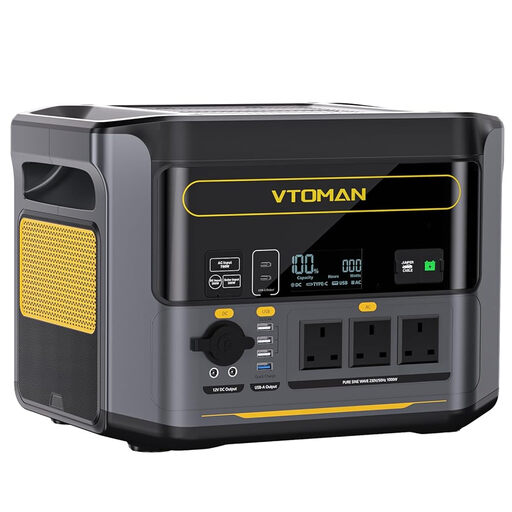
Why This Fits Their Persona: For those who need more power for longer durations. With 1000W of constant output and 828Wh of capacity, this unit can serve as a serious home backup during a blackout or power a demanding off-grid setup, including power tools or a larger fridge.
This model is built around a premium LiFePO4 battery and offers an incredible 1-hour fast charge to 80%. It provides a clear, powerful upgrade from the 600W class without compromising on the essential quality markers of battery life and charging speed.
High power output, very large (and expandable) capacity and market-leading recharge speeds make it a top-tier choice for demanding applications.
We have compiled a complete, real-time list of products that fully satisfy these strict selection criteria and UK safety regulations.
For most users, the answer is yes. A LiFePO4 battery can endure over 3,000 charge cycles before its capacity degrades significantly. In contrast, older NCM batteries typically last for 500-800 cycles. This means a LiFePO4 unit can last up to six times longer, offering far greater long-term value and reducing electronic waste.
This depends on the fridge's power consumption and the station's capacity. A typical 12V camping cooler draws between 40-60 watts when the compressor is running. A power station with around 500Wh of capacity, like the VTOMAN FlashSpeed 600, could power a 50W fridge for approximately 9-10 hours. The runtime will vary based on the ambient temperature and how frequently you open the fridge.
It is crucial to check for compatibility. Every power station has a specific solar input voltage range (e.g., 10-50V) and a maximum wattage it can handle. Using a panel with incorrect voltage can be inefficient or even damage the station's charge controller. For optimal performance and safety, it is advisable to use a solar panel from the same manufacturer or one that is explicitly confirmed as compatible, such as pairing a station with a correctly rated SWAREY 100W Foldable Solar Panel.