
24/7 Customer Support

Free returns

Same-day & Next-day Delivery

Quality Guaranteed

Unlock Your Welcome Offers: FREE Delivery | Up to 80% OFF | Free 30-day JoyPlus trial
Download the APP
Whether you're planning a weekend camping trip, preparing your caravan for the road or simply want a reliable backup for home power cuts, a portable power station is an increasingly essential piece of kit. These devices offer a clean, quiet and convenient alternative to traditional petrol generators, allowing you to power everything from smartphones and laptops to mini-fridges and lights, wherever you are.
But with so many options on the market, choosing the right one can feel overwhelming. This guide is designed to cut through the clutter, explaining the key features to look for and helping you find a model that fits your needs. As the Joybuy Product Recommendation Officer, my role is to provide practical advice to help you make an informed decision.
Before diving into specific models, it's helpful to understand the core specifications. Focusing on these three areas will ensure you select a unit that performs as you expect.
These two numbers are the most important specifications, but they are often confused.
caravan power supply or home backup power, look for 500Wh or more.The battery chemistry inside your power station is crucial for its longevity and safety. Many modern units now use a LiFePO4 battery pack (Lithium Iron Phosphate). Compared to older lithium-ion batteries, LiFePO4 offers significant advantages:
While they can be slightly heavier, the long-term value and safety benefits make a LiFePO4 battery pack a worthwhile feature.
A portable power station is only useful if you can keep it charged. Most models offer three primary methods:
fast charging power station if you need quick turnarounds.off-grid power, pairing your station with a compatible solar panel creates a solar generator. A 100W foldable solar panel is a popular choice, offering a great balance of portability and charging speed for your emergency power supply.Here are a few options that stand out for their features, performance and suitability for different scenarios.

Why It Stands Out: This unit is all about convenience. Weighing just over 3 kg (7 lbs), it's incredibly easy to carry from your car to a remote fishing spot or campsite. Its pure sine wave AC outlet ensures it can safely power sensitive electronics like laptops and cameras without risk of damage.
Pros:
Who is it for? This is an excellent portable battery pack for camping for weekend adventurers, anglers and anyone needing a light, compact power source for personal electronics.

Why It Stands Out: The FlashSpeed 600 is built for those who need more power and less waiting. Its standout feature is its rapid recharging capability, going from 0-80% in about an hour from a wall socket. It also uses a durable LiFePO4 battery rated for over 3,000 cycles.
Pros:
RV power station or home backup.Who is it for? Ideal for serious campers, caravanners and homeowners looking for a robust emergency power supply that charges quickly and can handle more demanding appliances.
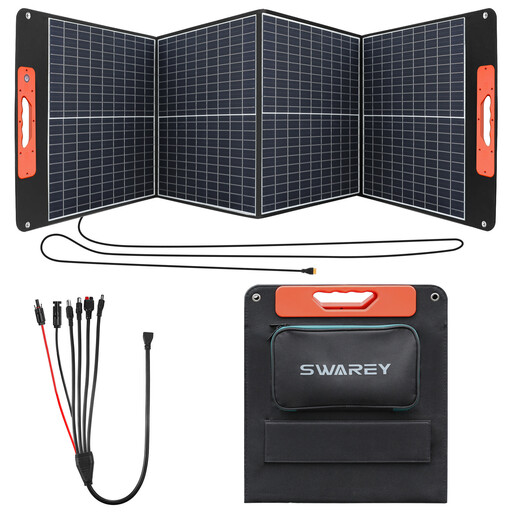
Why It Stands Out: This solar panel turns a portable power station into a true solar generator. It uses high-efficiency monocrystalline cells to achieve up to 23% energy conversion. A clever feature is its Ray Tracer technology, which helps you easily find the optimal angle to the sun for maximum charging.
Pros:
Who is it for? Anyone wanting to achieve off-grid power freedom. It's a perfect match for van lifers, long-term campers and those building a resilient home backup power system.
Finding the right gear is key to enjoying the great outdoors or your own back garden. While you're equipping yourself for adventure with a power station, why not also enhance your relaxation space at home? Explore our range of garden chaise sofas to create the perfect spot to unwind after your trip.
A 300W station is perfect for low-to-medium power devices. This includes charging laptops, smartphones, tablets, cameras and drones. It can also run small fans, LED lights and some portable projectors. It is not suitable for high-draw appliances like electric kettles, hair dryers or microwaves, which typically require over 1000W.
This depends entirely on its capacity (Wh) and the power consumption (W) of the device you're using. You can estimate the runtime with a simple calculation: Runtime (in hours) ≈ Station Capacity (in Wh) x 0.85 / Device Power (in W). The 0.85 factor accounts for a small amount of energy loss during power conversion. For example, a 222Wh station running a 40W device would last approximately 4.7 hours (222 * 0.85 / 40).
Yes, it can be a very practical investment. Modern monocrystalline solar panels are surprisingly efficient and can generate a useful amount of power even on the cloudy days common in the UK. For anyone spending extended time off-grid or wanting a self-sustaining emergency power supply, the ability to generate your own free, clean energy is a significant advantage.