
24/7 Customer Support

Free returns

Same-day & Next-day Delivery

Quality Guaranteed

Unlock Your Welcome Offers: FREE Delivery | Up to 80% OFF | Free 30-day JoyPlus trial
Download the APP
A portable power station can run essential electronics at a campsite, in a caravan or during a power cut. However, comparing models by headline wattage alone can lead to an unsuitable purchase. The useful question is not simply “How powerful is it?” but whether the battery, ports, charging options and weight match your actual routine.
A power station may advertise a 1,000W or 2,000W peak figure, but that is usually a short-duration surge rating. The continuous AC output is the figure to compare with your appliances.
For example, a device rated at 500W continuous output may handle a laptop, camera charger or small television, while a kettle, heater or induction hob may require considerably more. Check both the appliance’s running wattage and its starting surge before purchase.
Capacity is normally shown in watt-hours (Wh). A 500Wh power station does not necessarily deliver 500Wh to an AC appliance because some energy is used by the inverter and internal electronics.
As a practical estimate:
Approximate runtime = battery capacity × 0.8 ÷ device wattage
This means a 500Wh unit may provide around 400Wh of usable AC energy, depending on conditions. A 60W laptop could therefore run for roughly six hours, although the result varies by inverter efficiency, battery age and charging behaviour.
A solar generator or portable solar generator still depends on sunlight, panel position and the station’s solar input limits. UK cloud cover, low winter sun and partial shade can reduce charging performance.
A foldable solar panel rated at 100W or 200W describes its maximum laboratory-style output, not a guaranteed continuous figure outdoors. Check the station’s accepted voltage, current and connector type before pairing it with a portable solar panel.
Many current models use LiFePO4 battery technology. Product listings may provide a cycle-life rating, but this should be treated as a stated specification rather than a promise of identical performance in every household. Storage temperature, charging habits and frequency of use all matter.
For occasional camping, 200Wh–600Wh may cover phones, lights, laptops, cameras and small accessories. For a power station for home power cuts, off-grid work or larger appliances, consider approximately 1,000Wh or more.
Look for a 230V pure sine wave AC output when powering sensitive electronics or equipment with motors. Compare the continuous wattage with every intended appliance, not only the largest headline peak figure.
Also check the number and type of ports. USB-C Power Delivery can charge compatible laptops directly, avoiding the energy loss of using a mains adapter through the AC socket. A 12V car port may suit caravan accessories, while multiple AC sockets are useful when several people need power simultaneously.
A practical camping power station should offer at least two charging methods, such as mains and vehicle charging. Solar input adds flexibility for off-grid trips, but confirm:
Never use damaged leads, cover ventilation openings or charge in a damp location. Follow the supplied instructions and UK plug and voltage information, particularly when buying a UK version model.

Why This Fits Their Persona: Its 7lb format, 222Wh capacity and 65W USB-C output suit occasional campers, anglers and caravan users who mainly need phones, lights, tablets or a laptop.
The listing separates 300W continuous output from 600W peak output and states the three charging methods, helping buyers avoid vague capacity claims.
Eight output ports, LCD monitoring and a stated 150W solar charging option.
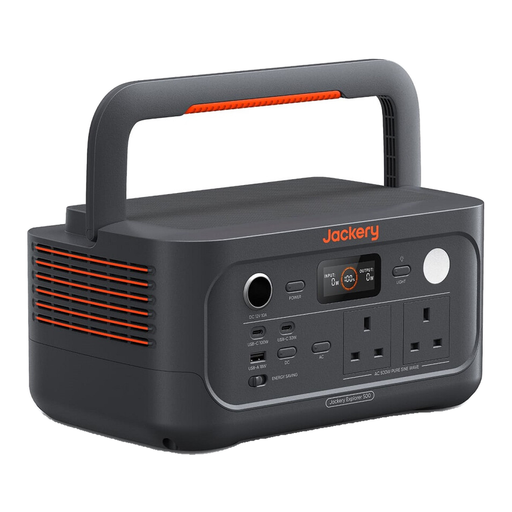
Why This Fits Their Persona: This 512Wh UK-oriented camping battery backup is suited to users wanting a compact unit for picnics, fishing, travel and occasional home backup.
Its listed 500W rated output is clearly distinguished from the 1,000W surge figure, while the charging temperature and ventilation guidance are provided.
5.7kg weight, 100W USB-C output and mains, vehicle or solar charging.
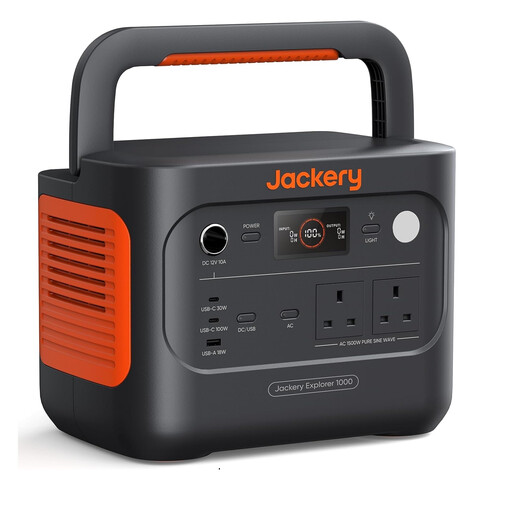
Why This Fits Their Persona: The 1,070Wh battery and 1,500W AC output are aimed at caravan owners, remote workers and households wanting longer backup for several devices.
The listing gives separate battery, continuous output and surge figures, plus stated charge temperature ranges and storage precautions.
100W USB-C, app monitoring and a listed 400W maximum solar input.
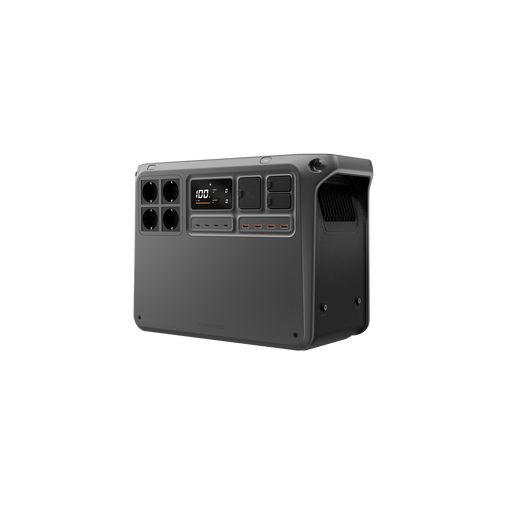
Why This Fits Their Persona: Its 2,048Wh LFP battery and 3,000W continuous output suit demanding off-grid setups, creative equipment and extended home power-cut planning.
The UK version specifies its battery chemistry, continuous output and port selection, making it easier to check appliance compatibility before buying.
Four AC outputs, four USB-C ports, four USB-A ports and two SDC ports.
A foldable solar panel can extend an off-grid power station’s usefulness, but compatibility matters more than panel wattage alone. The SWAREY 200W portable monocrystalline solar module weighs 5.5kg and includes an XT60 cable with adapters, USB-A, USB QC3.0, USB-C PD and DC outputs. Its listed 23% conversion rate is a specification, while real-world generation will vary with sunlight and positioning.
For lighter trips, the SWAREY 100W foldable solar panel includes 60W USB-C PD, USB QC3.0 and a multi-connector cable. Its four kickstands allow angle adjustment, which can help with setup at a campsite or beside a motorhome. Check the input range of your station before connecting either portable solar panel.
We have compiled a complete, real-time list of products that fully satisfy these strict selection criteria and UK safety regulations.
It can provide temporary power for selected low- to medium-wattage devices, such as phones, routers, laptops, lights and small appliances. Check the station’s continuous output, battery capacity and required running time. It is not a replacement for a professionally installed home electrical backup system, and it should not be connected to household wiring unless a qualified electrician has installed an appropriate transfer arrangement.
Battery lifespan depends on chemistry, cycles, temperature, storage and charging practice. A LiFePO4 power station often lists a higher cycle figure than some older battery types, but the manufacturer’s stated rating is not a guarantee of identical capacity throughout ownership. Store the unit in a cool, dry, ventilated place and follow its maintenance instructions.
Sunlight itself has no purchase cost, but the panel, cables and power station require an initial outlay. Output varies with weather, season, shading and panel angle. For dependable charging in Britain, treat a portable solar generator as one charging option alongside mains and vehicle charging rather than the sole source of energy.