
24/7 Customer Support

Free returns

Same-day & Next-day Delivery

Quality Guaranteed

Unlock Your Welcome Offers: FREE Delivery | Up to 80% OFF | Free 30-day JoyPlus trial
Download the APP
A reliable source of off-grid electricity has become essential, whether you're planning a weekend camping trip, fitting out a caravan, or preparing for unexpected power cuts at home. However, the market for portable power stations is filled with confusing specifications and marketing claims. Choosing the wrong one can lead to a device that's underpowered, inconvenient or fails when you need it most.
Before you invest, it's crucial to understand the common pitfalls that many buyers fall into. Steering clear of these traps ensures you get a unit that genuinely meets your needs.
To make an informed decision, focus on these three core parameters. They determine what you can power, for how long and how you can keep it charged.
Watt-hours (Wh) directly tell you how much energy the station stores. To put it in practical terms, a 222Wh power station can theoretically run a 22.2-watt device for 10 hours. For campers, this might translate to charging a smartphone (approx. 10-15Wh) about 15 times or powering a low-wattage LED lamp for several nights. Always calculate your needs based on the Wh rating to avoid disappointment.
This determines which devices you can run. A 300W power station can handle devices that draw up to 300 watts continuously, such as laptops, drones, cameras and small projectors. For sensitive electronics, it is vital to choose a unit with a Pure Sine Wave AC outlet. This provides clean, stable electricity identical to what you get from a wall socket at home, preventing potential damage to your gadgets. An emergency power supply without this feature could harm your most important devices.
A versatile outdoor generator should offer multiple ways to recharge. Standard options include a wall socket (fastest), a 12V car port (useful on the road) and solar panel compatibility. The ability to use it as a solar generator is a game-changer for extended off-grid trips, allowing you to stay powered indefinitely with the right solar panel. Check the maximum solar input and estimated recharge times to ensure it fits your travel style, especially for a power station for caravan use.
Instead of a one-size-fits-all approach, the right power solution depends entirely on your lifestyle. Here are our recommendations matched to specific user profiles.

Why This Fits Their Persona: This user needs a compact and lightweight `camping power bank` for short trips and festivals. Weighing just over 3kg, it's easy to carry from the car to the tent. The 222Wh capacity is ample for keeping phones, speakers and lights running for a weekend, while the 300W output handles essentials like a laptop or camera charger.
It clearly states the 300W continuous output and 222Wh capacity, avoiding the "peak wattage" and "confusing capacity" traps. The Pure Sine Wave AC outlet ensures safe power for all your gadgets.
Features a powerful 65W USB-C PD port for fast-charging modern laptops and tablets plus a versatile array of 8 total outputs. Fast solar recharging (around 2 hours with a 150W panel) makes it ideal for off-grid use.
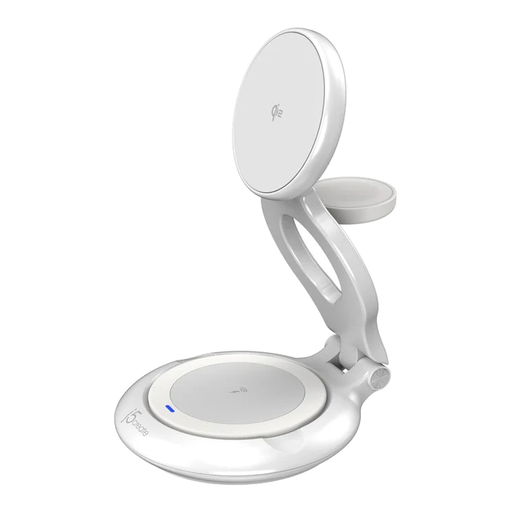
Why This Fits Their Persona: This user works from anywhere and values an organised, cable-free setup. This 3-in-1 stand is the perfect companion to a portable power station, allowing them to create a tidy, efficient workspace in a caravan, campsite or temporary office by charging their phone, earbuds and another Qi2 device simultaneously from a single USB-C cable.
It solves the hidden trap of cable clutter and inefficient charging. Instead of juggling multiple chargers and cables from a power station's ports, this centralises power delivery for personal devices in a neat, foldable package.
Supports the latest Qi2 wireless charging standard for efficient 15W power delivery. Its magnetic alignment ensures a perfect connection every time, and the foldable design makes it extremely portable.
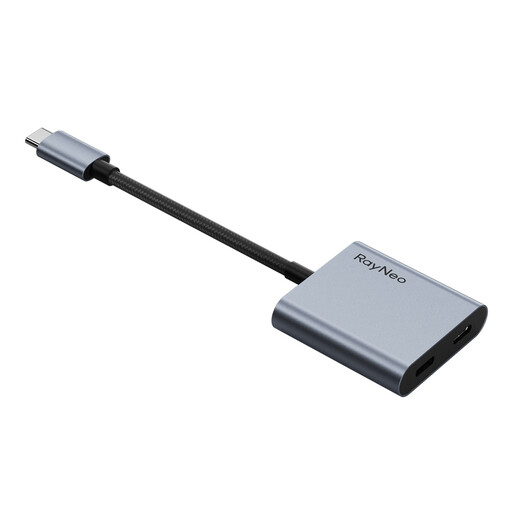
Why This Fits Their Persona: This user travels with the latest gadgets like AR glasses, a Nintendo Switch or a Steam Deck. This adapter is an essential accessory, allowing them to use their device and charge it simultaneously from a portable power station's USB-C port. It unlocks the full potential of their tech, even when away from a wall socket.
It solves the frustrating trap of device incompatibility or being forced to stop using a device to charge it. This adapter provides both a 4K@60Hz video signal and 100W power delivery, ensuring no compromise on performance.
Enables a "charge and play" experience for a wide range of USB-C devices. Its plug-and-play design and compact, lightweight build make it a perfect travel companion for any tech enthusiast's kit.
We have compiled a complete, real-time list of products that fully satisfy these strict selection criteria and UK safety regulations.
The lifespan of a portable power station is measured in "charge cycles" – one full discharge and recharge. Models with standard Lithium-ion batteries typically offer 500-800 cycles. However, units with LiFePO4 batteries can last for 2,000 to 3,000+ cycles, meaning they can provide reliable power for many years even with regular use.
Absolutely. Unlike petrol-powered generators, battery-powered stations produce no fumes, are virtually silent and require no flammable fuel. This makes them a safe and effective emergency power supply for indoor use, perfect for keeping lights, routers and small appliances running during a blackout.
The main differences are capacity and outputs. A power bank is designed to charge small personal devices like smartphones via USB ports and typically has a capacity below 30,000mAh (~100Wh). A portable power station offers a much larger capacity (200Wh and up) and, crucially, includes a built-in AC outlet to power devices that require a standard wall plug, like laptops, fans or even small fridges.