
24/7 Customer Support

Free returns

Same-day & Next-day Delivery

Quality Guaranteed

Unlock Your Welcome Offers: FREE Delivery | Up to 80% OFF | Free 30-day JoyPlus trial
Download the APP
Navigating the market for a portable power station in the UK can feel overwhelming. With endless specifications and bold marketing claims, it's easy to end up with a device that doesn't meet your needs. As a Joybuy Product Recommendation Officer, my role is to help you sidestep the common purchasing traps and focus on what truly matters for reliable power, whether you're camping in the Peak District, living off-grid in an RV or preparing for a power cut at home.
Before you spend your hard-earned money, be aware of these three common pitfalls:
To make a smart choice, ignore the hype and focus on these three core parameters. They determine a power station's real-world performance and value for money.
The single most important specification to check is the battery chemistry. The current industry standard for safety and longevity is Lithium Iron Phosphate (LiFePO4).
While the initial cost might be slightly higher, a LiFePO4 power station provides superior safety and a lifespan that makes it more economical over time.
These two numbers are often confused, but they tell you very different things.
Always check the continuous output wattage, not just the peak or surge figure.
A portable power station is only as good as its ability to be recharged. Look for multiple, efficient charging options.
Instead of a one-size-fits-all approach, here are our recommendations matched to specific UK user profiles.

Why This Fits Their Persona: Ideal for short trips, this unit is lightweight (7.2kg) and compact. Its 499Wh capacity is ample for charging phones, cameras, a drone and running LED lights over a weekend. The 100W USB-C port is perfect for keeping a laptop charged for a bit of remote work from the campsite.
It uses a long-lasting LiFePO4 battery and features super-fast AC charging (0-80% in about 60 minutes), solving the slow-charging bottleneck for quick getaways.
Excellent portability with a flat-top design for easy packing. The integrated storage box for cables is a practical touch for staying organised outdoors.
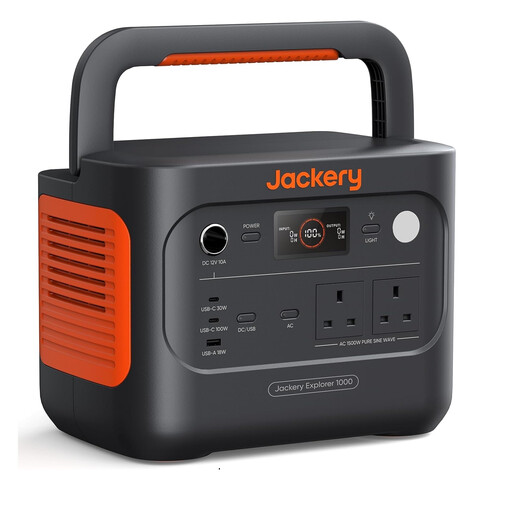
Why This Fits Their Persona: This is a versatile workhorse. With 1070Wh capacity and a 1500W output, it can power a portable fridge, multiple gadgets and even a low-wattage induction hob. It's a great solution for families needing to keep everyone's devices charged while enjoying some creature comforts.
It delivers a genuine 1500W continuous output, avoiding the "peak power" trap. It also uses a durable LiFePO4 battery with a stated 4,000-cycle lifespan, ensuring long-term value.
Very fast charging (full charge in about 1 hour via the app) and smart app control for monitoring and customising charging modes, including a quiet mode for overnight charging.
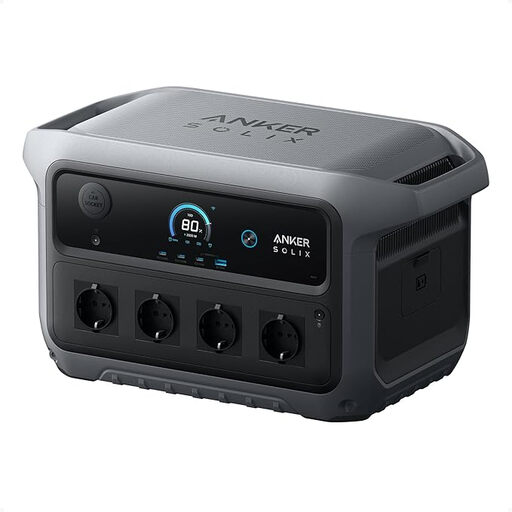
Why This Fits Their Persona: For those needing serious power for an RV or as a home backup, this unit's massive 2048Wh capacity and 2400W output are formidable. It can run multiple essential appliances during a blackout, including a refrigerator, microwave or medical equipment, providing genuine peace of mind.
It combines a huge capacity with incredibly fast charging, reaching a full charge in under an hour from an AC outlet. This completely eliminates the slow-charging issue common in high-capacity units.
Massive 2400W continuous output with a 4000W peak handles demanding appliances. The long-life LiFePO4 battery ensures it's a reliable, long-term investment for home or off-grid use.
We have compiled a complete, real-time list of products that fully satisfy these strict selection criteria and UK safety regulations.
A quality LiFePO4 battery is typically rated for 3,000 or more full charge-discharge cycles before its capacity drops to around 80% of its original state. For a user who fully drains and recharges their power station every weekend, this could translate to decades of reliable use, making it a very durable and cost-effective choice.
Yes, one of the main advantages of a battery-powered portable power station over a petrol generator is that it produces no fumes and is silent. This makes it a safe and effective emergency power supply for home use during a power cut. You can use it indoors to power lights, your router, a fridge and charge essential devices. Always ensure the unit is placed in an area with adequate ventilation to prevent overheating.
The ideal solar panel size depends on your recharging speed requirements and local weather conditions. As a general rule for UK sunlight, a 200W solar panel is a good match for a 1000Wh power station. Under optimal sunny conditions, this setup could potentially recharge the unit from empty to full in 6-8 hours, making it a viable solar generator for camping and off-grid adventures. Always check the power station's maximum solar input voltage and wattage to ensure compatibility.