
24/7 Customer Support

Free returns

Same-day & Next-day Delivery

Quality Guaranteed

Unlock Your Welcome Offers: FREE Delivery | Up to 80% OFF | Free 30-day JoyPlus trial
Download the APP
From a dead phone on the morning commute to a car that will not start on a frosty morning, losing power at a critical moment is a modern frustration. A reliable portable power supply seems like a simple solution, but the market is filled with confusing specifications and overhyped claims. Many UK buyers find themselves with a device that underperforms, fails quickly or is simply the wrong tool for the job.
As a Joybuy Product Recommendation Officer, my role is to help you navigate this landscape. We will look past the marketing jargon and focus on what truly matters, ensuring you get a device that fits your needs without wasting your money.
Before you add anything to your basket, be aware of these common purchasing mistakes:
To make an informed choice, focus on these three non-negotiable parameters.
Understanding capacity helps you match the device to your needs.
Capacity is how much fuel you have; output power is how fast you can use it.
Finally, be clear about your main reason for buying.
Based on these practical criteria, here are some options tailored to different UK user profiles.
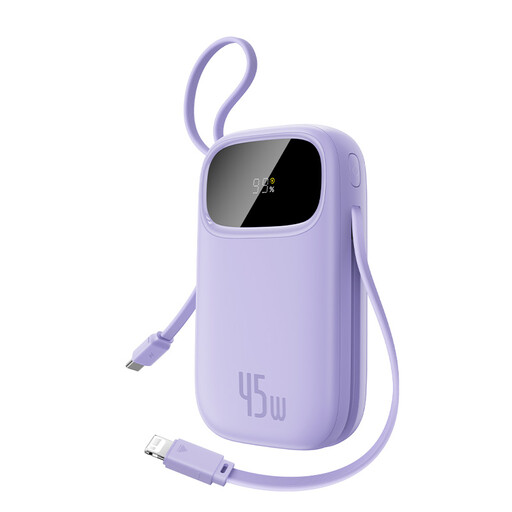
Why This Fits Their Persona: Perfect for the daily commute or short trips, this power bank is compact yet powerful. Its integrated USB-C and Lightning cables mean you never have to remember to pack a separate cord, reducing clutter in your bag.
It avoids the "one-size-fits-all" trap by focusing on being an excellent portable charger for personal electronics, not a car starter. The integrated cables solve a real-world problem for commuters.
Features both built-in USB-C and Lightning cables, plus a 45W fast-charging output capable of powering laptops and tablets. The digital display shows the exact battery percentage.
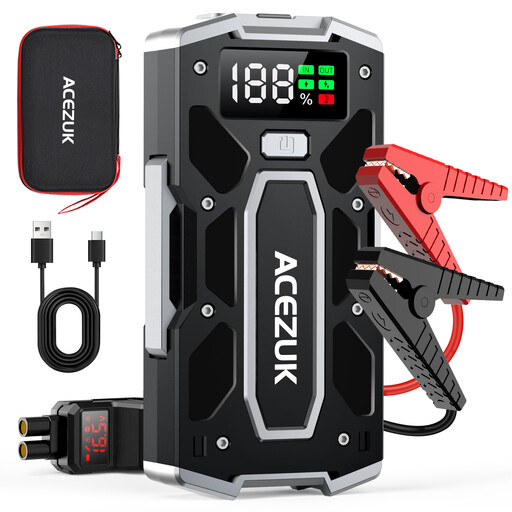
Why This Fits Their Persona: For any UK driver, especially those with larger cars, SUVs or diesel engines, this is a vital piece of emergency kit. It provides peace of mind that a flat battery won't leave you stranded, whether at home or on a remote country lane.
This unit prioritises its core function: jump-starting. The massive 8000A peak current is the key specification, not just its battery capacity, ensuring it has the power for large engines.
Engineered for high-displacement vehicles (up to 10.0L petrol/8.0L diesel). It includes 8 safety protections, including spark-proof and reverse polarity alerts, to prevent dangerous user errors.
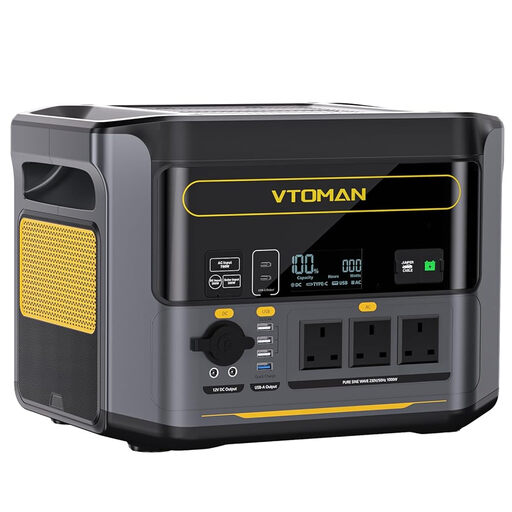
Why This Fits Their Persona: For those who enjoy camping, caravanning or want a solid emergency power supply for home power cuts, this unit is a serious solution. It can run multiple devices, including AC appliances, for extended periods.
It avoids the trap of poor long-term value by using a superior LiFePO4 battery, which offers over 3,000 charge cycles—far more than standard lithium-ion batteries.
Features a large 828Wh capacity that is expandable to 2376Wh. It can be recharged to 80% in just one hour and supports solar panel input for true off-grid use.
We have compiled a complete, real-time list of products that fully satisfy these strict selection criteria and UK safety regulations.
1. How long does a portable power supply last? This depends on two factors. The lifespan of the device itself is measured in charge cycles. A standard lithium-ion power bank typically lasts for 300-500 cycles. A higher-quality unit with a LiFePO4 battery can last for 2,000-3,000 cycles, making it a better investment for heavy use. The duration of a single charge depends entirely on its capacity (mAh or Wh) and the power draw of the devices you connect to it.
2. Can I take a portable power supply on a plane in the UK? Yes, but with strict limitations. Most airlines follow international regulations, which cap power banks at 100 Watt-hours (Wh) for carry-on luggage. They are strictly forbidden in checked baggage. Some airlines may permit devices between 100Wh and 160Wh with prior approval. Always check the Wh rating of your device and your airline's specific policy before travelling.
3. What is the main difference between a power bank and a portable power station? A power bank is designed for portability to charge small personal electronics like phones and tablets via USB. A portable power station is a larger, higher-capacity unit designed to power a wider range of devices, including those that require a standard AC wall plug (like laptops, lights or small appliances). They are ideal for camping, fieldwork, or as a home emergency power supply.