Choose a projector if you can control the room light, provide a suitable wall or screen and accept some setup for a flexible large image. A portable model suits planned film nights and easy storage; a more settled home-cinema setup suits repeat viewing where its position can stay in place. If daytime viewing and quick, routine use matter more, compare a television before committing to projection.
Who each setup suits
Occasional dark-room film-night hosts
If you can dim the room and want to put the equipment away afterwards, a portable projector is worth considering. Epson United Kingdom places portable indoor projection in controlled-light settings; check the intended image size as well as the room light.
Living-room sport viewers
For viewing with windows or lamps in use, start with the room’s light, the available projection distance and a dependable route to the match and its audio. BenQ UK notes that increasing image size calls for more light to maintain a clear picture.
Low-fuss everyday viewers
If you cannot leave equipment positioned or do not want to align an image for each session, compare a television with a projector setup. The trade-off is giving up an image that can be projected large and then packed away.
What matters when choosing
Decide whether projection works in the room before comparing convenience features. Then check how you will position the projector and reach your usual content and sound.
| Concern |
What to check |
Who this matters to |
| Light and image surface |
Assess light at your usual viewing time and the size of the image you want. Compare stated brightness in its specified unit; check that the wall is flat, smooth and pale, or plan for a screen. |
If I want sport on a large image while the room is still lit, I need to know whether the picture will work on my actual wall or screen. About 36% of consumers would put the viewing environment first. |
| Placement and setup |
Measure the projector-to-image distance and choose a repeatable position. Check the exact model’s throw guidance and adjustment options rather than relying on keystone correction to make an unsuitable position work. |
When I have to put the projector away after film night, I need a position I can recreate without awkward cabling or repeated adjustments. Placement would be the primary concern for about 29% of consumers. |
| Content and sound |
Confirm the named apps you use or a suitable HDMI input for an external source. If adding speakers, check the exact audio-output type and its compatibility with your equipment. |
For a shared screening, I need a reliable way to play the film or match and let everyone hear it. About 21% of consumers would make content access and sound their first priority. |
| Everyday effort |
Compare the routine of positioning, connecting and aligning a projector with using a television. If quiet scenes matter, check the projector’s model- and mode-specific noise specification. |
If most viewing is spontaneous, I want to start watching without preparing the room each time. Ease of everyday use would come first for about 14% of consumers. |
Buying pitfalls
-
Choosing by the largest quoted image or brightness figure
A bigger image spreads the projector’s light over more area, while room light and the projection surface also affect what you see. BenQ UK highlights the relationship between image size and required light.
Set a realistic image size, assess the room at your usual viewing time and compare brightness figures only with their stated units and conditions.
A brighter room or unsuitable wall may call for a screen or changes to the room lighting.
-
Assuming a smart projector has every streaming app
Built-in app support differs by model. An external streaming device is another route only if the projector has a suitable input and the device can be powered.
Check the exact model’s named apps and support information. If you plan to use an external device, confirm its connection and power requirements; Google specifies an available HDMI input for Chromecast with Google TV.
An external device adds equipment, power and cable-management steps.
-
Using image correction instead of planning placement
A projector still needs a workable distance and position. BenQ UK explains that lens shift can move an image without the clarity loss that keystone correction can introduce.
Measure the intended image position and available throw distance before ordering, then check whether the model fits that arrangement.
A repeatable position may require a stand, mount or furniture rearrangement.
-
Assuming fan noise and built-in sound are alike on every model
Noise varies by projector and operating mode. For example, BenQ UK lists 34 dB typical and 28 dB Eco acoustic noise for the W1800; those figures do not describe other models.
Check the noise specification for the model and mode you expect to use, particularly if people will sit nearby. Confirm its audio connections before planning a soundbar or speakers.
Brands to consider
Epson
Epson United Kingdom lists portable, home-cinema and ultra-short-throw options, giving households different ways to plan room placement.
- Its UK range lists the portable Lifestudio Flex Plus EF-72 with 1,000 lumens and Google TV.
- Its claim that the EH-LS800W produces an 80-inch image from 2.3 cm from the wall applies to that model, not every Epson projector.
BenQ
BenQ UK covers home-cinema placement choices, including short-throw designs and lens shift on applicable models.
- The W1800 specification lists HDMI eARC and a 3.5 mm audio output for planning external sound.
- Connection and noise specifications are model-specific; the W1800’s figures should not be applied across the range.
XGIMI
XGIMI UK offers portable smart-projector models for households interested in equipment that can be moved or stored.
- XGIMI lists a battery, automatic image adjustments and Google TV for the Halo+ (New).
- Check the exact model for its brightness unit, battery conditions and named app support; those Halo+ (New) claims do not establish the features of older units.
NEBULA
NEBULA UK lists home-theatre and portable smart-projector options with differing model specifications.
- Its X1 specification lists 3,500 ANSI lumens, Google TV and official Netflix support.
- Those are NEBULA’s specifications for the X1; check the particular model and viewing conditions rather than extending them to the range.
Joybuy projector selections
These projector selections are for flexible home film or sport viewing. Compare each model’s stated features with your room, intended image size and preferred way of accessing content; a television remains an alternative if routine setup or room light makes projection impractical.
 No image available
Magcubic HY350Max projector
Consider its rotating design if you expect to reposition the projector for planned viewing. The product name states native 1080P, 900 ANSI lumens, 180° rotation, auto keystone and HDMI/USB compatibility. Check the brightness against your room and image size, and confirm the apps and audio connections you need. Keep its ventilation clear and avoid looking directly into the lens.
View on Joybuy
 No image available
XBJ 360° Portable Projector, European Version
Its rotating design may suit a room where the projector is set up for occasional screenings rather than left in place. The product name states 360° rotation, 1080P, 500 lumens, a 120-inch display claim, auto keystone and HDMI. Check the required throw distance and whether the stated image size works in your room; confirm any streaming services you rely on.
View on Joybuy
 No image available
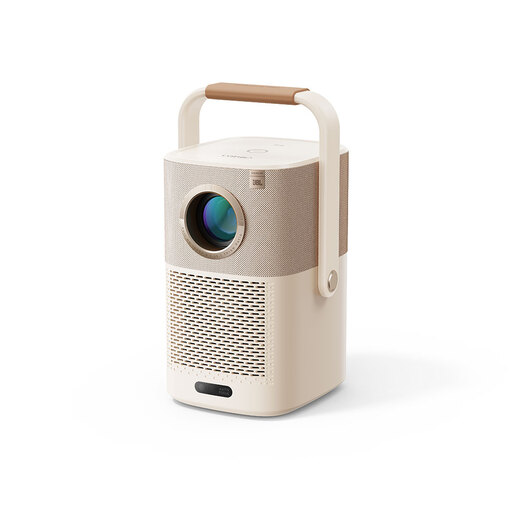
Yaber T2 Plus GTV portable projector
Consider this model if being able to move the projector between planned viewing sessions matters to you. Its product name states native 1080P, a built-in battery, Sound by JBL, WiFi 6 and Bluetooth. Check battery runtime for your intended session, along with the room-light requirements, throw distance and exact apps you use.
View on Joybuy
 No image available
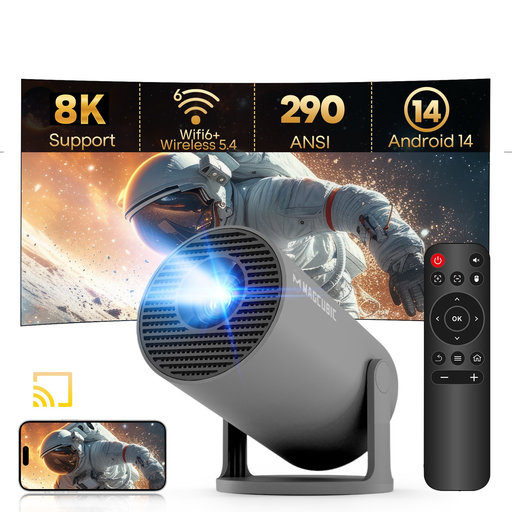
Magcubic HY300 Pro mini projector, grey
The rotating stand may help with flexible positioning, though focus still requires a manual step. The product name specifies native 720p, 1080p support, auto keystone and a 180° rotating stand. Treat 1080p support separately from native resolution, and check the intended room light, app access and fan noise before choosing it.
View on Joybuy
 No image available
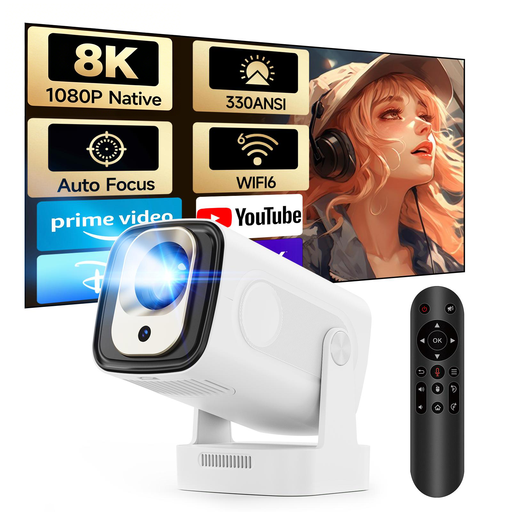
MAGCUBIC HY310 projector
Its stated autofocus may appeal if you want less manual image adjustment for a planned screening. The product name also states Android 14, 330 ANSI lumens and a built-in speaker. Confirm the native resolution before buying, as the resolution wording is conflicting; check the exact apps, connections and room-light suitability as well.
View on Joybuy
Frequently asked questions
Can I project onto a plain wall?
Yes, if it is flat, smooth and pale, a wall can work for an initial setup. BenQ UK describes a smooth white wall as a workable starting point; compare a dedicated screen if the wall has texture or colour, or if you need to address a brighter viewing room.
Will a smart projector run my streaming services?
Not necessarily. Confirm your named services on the exact model’s current product or support information. An external streaming device offers another route if the projector has a suitable input; Google specifies an available HDMI input and power for Chromecast with Google TV.
Do film nights require a soundbar?
No; decide based on the room, where people will sit and whether the projector’s built-in sound meets your needs. If you want external sound, check the exact output and your speaker’s input before buying. BenQ UK lists HDMI eARC and a 3.5 mm audio output for the W1800, but other models may differ.


