Who needs portable project storage?
The useful choice depends on where files travel, which devices receive them and whether the drive carries active work or an additional copy.
Location shooters moving active projects
If you take current photo or video files between shoots and editing computers, check the connection at both ends before choosing by a drive’s stated speed. Samsung’s portable-SSD specifications make clear that host and cable capabilities affect its quoted maximums.
Creators working in rougher conditions
A drive carried in a kit bag or used around dust and splashes calls for model-specific protection claims, not an assumption that every SSD is rugged. Samsung and SanDisk state ingress and drop ratings for particular portable models.
Phone and tablet media offloaders
Moving files through an iPhone or iPad adds connector, format and sometimes power checks. Apple Support sets separate requirements for iPad external storage and for direct external ProRes recording on compatible iPhone Pro models.
What matters when choosing a drive?
Decide whether transfer time, protection in transit, device compatibility or carrying capacity is your primary constraint; then check the exact drive and connection against that need.
| Concern |
What to check |
Who this matters to |
| Transfer speed |
Check the host’s USB data specification and the cable rating. Treat advertised sequential speeds as maximums, not promised speeds throughout a long transfer. |
If large photo batches or video projects move between editing locations repeatedly, waiting for each copy matters. About 36% of consumers put transfer speed first. |
| Protection in transit |
Check the exact model’s IP rating, stated drop conditions and handling limitations; keep another copy of important files. |
A drive used in a busy location or carried through dusty or wet conditions needs more attention to its stated protection. For about 29% of consumers, resilience is the primary concern. |
| Device compatibility |
Confirm connectors, available power and file-system support on each device. For iPad storage, Apple Support specifies a single data partition and a supported format. |
When files must pass between a computer, phone or tablet, a fitting USB-C plug alone does not settle whether the workflow will work. Cross-device compatibility comes first for about 21% of consumers. |
| Carrying capacity |
Allow room for the projects you need to carry and distinguish an additional transport copy from your only copy. Compare drive types with your tolerance for slower transfers in mind. |
If the main task is carrying completed media or duplicate files, space may matter more than rapid working transfers. About 14% of consumers make capacity their primary concern. |
Which? distinguishes faster SSDs from HDDs used for longer-term backup. For active projects, that distinction helps frame the choice, but it does not establish how quickly any particular drive will handle your files. Likewise, a USB 3.2 Gen 2x2 label is useful only if the computer and cable support the connection: Samsung specifies a compatible host, cable and UASP for the T9’s quoted maximum, while Crucial makes host compatibility a condition of full X10 Pro performance.
Relevant brands to consider
Compare the particular model and variant rather than extending one drive’s speed, protection or accessories across a brand’s range.
Samsung
The T7 Shield covers a rugged USB 3.2 Gen 2 route; the T9 is a USB 3.2 Gen 2x2 option for a compatible host.
- Samsung states up to 1,050/1,000MB/s read/write, IP65 resistance and up to 3m drop resistance for the T7 Shield.
- The T9’s stated up-to-2,000MB/s maximum requires a supporting Gen 2x2 host, cable and UASP. The T7 Shield’s protection claims are not a promise against damage.
SanDisk
The Extreme Portable SSD is a rugged model range with stated security features; check the exact variant before applying those claims.
- SanDisk states up to 2,000MB/s, IP65 resistance, up to 3m drop protection and built-in 256-bit AES encryption for the cited Extreme Portable SSD range.
- Those specifications should not be assumed for a different SanDisk Portable SSD, and the stated speed depends on the connection used.
Crucial
The X10 Pro is a Gen 2x2 portable-SSD option for buyers who can verify their computer’s USB-C data capability.
- Crucial states up to 2,100/2,000MB/s read/write and IP55 resistance for the X10 Pro.
- Crucial says full Gen 2x2 performance needs a compatible USB-C host. It describes use with BitLocker To Go and FileVault, rather than universal out-of-box encryption.
Seagate
The Basic portable HDD range is relevant when carrying a larger volume of media takes priority over fast active-project transfers.
- Seagate lists Basic portable HDD capacities up to 5TB.
- Seagate specifies a USB 3.0 port for USB 3.0 transfer speeds; device compatibility also depends on hardware and operating-system configuration.
Kingston
The XS1000 is a compact USB 3.2 Gen 2 SSD for moving files between appropriately connected devices.
- Kingston states up to 1,050/1,000MB/s read/write and includes a USB-C-to-USB-A cable and USB-A-to-USB-C adapter with the XS1000.
- Do not treat the XS1000 as an IP-rated rugged model or a Gen 2x2 drive on the basis of those specifications.
Portable SSDs on Joybuy
These portable SSDs cover routine project transfers, drives with stated travel-protection features and faster-interface options. Match each one to your host, cable and destination devices; this selection does not compare portable HDD products.
 No image available
Samsung T7 Shield MU-PE1T0S 1TB
Consider this model for moving active projects when protection during location travel is a priority. Samsung states USB 3.2 Gen 2, up to 1,050/1,000MB/s sequential read/write, IP65 resistance and up to 3m drop resistance for the T7 Shield. Its quoted speed requires a suitable host and cable with UASP enabled; the protection rating does not make the drive suitable for submersion.
View on Joybuy
 No image available
Lexar ES5 1TB portable SSD
Consider this listing if you want a portable drive with stated location-protection features and have a computer that supports the intended high-speed connection. The product listing states USB 3.2 Gen 2x2, up to 2,000MB/s read/write, IP65 resistance and up to 3m drop protection. Before relying on its advertised iPhone recording use, check the exact phone, recording mode, storage speed and power requirements against Apple’s guidance.
View on Joybuy
 No image available
Lexar ES4 2TB portable SSD with magnetic set
This is an option for carrying projects between computers and checking a phone-mounted setup. The listing states USB 3.2 Gen 2, up to 1,050/1,000MB/s read/write and both USB-C-to-C and USB-A-to-C cables. Confirm the format required by each destination device before copying files. The listing says MagSafe wireless charging is not supported while the drive is attached and advises avoiding liquids and physical shock.
View on Joybuy
 No image available
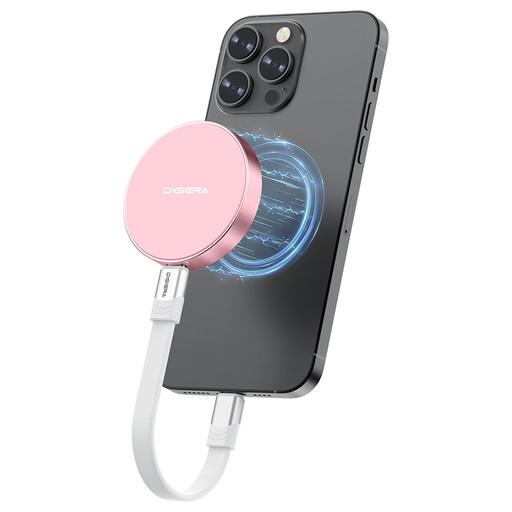
DigiEra LPS2000M-3 1TB magnetic SSD, pink
Consider this model for project transfers or a magnetic phone-mounted arrangement only after checking the devices involved. Its listing states USB 3.2 Gen 2x2 and up to 2,000MB/s read and 1,800MB/s write. For direct iPhone ProRes recording, verify the exact iPhone and recording mode alongside Apple’s drive-speed and maximum-power-draw requirements; a magnetic mount or USB-C connector does not establish recording compatibility.
View on Joybuy
 No image available
SanDisk Portable SSD 2TB
This model is worth considering when a portable 2TB drive fits the amount of media you need to carry. Its listing states up to 800MB/s read speed, a 40g weight and up to 2m drop protection. Check its connection and write-speed requirements against your computer and transfer workload; do not apply specifications from the separate SanDisk Extreme Portable SSD range to this model.
View on Joybuy
Frequently asked questions
Do I need a 20Gbps SSD for photo and video projects?
A USB 3.2 Gen 2x2 SSD is most relevant if you repeatedly move large projects and your computer and cable support that mode. Samsung specifies a compatible host, cable and UASP for the T9’s stated maximum; Crucial also makes compatible USB-C host capability a condition of full X10 Pro performance. If your connection runs at a slower USB mode, choose on the basis of the transfer performance available to you rather than the higher headline figure.
Can I use one portable SSD with both a Mac and a Windows computer?
Yes, if the drive uses a file system supported by both computers and each has a suitable connection. Apple Support describes formatting an external disk for Mac and Windows use; check the drive’s format before loading projects. Formatting erases existing contents, so copy files elsewhere first.
What should I check before connecting an SSD to an iPad or iPhone?
For iPad file transfers, check the connector or adapter, the drive’s power needs and Apple Support’s single-partition and supported-format requirements. Direct external ProRes recording is a separate iPhone workflow: Apple specifies compatible Pro models and recording-dependent drive-speed requirements, alongside a maximum 4.5W power draw. Check your exact phone, mode and drive before relying on that use.
Should I encrypt a portable SSD carrying client files?
Assess the information on the drive and your organisation’s security requirements before moving client files. The UK Information Commissioner’s Office says the UK GDPR requires appropriate technical and organisational measures when processing personal information, and identifies encryption as a measure whose suitability depends on the nature and risks of that processing. A drive’s advertised encryption feature alone does not settle those wider requirements.


